We are your trusted health partner. Local doorstep deliveries is within the hour .We are Licensed and Regulated by the Pharmacist's Council of Nigeria(PCN).Prices displayed here may differ due to inflation.
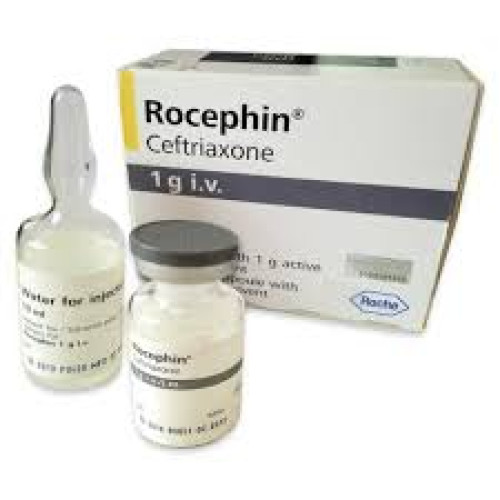
Rocephin is a highly potent, prescription-only cephalosporin antibiotic. It contains Ceftriaxone Sodium as its active ingredient and is supplied as a sterile powder vial (available standardly in strengths like 250mg, 500mg, 1g, and 2g) that must be mixed with a liquid solution before use.
Administered by a healthcare provider as an injection into a muscle or an infusion into a vein, Rocephin is a broad-spectrum antibiotic used to treat severe, deep-seated, or life-threatening bacterial infections.
Rocephin is a bactericidal antibiotic, meaning its primary job is to physically destroy invading bacteria rather than just slowing their growth:
Targets the Bacterial Shield: Bacteria rely on a tough outer wall (cell wall) to protect themselves and survive inside your body. Rocephin targets and blocks the specific enzymes bacteria use to construct this wall.
Bursts the Bacteria: Without a strong protective shield, the wall develops holes and collapses under internal pressure, killing the bacteria completely.
Long-Lasting Defense: Unlike many other antibiotics that must be taken multiple times a day, Rocephin breaks down very slowly in the body. A single daily dose maintains a strong baseline in your blood for a full 24 hours.
Note: Because it specifically targets bacterial cell walls, Rocephin is completely ineffective against viruses (like the common cold, flu, or cough).
Severe Respiratory Tract Infections: Such as severe community-acquired or hospital-acquired Pneumonia.
Central Nervous System Infections: Treating life-threatening Bacterial Meningitis (infection of the brain and spinal cord membranes).
Abdominal & Pelvic Infections: Managing internal stomach infections, peritonitis, and Pelvic Inflammatory Disease (PID).
Complicated UTIs & Soft Tissue Infections: Treating advanced kidney infections (pyelonephritis), bone/joint infections, and deep skin infections like severe cellulitis.
Surgical Infection Prevention: Given as a single injection right before certain surgeries to block bacteria from entering the surgical site.
Sexually Transmitted Infections: Treating severe or resistant strains of Gonorrhea and Syphilis.
🚨 Absolute Safety Requirement: You must strictly avoid Rocephin if you have a history of severe allergic reactions (like anaphylaxis or facial swelling) to any cephalosporin or penicillin antibiotic. Because these drug families share a similar molecular structure, a person severely allergic to penicillin can have a life-threatening allergic reaction to Rocephin. Always tell your doctor about your complete allergy history before receiving this shot.
Rocephin must strictly never be given to premature babies or any newborn baby (up to 28 days old) who has jaundice (yellowing of the skin or eyes) or high bilirubin levels. It can displace bilirubin in the blood, potentially leading to brain damage. Furthermore, newborns must never receive Rocephin alongside any intravenous medicines or fluids that contain calcium, as the two can bind together and form dangerous particles in the lungs and kidneys.
Gallbladder & Kidney Stones: Rocephin can occasionally bind with calcium in the gallbladder or urinary tract, creating temporary sludge or stone-like blockages. This is most common in children and disappears once the antibiotic treatment is finished.
Blood Thinning Alterations: It can lower your body's Vitamin K levels, which can prolong bleeding times. Use with extra caution if you have a history of bleeding disorders or take blood thinners like Warfarin.
Strict Professional Administration: Rocephin must always be prepared and administered by a registered Doctor, Nurse, or Trained Clinician. It is given either as a deep injection into a large muscle mass (IM) or slowly dripped through a needle into a vein (IV infusion over 30 minutes).
The Intramuscular Mixing Rule (Lidocaine): When given as a muscle shot (IM), Rocephin powder is standardly dissolved in a mild numbing liquid (Lidocaine) to make the injection much more comfortable. Rocephin mixed with Lidocaine must strictly never be injected into a vein. IV doses must strictly be mixed with sterile water or approved IV fluids only.
Finish the Full Course: If you are clearing an infection at home, you must complete the exact number of days prescribed by your doctor, even if you feel completely better after day two. Stopping early allows the strongest bacteria to survive, mutate, and become drug-resistant.
1.Confirm your complete antibiotic history:Allergy Clearance.
Before the nurse prepares the vial, confirm that you have never had a severe skin rash, swelling, or breathing issues from penicillins or cephalosporins.
2.Verify the fluid appearance before injection:Preparation Check.
The mixed solution should range from light yellow to amber. It must be completely clear and free of any floating particles before it enters your muscle or IV line.
3.Rest in the clinic for 15 to 30 minutes:Post-Dose Stay.
Remain seated in the hospital or clinic lobby for a short window after your injection so healthcare providers can quickly manage any immediate dizziness or allergic signs.
As your system clears out the bacterial infection, you may notice some typical clinical updates:
Localized injection site warmth, a hard lump, tightness, or mild bruising where the muscle shot was given.
Mild Diarrhea or Loose Stool: Highly common as the antibiotic temporarily upsets the normal, healthy bacteria living in your gut.
Minor nausea, temporary headaches, or mild vaginal itching/discharge (yeast overgrowth).
🚨 Watch for C. diff Colitis: Antibiotics can occasionally allow a dangerous strain of gut bacteria called Clostridioides difficile to take over your bowels. Contact your doctor immediately and do not take over-the-counter anti-diarrhea pills if you develop:
Severe, watery diarrhea that lasts for more than 2 days.
Intense stomach cramps, fever, or blood/mucus in your stool.
Can I drink alcohol while receiving Rocephin injections?
While Rocephin does not cause a violent reaction with alcohol like some other antibiotics do, it is highly recommended to completely avoid alcohol during your treatment. Alcohol dehydrates the body, places extra strain on your liver, and weakens your immune system, which can significantly delay your recovery from a severe bacterial infection.
Why does the Rocephin muscle shot sting, and how can I help it?
Because Rocephin is a dense, concentrated solution, pushing it into muscle tissue naturally stretches the local muscle fibers, which causes temporary stinging or aching. Applying a warm compress gently over the injection site after you get home can help soothe the muscle ache.
How should un-mixed Rocephin vials be stored safely?
Keep your unopened powder vials inside their original cardboard box to protect the dry crystalline structures from direct sunlight. Store the box in a cool room strictly below 30°C. Once a healthcare provider mixes the powder into a liquid solution, it must be used quickly or stored inside a refrigerator according to specific brand guidelines. Keep completely out of the reach of children.
High-potency injectable antibiotics require an absolutely sterile, verified supply chain and strictly managed, temperature-controlled storage to shield the delicate crystalline powders from moisture degradation and heat. To completely protect your health from the severe dangers of un-regulated, sub-potent, or counterfeit critical-care medications, institutional hospital procurement teams and individual patient families can securely submit prescriptions and buy genuine, factory-authenticated Rocephin Injections (manufactured by Roche) online through Sanlive Pharmacy & Stores for verified payment, discrete packaging, and rapid, climate-controlled delivery directly to your home, office, or clinical suite within Lagos, Abuja, Port Harcourt, and nationwide via our trusted specialty logistics networks.
Important Notice: This information is for educational purposes only. Rocephin is a high-potency, prescription-only injectable antibiotic. Your entire treatment timeline, injection site monitoring, and follow-up care must be supervised by your doctor or infectious disease specialist. If a patient experiences immediate difficulty breathing, a sudden widespread skin rash with hives, rapid swelling of the face, lips, or throat, severe confusion, or a sudden physical collapse, stop administration immediately and seek urgent emergency medical resuscitation at a hospital straight away.
No reviews yet — be the first!
Log in to write a review.