We are your trusted health partner. Local doorstep deliveries is within the hour .We are Licensed and Regulated by the Pharmacist's Council of Nigeria(PCN).Prices displayed here may differ due to inflation.
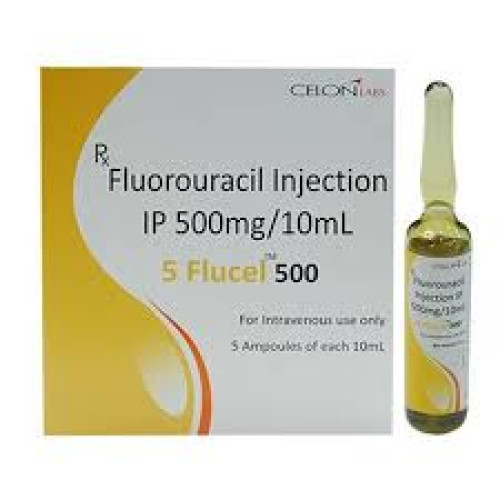
Fluorouracil 500mg is a prescription-only, high-potency antimetabolite chemotherapy medication. It belongs to a class of cytotoxic drugs known as pyrimidine analogues and contains 500mg of Fluorouracil inside a single-dose vial.
It is administered exclusively via an intravenous (IV) injection or continuous intravenous infusion inside a specialized oncology daycare unit or hospital ward. It serves as a foundational backbone for treating a wide array of solid tumors, particularly gastrointestinal, breast, and colorectal malignancies.
Fluorouracil acts as a molecular imposter to sabotage the replication machinery directly inside hyperactive cancer cells:
The Cellular Counterfeit: Cancer cells require a constant supply of thymidine (a building block of DNA) to replicate and divide. 5-FU mimics the natural molecules the cell needs to construct this building block.
Inhibits Thymidylate Synthase: Once inside the cancer cell, the active drug binds to and completely blocks a vital enzyme called thymidylate synthase.
Arrests DNA and RNA Synthesis: By shutting down this enzyme, the cell can no longer manufacture thymidine, bringing DNA replication and RNA structural assembly to a complete halt.
Forces Cytotoxic Destruction: Unable to repair or replicate their genetic blueprint, the rapidly dividing tumor cells sustain catastrophic structural failure and undergo cell death.
Fluorouracil is highly versatile and is frequently paired with other chemotherapy agents or radiation as part of intensive combination regimens (such as FOLFOX or FOLFIRI):
Colorectal Cancer: Adjuvant (post-surgery) treatment or advanced management of colorectal carcinomas.
Gastric and Pancreatic Cancer: Treating advanced or metastatic stomach and pancreatic adenocarcinomas.
Breast Cancer: Part of combination treatment lines for early-stage or advanced breast malignancies.
Esophageal and Head & Neck Cancers: Managing advanced squamous cell carcinomas of the esophagus, throat, or mouth.
Fluorouracil is broken down and cleared from the body by a specific natural enzyme called Dihydropyrimidine Dehydrogenase (DPD).
🚨 Severe Toxicity Risk: A small percentage of the population has a partial or complete genetic lack of this enzyme (DPD deficiency). If a patient with a DPD deficiency receives a standard dose of 5-FU, their body cannot clear the drug, leading to rapid, life-threatening toxicities. This manifests as severe, uncontrolled diarrhea, extensive mouth ulcerations, and profound bone marrow failure. Many clinical centers routinely screen DPD gene variants before your first dose.
It temporarily suppresses bone marrow function, causing a drop in your white blood cells (neutropenia) and blood platelets. Your oncology team will check a Complete Blood Count (FBC) before every single session to confirm your immune defenses have safely recovered.
Pregnancy and Breastfeeding: Fluorouracil is strictly contraindicated. It is highly toxic to a developing fetus and can cause severe birth defects or fetal death. Reliable non-hormonal birth control must be used throughout the course. It must never be used while nursing.
Severe baseline bone marrow depression or active, unmanaged infections.
Poor nutritional status or severe liver/kidney impairment.
Strictly Professional Clinical IV Use Only: Fluorouracil 500mg must never be given outside a clinical setting. It can be administered as a rapid IV injection (bolus) or mixed into a larger infusion bag for a slow, continuous infusion running over 24 to 48 hours via a specialized portable infusion pump attached to a central line (such as a PICC line or Port-a-Cath).
The No-Chilling Law: This injection must strictly never be refrigerated. Storing the vials in cold temperatures causes the fluorouracil to precipitate and form visible crystals. If crystals are noticed, the vial must be gently warmed and swirled by a pharmacist until completely clear before dilution.
Vigilant Site Monitoring: The clinical nurse will closely check your IV site. If the drug accidentally leaks into the surrounding arm tissue (extravasation), it can cause significant localized tissue irritation.
1.Verify FBC and baseline organ metrics:Blood Clearance.
The oncology nurse checks your laboratory blood tests to confirm your white blood cell count is at a safe level before authorizing the dose.
2.Administer preventive antiemetic medications:Anti-Sickness Guard.
Receive your routine pre-chemo anti-nausea medications intravenously to protect your stomach lining.
3.Administer the 5-FU bolus or continuous line:Controlled Delivery.
The drug is infused according to your specific protocol—either as a controlled IV injection or hooked up to a continuous multi-day infusion pump.
4.Suck on ice chips during bolus administration:Ice Prevention.
If receiving 5-FU as a rapid bolus injection, your nurse may have you suck on plain ice chips (cryotherapy) for 10-15 minutes to reduce the risk of painful mouth sores.
As your system clears this antimetabolite compound, you will experience typical systemic updates:
Mucositis and Mouth Sores: Painful ulcerations, redness, or inflammation along your lips, tongue, and the inside of your cheeks.
Hand-Foot Syndrome (Palmar-Plantar Erythrodysesthesia): Redness, swelling, a tingling burning sensation, or painful skin peeling on the palms of your hands and soles of your feet.
Gastrointestinal changes, including frequent watery stools (diarrhea), mild nausea, or temporary loss of appetite.
Thinning or temporary loss of body and scalp hair (alopecia), dry skin, or increased sensitivity to direct sunlight.
What signs of an infection or toxicity require immediate emergency medical care?
Because Fluorouracil lowers your immune defenses, a minor infection or a toxicity surge can escalate into a life-threatening scenario within hours. Rush to the nearest emergency room or alert your oncologist immediately if you develop a fever of 38°C (100.4°F) or higher, uncontrollable chills, severe diarrhea (more than 4 to 6 loose stools in a day), severe vomiting that prevents you from keeping fluids down, or painful mouth ulcers that prevent eating or drinking.
How should I care for my skin if I experience Hand-Foot Syndrome at home?
To minimize skin damage, avoid exposing your hands and feet to very hot water, wear loose-fitting and comfortable footwear, avoid heavy rubbing or high friction, and apply thick, emollient moisturizing creams or petroleum jelly generously multiple times a day.
Can I take over-the-counter vitamins during my treatment cycles?
You must strictly inform your oncologist before taking any supplements. Specifically, high-dose Folate or Folic Acid supplements can heavily increase the toxic effects of Fluorouracil, making side effects dangerously severe. (Note: While Leucovorin/Folinic Acid is deliberately given by your oncologist in the clinic to modify how 5-FU binds to tumors, self-medicating with over-the-counter folic acid pills at home is dangerous).
Advanced intravenous oncology therapies require absolute temperature regulation (strictly avoiding refrigeration while staying below 25°C), specialized cleanroom handling, and rigorous supply chain tracking to guarantee active ingredient stability and protect patient safety. Institutional hospital procurement, emergency oncology day-case stock replenishment, and verified batch delivery can be securely coordinated via Sanlive Pharmacy & Stores for rapid, climate-controlled, and tamper-evident delivery directly to registered cancer centers, teaching hospitals, and accredited private oncology wings within Lagos, Abuja, Port Harcourt, and nationwide via our authenticated clinical logistics networks.
Important Notice: This information is for educational and institutional procurement support purposes only. Fluorouracil is an ultra-high-potency cytotoxic antimetabolite agent. All clinical preparation, dosing calculations, and infusions must be managed exclusively under the direct, physical supervision of a registered Consultant Oncologist or oncology practitioner. If a patient shows signs of severe chest pain, rapid heart palpitations, or acute neurological confusion during or immediately following administration, stop the infusion immediately and activate emergency clinical evaluation.
No reviews yet — be the first!
Log in to write a review.

.jpg)