We are your trusted health partner. Local doorstep deliveries is within the hour .We are Licensed and Regulated by the Pharmacist's Council of Nigeria(PCN).Prices displayed here may differ due to inflation.
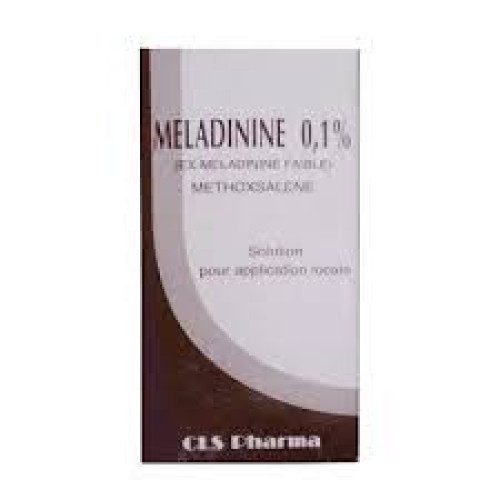
Meladinine is a high-alert prescription topical photosensitizing medication. It contains the active ingredient Methoxsalen (a naturally occurring plant compound belonging to the psoralen family) and is standardly available in concentrations such as 0.1% or 0.75% solution for local application.
Applied directly to the skin exclusively by or under the direct supervision of a dermatologist, it is used as a critical component of PUVA photochemotherapy to treat severe, localized, and stubborn skin conditions—primarily vitiligo (to induce repigmentation in white patches) and severe, recalcitrant psoriasis (such as thick plaques on the palms and soles).
Meladinine does not work like a conventional topical cream or healing ointment. It has zero therapeutic effect on its own and requires exact activation by light. It works through a highly structured, two-step medical process:
Penorates the Skin Cells: When the liquid solution is painted onto the affected skin patches, the Methoxsalen molecules soak deeply into the tissue, slipping directly into the DNA structures of hyperactive skin cells.
Activated by Ultraviolet Light: The medical team then exposes the treated skin to a highly calculated, precise dose of Ultraviolet A (UVA) light using specialized clinical lamps.
Halts Abnormal Growth (Psoriasis): The UVA light causes the Methoxsalen to form a permanent structural bond with the cell's DNA. This effectively locks the cell division chain, instantly slowing down the rapid, scaly skin cell overgrowth that forms psoriasis plaques.
Triggers Pigment Migration (Vitiligo): In vitiligo patches, this controlled light activation stimulates deep, resting pigment cells (melanocytes) in the hair follicles and surrounding tissue, encouraging them to multiply, migrate, and slowly restore your natural skin color.
🚨 Critical Clinical Warning: Meladinine makes your treated skin paths thousands of times more sensitive to light than usual. Misuse can cause catastrophic, third-degree chemical burns.
You must strictly never apply this medicine at home or use it casually for sunbathing or cosmetics.
The treated skin areas must be completely protected from any ambient daylight or sunlight (even through tinted car windows, glass doors, or on cloudy days) for at least 24 to 48 hours after treatment. Exposure to sunlight within this window can cause severe, painful blistering, deep skin tissue destruction, and permanent scarring.
Strict Clinical Supervision Only: PUVA photochemotherapy must only be performed by specialists with dedicated dermatological training. The healthcare provider applying the fluid must strictly wear protective medical gloves to prevent photosensitizing their own hands.
Contraindications: Meladinine must strictly never be used if you have a family history of skin cancer (melonoma or non-melanoma), active lupus erythematosus, porphyria, or a severe genetic allergy to sunlight.
Premature Aging and Cancer Risks: Long-term, repeated use of PUVA therapy can cause premature structural aging of the skin (similar to severe sun damage) and cumulative metrics show an increased lifetime risk of developing localized skin cancers. The skin must be inspected regularly by your specialist.
The Clinical Schedule: Treatments are standardly coordinated 2 to 3 times per week, ensuring at least 48 hours of recovery time between sessions. It should never be applied on consecutive days.
Precise Application: The clinical nurse or doctor dips a sterile swab into the Meladinine solution and carefully paints it only within the distinct borders of the vitiligo spots or psoriasis plaques.
The Absorption Window: The fluid is allowed to dry completely. Depending on the clinical protocol, the UVA light exposure is precisely timed to take place shortly after application.
Post-Treatment Washing: Immediately after the light exposure session is completed, the treated areas must be thoroughly washed with soap and cool water, then covered entirely with thick clothing or a high-protection sunscreen to block accidental light tracking.
1.Careful application to distinct skin lesions:Clinical Paint.
Under strict clinical observation, a specialist applies the solution exclusively to the affected vitiligo or psoriasis spots using protective gloves.
2.Targeted UVA light radiation session:Controlled Exposure.
The patient is exposed to a calculated, conservative dose of UVA light under a medical lamp to safely activate the methoxsalen molecules.
3.Thorough washing and 24-hour light shielding:Total Sun Block.
The treated skin is washed immediately to remove residual chemical fluid. The patient wears long clothing and wraps up to block out all ambient daylight.
Because Meladinine changes how your skin interacts with light energy, temporary localized reactions are standardly expected during a course of therapy:
Redness, warmth, or mild tenderness of the treated skin paths—similar to a mild sunburn—peaking 48 to 72 hours after light exposure.
Temporary skin itching, dryness, or a deep darkening (hyperpigmentation) of the surrounding skin borders.
Note: If you experience severe blistering, severe fluid-filled skin peeling, agonizing pain, or swelling of the limbs, you must contact your dermatologist or visit an emergency facility immediately.
How long does it take for vitiligo patches to show repigmentation?
Repigmentation is a very slow, cumulative biological process. While minor pigment spots may begin to emerge within a few weeks, significant, visible repigmentation standardly requires 6 to 9 months of continuous, un-broken clinical PUVA therapy. Results vary heavily based on the thickness of the skin tissue (the face and abdomen pigment much faster than the fingers or feet).
Can I apply standard makeup or sunscreens before my Meladinine treatment?
No. Your skin must be completely clean, dry, and free of any perfumes, cosmetics, body oils, or sunscreens before the Meladinine solution is painted on. Sunscreens will physically block the UVA rays, preventing the light from reaching the medicine and completely neutralizing the treatment. Sunscreens should only be applied after the medical light session is fully finished.
How should the container be stored safely?
Keep the glass bottle tightly capped inside its original dark carton package to shield the liquid from direct ambient light. Store the container in a cool room strictly below 25°C, entirely away from hot window ledges or direct tropical heat, and keep it completely out of the sight and reach of children.
Because Meladinine is a high-potency, restricted medical photosensitizer, it must be sourced from authentic pharmaceutical channels with verified manufacturing tracking to ensure the chemical molecules are stable and pure. To securely upload your dermatologist's medical prescription and coordinate genuine Meladinine Topical Solution (such as original 0.1% or 0.75% preparations), you can do so online through Sanlive Pharmacy & Stores. We provide verified safe clinical handling, secure payment processing, and rapid, climate-protected distribution directly to your accredited clinic or hospital facility anywhere in Nigeria.
Notice: This guide is for educational and general medication tracking support only. Meladinine Solution is a highly specialized hospital-use therapy and must never be self-administered or applied at home. If someone accidentally swallows the solution, encounters severe widespread skin blistering, severe eye pain, or signs of an acute systemic allergic reaction (like swelling of the throat and face with acute breathing distress), seek immediate emergency medical intervention right away.
No reviews yet — be the first!
Log in to write a review.