We are your trusted health partner. Local doorstep deliveries is within the hour .We are Licensed and Regulated by the Pharmacist's Council of Nigeria(PCN).Prices displayed here may differ due to inflation.
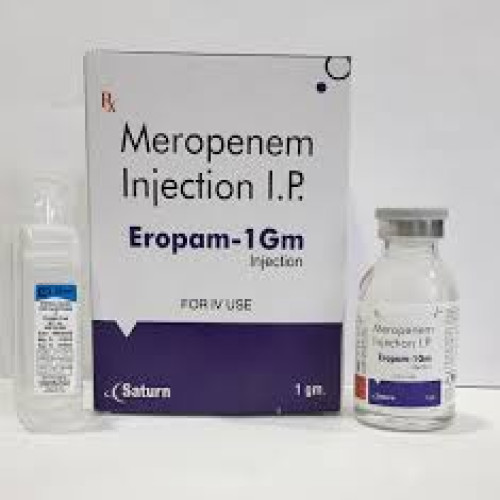
Meropenem is a prescription-only, ultra-broad-spectrum carbapenem-class antibiotic administered via intravenous (IV) infusion or injection. It is supplied as a sterile white to pale yellow powder in single-dose vials (commonly 500mg or 1g).
It is reserved for the treatment of severe or multi-drug resistant bacterial infections in hospitalized patients, including:
Severe hospital-acquired or ventilator-associated pneumonia
Complicated intra-abdominal infections (such as peritonitis or ruptured appendix)
Complicated urinary tract infections (UTIs) and pyelonephritis
Bacterial meningitis
Skin and skin structure infections and severe pelvic infections
Febrile neutropenia (empiric treatment in patients with low white blood cell counts)
Meropenem belongs to the carbapenem family, which are among the most powerful and broad-spectrum antibiotics available:
Penetrates Bacterial Walls: It easily penetrates the cell walls of a vast array of Gram-positive, Gram-negative, and anaerobic bacteria.
Inhibits Cell Wall Synthesis: It binds to essential penicillin-binding proteins (PBPs), halting peptidoglycan synthesis and causing rapid bacterial cell lysis and death.
High Beta-Lactamase Resistance: It is highly stable against most beta-lactamase enzymes that typically render penicillins and cephalosporins ineffective.
Severe Hypersensitivity: Do not use Meropenem if you have a known history of severe allergic reactions (anaphylaxis) to carbapenems, penicillins, or cephalosporins. Seek immediate emergency care if breathing difficulty or facial swelling occurs.
Neurotoxicity Risk: Seizures and other central nervous system adverse reactions have been reported during treatment with meropenem, particularly in patients with pre-existing neurological disorders (such as epilepsy) or compromised kidney function.
Renal Dose Adjustment: Dosage adjustments are strictly required for patients with renal impairment, as meropenem is eliminated primarily through the kidneys.
Route of Administration: Administered strictly via Intravenous (IV) Bolus (over 3 to 5 minutes) or Intravenous Infusion (over 15 to 30 minutes) by a trained healthcare professional.
Standard Adult Dosing:
Usual Range: 500mg to 1g every 8 hours, depending on the type and severity of the infection.
Meningitis / Severe Pseudomonal Infections: Up to 2g every 8 hours.
Reconstitution: Reconstitute sterile powder with sterile water for injection prior to further dilution with compatible IV fluids (such as 0.9% Sodium Chloride or 5% Dextrose).
Meropenem is generally well-tolerated in clinical hospital settings. Side effects may include:
Inflammation, pain, or phlebitis at the IV injection site.
Diarrhea, nausea, or vomiting.
Headache, rash, or pruritus (itching).
Temporary increases in liver enzymes or blood platelets.
Store dry powder vials at controlled room temperature below 25°C or 30°C.
Protect from light and moisture.
Once reconstituted and diluted for IV use, solutions should be used promptly according to strict hospital guidelines.
Keep strictly out of reach of children.
No. Meropenem is not absorbed effectively through the digestive tract and is manufactured exclusively as an injectable formulation for hospital or clinical administration.
Because of its unique chemical structure, meropenem remains effective against tough, hospital-acquired bacteria that have developed resistance to standard first-line antibiotics like penicillins and cephalosporins.
You can order verified, original prescription hospital medications like Meropenem Injection directly online from Sanlive Pharmacy & Stores with a valid medical prescription.
We offer fast, secure delivery across Nigeria, as well as international shipping to the UK, US, Europe, Middle East, and other parts of the world.
Notice: This guide is for simple educational information only. Meropenem is a prescription-only intravenous antibiotic and must be administered under the direct supervision of a licensed physician in a clinical setting.
No reviews yet — be the first!
Log in to write a review.