We are your trusted health partner. Local doorstep deliveries is within the hour .We are Licensed and Regulated by the Pharmacist's Council of Nigeria(PCN).Prices displayed here may differ due to inflation.
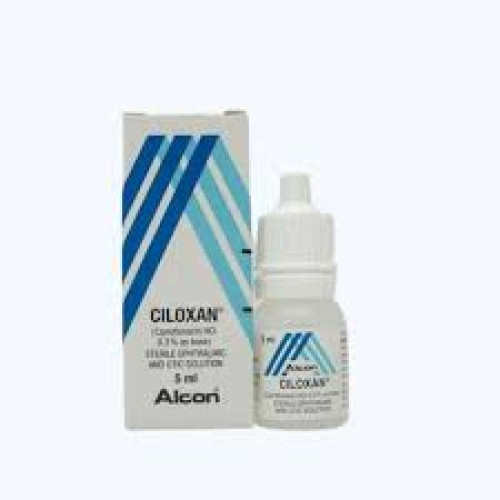
Ciloxan 0.3% is a prescription-only, high-potency antibacterial eye drop. It contains Ciprofloxacin (3mg per mL) and belongs to a class of medications called fluoroquinolone antibiotics. It is used daily to treat severe superficial bacterial infections of the eye and corneal ulcers.
Ciloxan acts directly on the genetic machinery of invading bacteria to stop the infection from spreading:
Inhibits Bacterial Enzymes: It targets and blocks two vital bacterial enzymes called DNA gyrase and topoisomerase IV.
Halts DNA Replication: Bacteria require these enzymes to untangle, copy, and repair their genetic code. By blocking them, Ciloxan completely halts bacterial DNA replication.
Rapidly Kills Pathogens: Unable to repair or replicate their DNA, the bacterial cells quickly break apart and die, rapidly clearing the eye infection.
Bacterial Conjunctivitis (Pink Eye): Treating severe superficial eye infections that cause redness, swelling, irritation, and thick yellowish discharge or crusting.
Corneal Ulcers: Managing deep, serious bacterial infections on the clear front surface of the eye (the cornea)—a critical condition that requires rapid medical attention to save vision.
Contact Lens Wearers: Do not wear contact lenses while you have an active eye infection. Furthermore, Ciloxan contains a preservative called benzalkonium chloride, which can be absorbed by soft contact lenses and discolor them or cause extra eye irritation.
Hypersensitivity: Avoid use if you have a known allergy to ciprofloxacin or any other fluoroquinolone antibiotics (such as ofloxacin, levofloxacin, or moxifloxacin).
Pregnancy and Breastfeeding: Consult your ophthalmologist or doctor before use. These drops act locally on the eye, so very little medicine enters your systemic bloodstream, but professional guidance is still recommended.
The No-Touch Law: Never let the dropper tip touch your eye, eyelid, fingers, or any other surface. The dropper tip is sterile; touching it to any surface will introduce bacteria into the bottle, contaminating the remaining fluid.
The 15-Minute Rule for Multiple Drops: If your doctor has prescribed other eye drops or ointments alongside Ciloxan, wait at least 15 minutes between applying each medication. Always apply liquid drops first and thick ointments last.
Finish the Full Window: Even if your eye looks completely clear and stops itching after 2 days, continue using the drops for the exact number of days prescribed to prevent the infection from returning.
1.Wash your hands thoroughly with soap:Hygiene.
Clean your hands with warm water and soap to prevent introducing new dirt or bacteria into the infected eye area.
2.Tilt your head back and pull down the lid:Preparation.
Tilt your head back slightly, look upward, and use your index finger to gently pull down your lower eyelid to create a small pocket.
3.Squeeze 1 drop precisely into the pocket:Application.
Hold the bottle upside down above your eye. Look up and gently squeeze the bottle to drop exactly 1 drop into the lower eyelid pocket. Do not blink or rub the eye.
4.Press the corner of your eye for 1-2 minutes:Occlusion.
Close your eye gently and press your fingertip firmly against the inside corner of your closed eye (near your nose) for 1 to 2 minutes. This stops the medicine from draining out into your nose and throat.
As your eye adjusts to the local antibiotic fluid, you may experience temporary local reactions:
A mild stinging, burning, or uncomfortable gritty sensation in the eye right after applying the drop.
Temporary blurred vision for a few minutes (avoid driving until your vision clears up completely).
The White Crystalline Residue: If you are treating a corneal ulcer, you may notice a fine white crystalline residue building up in the corner of your eye or on the ulcer. This is normal buildup from the medicine and means it is working; do not try to scrape it away.
Can I use Ciloxan eye drops in my ears if I have an ear infection?
While ciprofloxacin is used to treat ear infections, you should only use this bottle in your ears if your doctor has explicitly instructed you to do so. In general, eye drops can sometimes be used safely in ears because eye drops must meet the absolute highest standards of sterility, but ear drops can never be used in eyes.
How long can I keep a bottle of Ciloxan open before throwing it away?
Once you unscrew the cap and break the sterile seal, the bottle is exposed to air. You must safely discard the bottle 28 days (4 weeks) after opening, even if there is still liquid left inside. Write the date you opened it on the box to track it accurately.
What should I do if my eye infection does not get better after a few days?
If your eye pain worsens, if your vision begins to blur significantly, or if the redness and discharge do not show signs of improvement after 3 to 4 days of continuous use, stop using the drops and contact your eye specialist right away for a diagnostic reassessment.
To protect your vision from low-grade counterfeits or contaminated eye preparations, specialized ophthalmic solutions must be sourced directly through verified pharmaceutical networks. You can submit your prescription and buy genuine, factory-authenticated Ciloxan 0.3% Eye Drops (manufactured by Alcon) online through Sanlive Pharmacy & Stores for secure payment and fast, reliable same-day delivery directly to your home, office, or clinic within Lagos, Abuja, and Port Harcourt. We also provide nationwide delivery through our trusted logistics partners to deliver your essential eye care safely anywhere in Nigeria.
Important Notice: This information is for educational support purposes only. Ciloxan 0.3% is a potent prescription-only antibacterial eye drop. Your entire treatment course must be guided under the care of a qualified doctor or ophthalmologist. If you experience sudden extreme eye pain, swelling of the eyelids with a severe headache, sensitivity to light, or a sudden loss of vision, seek immediate emergency medical care at an eye clinic.
No reviews yet — be the first!
Log in to write a review.