We are your trusted health partner. Local doorstep deliveries is within the hour .We are Licensed and Regulated by the Pharmacist's Council of Nigeria(PCN).Prices displayed here may differ due to inflation.
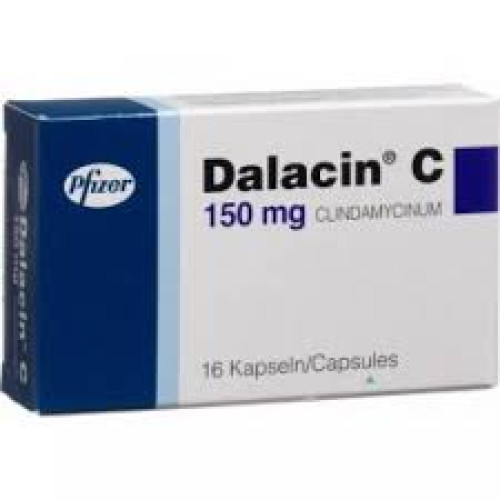
A potent prescription lincosamide antibiotic used to treat serious bacterial infections of the respiratory tract, skin, soft tissues, and teeth.
Dalacin C contains clindamycin hydrochloride (150mg) as its active ingredient. It functions as a bacteriostatic antibiotic, meaning it stops the growth and reproduction of bacteria by directly binding to the 50S subunit of the bacterial ribosome. This action completely blocks the synthesis of essential bacterial proteins.
By halting protein production, it prevents harmful anaerobic bacteria and susceptible strains of streptococci and staphylococci from multiplying, allowing your body's natural immune system to clear the remaining infection.
Serious Respiratory Infections: Treating lower respiratory tract conditions such as pneumonia, empyema, and lung abscesses.
Skin and Soft Tissue Infections: Managing severe acne, cellulitis, and abscesses caused by susceptible bacterial strains.
Dental and Oral Infections: Eradicating deep dental abscesses or bone infections (osteomyelitis) within the jaw tissue.
Intra-Abdominal and Pelvic Infections: Suppressing complicated internal bacterial flares, often used in combination with other specialized antimicrobials.
✅ Who Can Use It
Adults and pediatric patients who have been diagnosed with specific serious bacterial infections, particularly individuals who are allergic to penicillin class antibiotics.
❌ When to Avoid It
Clindamycin or Lincomycin Hypersensitivity: Completely contraindicated if you have a known history of severe allergic reactions to clindamycin, lincomycin, or any of the capsule ingredients.
History of Antibiotic-Associated Colitis: Must be completely avoided if you have a history of pseudomembranous colitis, ulcerative colitis, or regional enteritis, due to the high risk of severe intestinal microflora disruptions.
Meningitis Infections: Do not use for central nervous system infections, as clindamycin does not adequately diffuse across the blood-brain barrier into the cerebrospinal fluid.
The Schedule: Take one to three capsules (150mg to 450mg) orally every six hours, depending on the severity of the infection and your physician's exact dosage protocol.
The Complete Course Law: You must finish the entire duration of your prescribed course, even if your fever subsides or your symptoms clear up after a few days. Stopping early allows the most resilient bacteria to survive, which can lead to a recurrent, antibiotic-resistant infection.
Step-by-Step Supplementation Protocol
1.Verify your exact capsule count:Dose Verification.
Check your prescription label to ensure you are taking the exact number of 150mg capsules instructed by your doctor for your specific type of infection.
2.Swallow the capsule whole with a full glass of water:Ingestion Timing.
Take your dose with a full glass of plain water while sitting up or standing. Do not lie down for at least thirty minutes after swallowing to prevent the capsule from causing severe throat or esophageal irritation.
3.Maintain even spacing throughout the day:Interval Consistency.
Take your doses at regular, evenly spaced intervals around the clock (such as every six hours) to keep a steady concentration of the medicine in your bloodstream.
4.Watch out for significant digestive changes:Intestinal Monitoring.
Monitor your bowel movements closely during therapy and for several weeks afterward. Report any severe or persistent watery diarrhea to your healthcare team immediately.
As the clindamycin halts the spread of the bacteria, you can expect localized swelling, pain, and fever symptoms to steadily reduce over the first forty-eight to seventy-two hours. The medication works systematically to suppress the bacterial colony, paving the way for complete tissue healing.
Warning: If you experience severe, watery diarrhea that occurs multiple times a day accompanied by stomach cramps and fever, do not take anti-diarrheal medicines. Contact your doctor immediately, as this can be a sign of a serious intestinal condition called C. difficile-associated diarrhea.
Because oral antibiotics impact both harmful germs and the friendly bacterial colonies residing inside your gut, Dalacin C can occasionally trigger systemic adjustments, including:
Abdominal pain, nausea, vomiting, or mild diarrhea and loose stools.
Localized skin rashes, hives, or a transient metallic taste sensation in the mouth.
Can I take Dalacin C 150mg if I have a known allergy to Penicillin?
Yes. Dalacin C belongs to the lincosamide class of antibiotics, which is chemically distinct from penicillins and cephalosporins. It is frequently prescribed as a highly effective, safe alternative for individuals who carry verified penicillin allergies.
Does this medication need to be taken with food or on an empty stomach?
Dalacin C can be taken either with food or on an empty stomach. Clinical data shows that food does not significantly alter the absorption of clindamycin hydrochloride. The most important factor is swallowing it with a full glass of water to protect your esophagus.
What should I do if I accidentally miss a scheduled dose?
Take the missed dose as soon as you remember. However, if it is already close to the time for your next scheduled application, skip the forgotten dose completely and resume your regular six-hour schedule. Never take a double dose to make up for a missed tablet.
Where to buy Dalacin C 150mg online in Nigeria?
You can purchase authentic Dalacin C 150mg online through Sanlive Pharmacy & Stores for secure payment and fast, reliable same day delivery within Lagos, Abuja and Porthharcourt.
Important Notice: This is for informational purposes only and is not to be taken as a prescription. Consult a healthcare professional before proceeding with this medication.
No reviews yet — be the first!
Log in to write a review.