We are your trusted health partner. Local doorstep deliveries is within the hour .We are Licensed and Regulated by the Pharmacist's Council of Nigeria(PCN).Prices displayed here may differ due to inflation.
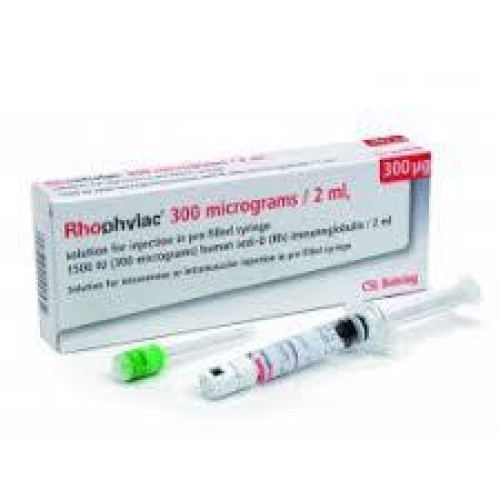
RhoGAM is a specific brand of medicine that must only be given as a shot into the muscle (intramuscularly). It must never be injected directly into a vein.
However, the main active ingredient in it—called Rho(D) Immune Globulin—is sold under other brand names (like WinRho SDF or Rhophylac) that are safe to be given through an IV directly into a vein.
When doctors give this medicine through an IV, it is used for two main reasons:
During Pregnancy: It stops an Rh-negative mother's body from attacking her baby's blood cells if the baby is Rh-positive.
For a Blood Disorder (ITP): It helps quickly raise the number of platelets (blood-clotting cells) in patients whose immune systems are mistakenly destroying them.
Rho(D) Immune Globulin consists of sterile antibodies harvested from human plasma that target the Rh factor (D antigen) on red blood cells. It works via two entirely separate biological mechanisms depending on the medical goal:
For Preventing Rh Incompatibility (Pregnancy/Transfusion): If an Rh-negative mother is carrying an Rh-positive fetus, or if an Rh-negative individual accidentally receives Rh-positive blood, the body views the foreign Rh factor as a threat and builds permanent destructive antibodies against it. Rho(D) Immune Globulin acts as a passive antibody shield. It sweeps through the bloodstream, binds to, and neutralizes the foreign Rh-positive red blood cells before the patient's own immune system can detect them. This prevents "Rh sensitization," completely protecting future pregnancies from Hemolytic Disease of the Fetus and Newborn (HDFN).
For Managing Immune Thrombocytopenia (ITP): In patients with ITP, the immune system mistakenly manufactures antibodies that target and destroy its own blood-clotting platelets inside the spleen. When administered strictly via the Intravenous (IV) route in Rh-positive patients, the Rho(D) antibodies rapidly coat the patient's own red blood cells. The predatory immune cells in the spleen become completely overwhelmed and saturated trying to clear these coated red blood cells. This "splenic distraction" successfully spares the antibody-coated platelets, causing a rapid and significant rise in peripheral platelet counts to stop dangerous bleeding.
Pregnancy Prophylaxis (Antepartum & Postpartum): Preventing antibody formation in Rh-negative women carrying an Rh-positive baby, routinely administered at 26 to 28 weeks of gestation and again within 72 hours of delivery.
Obstetric Complications and Trauma: Administered following miscarriages, ectopic pregnancies, abortions, amniocentesis, chorionic villus sampling (CVS), or blunt abdominal trauma during pregnancy where fetal-maternal bleeding might occur.
Incompatible Blood Transfusions: Suppressing the immune response in Rh-negative individuals who have been exposed to Rh-positive red blood cells or blood products.
Immune Thrombocytopenic Purpura (ITP): Intravenous treatment for non-splenectomized, Rh-positive children and adults with acute or chronic ITP (or ITP secondary to HIV infection) to safely elevate platelet counts.
The RhoGAM Brand IV Restriction: Never inject the specific brands RhoGAM® or HyperRHO® S/D intravenously. They contain structural stabilizers meant only for muscle tissues; IV injection can cause severe local complications or systemic shock. Only use explicitly labeled IV brands (WinRho SDF or Rhophylac) for a vein.
Rh-Positive Status in Pregnancy: It is strictly unnecessary and contraindicated for women who are already naturally Rh-positive, or if the father and baby are conclusively proven to be Rh-negative.
Prior IgA Deficiency: Must not be used in individuals with a known history of severe anaphylactic reactions to human immune globulins or those with selective Immunoglobulin A (IgA) deficiency who possess active antibodies against IgA.
Pre-existing Severe Anemia (For ITP Treatment): Because using this drug for ITP intentionally causes a controlled breakdown of some red blood cells to save platelets, it must be used with extreme caution or avoided if a patient already has severe baseline hemolytic anemia.
Strictly Professional Clinical Supervision Only: This medication must only be administered inside an accredited hospital ward, emergency suite, or specialized obstetric daycare unit equipped with immediate resuscitation tools.
The 72-Hour Exposure Window: Following birth, trauma, or an incompatible blood transfusion, the first dose must be administered as soon as possible and strictly within 72 hours of the exposure event to stop the immune system from initializing its own antibody cascade.
The 8-Hour Post-ITP Monitoring Law: When an approved brand is administered intravenously to treat ITP, it is infused into a suitable vein over 3 to 5 minutes. Because of the risk of sudden red blood cell breakdown, the patient must be closely monitored in the healthcare facility for at least 8 hours post-infusion, including baseline and follow-up dipstick urinalysis checks at 2, 4, and 8 hours to watch for hidden blood in the urine.
1.Confirm baseline Rh status and antibody screens:Blood Verification.
The healthcare professional verifies laboratory blood files to confirm the patient is Rh-negative (for pregnancy care) or Rh-positive with no splenectomy (for ITP care).
2.Verify the precise brand and injection route matches:Route Calibration.
The clinical team verifies the product box: if using the RhoGAM brand, it is prepared strictly for an Intramuscular (IM) injection. If a vein is being used, an approved IV brand is mixed.
3.Administer the dose and initiate the safety watch:Controlled Injection.
The medication is delivered smoothly. The patient remains resting comfortably in the clinical area for a minimum of 20 to 30 minutes (or 8 hours for IV ITP cycles) to track vital signs.
4.Delay any upcoming live viral vaccinations:Vaccine Planning.
The antibodies inside this plasma product can temporarily interfere with your body's response to live vaccines. Delay vaccines like MMR or Varicella for at least 12 weeks following the dose.
Most reactions associated with standard pregnancy prophylaxis are mild and self-limiting, though systemic updates can occur:
Redness, mild swelling, induration, or mild aching pain at the local injection site (very common with intramuscular shots).
A slight, brief elevation in body temperature (mild fever), intermittent headaches, or generalized body aches.
Intravascular Hemolysis (IVH Warning for ITP Patients): When given intravenously at high doses for ITP, patients may experience significant red blood cell destruction, resulting in shaking chills, lower back pain, dark brown or bloody urine, or a sudden decrease in urine output.
Can this injection harm my unborn baby during pregnancy?
No. While the active anti-D antibodies can technically cross the placenta in microscopic amounts, decades of clinical study and millions of administered doses have conclusively proven that standard prophylactic doses given to Rh-negative mothers do not harm the developing fetus.
What should be done if more than 72 hours have passed since delivery or trauma?
If a delivery or bleeding event occurred and the 72-hour window was missed, the medication should still be administered as soon as possible. While its clinical effectiveness decreases the longer you wait, data shows it can still provide partial immune-blocking protection even if given up to 13 to 28 days following exposure. Do not withhold the dose.
How is the exact dose calculated if there was a severe bleeding event during birth?
A standard single dose (300 mcg / 1500 IU) is scientifically calculated to neutralize up to 15 mL of fetal red blood cells (or 30 mL of whole fetal blood). If a massive maternal-fetal hemorrhage is suspected due to severe placental complications or abdominal trauma, the medical team will perform a specialized quantitative test (such as a Kleihauer-Betke test or flow cytometry) to measure the exact volume of fetal blood mixed, and will administer multiple synchronized syringes if required.
Critical maternal health therapies, blood compatibility products, and emergency immunoglobulins require absolute supply chain security, continuous temperature-controlled storage —never frozen, and rigorous batch tracking to maintain active antibody integrity. Hospital procurement officers, specialized maternity centers, and private clinical wings can securely coordinate emergency stock replenishment or patient-specific prescriptions of genuine, factory-authenticated Rho(D) Immune Globulin Injections (including premium NAFDAC-registered options) via Sanlive Pharmacy & Stores for rapid, temperature-verified, and tamper-evident delivery within Lagos, Abuja, Port Harcourt, and across Nigeria through our dedicated specialty clinical cold-chain networks.
Important Notice: This information is for educational and institutional procurement support purposes only. Rho(D) Immune Globulin is a high-potency, prescription-only plasma-derived biological product. All clinical typing, dosage calculations, and administrations must be managed under the direct physical direction of a registered Obstetrician, Gynecologist, Hematologist, or medical practitioner. If a patient experiences sudden breathing difficulties, throat tightness, severe dizziness, skin hives, or dark/bloody urine following an injection, activate emergency life-support protocols immediately.
No reviews yet — be the first!
Log in to write a review.

.jpg)