We are your trusted health partner. Local doorstep deliveries is within the hour .We are Licensed and Regulated by the Pharmacist's Council of Nigeria(PCN).Prices displayed here may differ due to inflation.
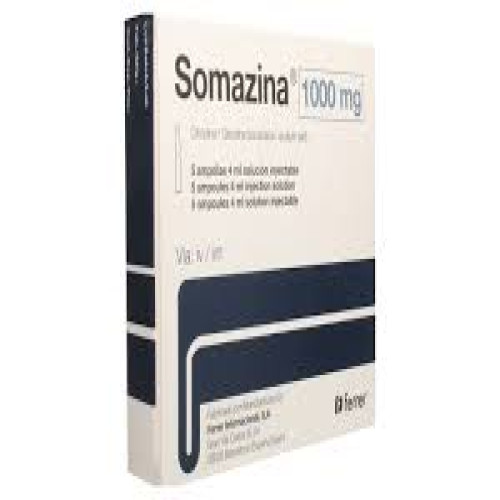
Somazina 1000mg is a prescription-only neuroprotective and psychostimulant medication. It contains Citicoline Sodium (1000mg) as a clear liquid solution inside a single-dose glass ampoule.
It is administered exclusively via an intravenous (IV) or intramuscular (IM) injection by qualified healthcare professionals. It is widely used in acute neurology settings to support brain cell repair and improve cognitive recovery following severe neurological insults, such as strokes or head trauma.
Citicoline is a naturally occurring complex biochemical that acts as a structural building block and repair kit for compromised brain tissue:
Rebuilds Brain Cell Membranes: Following a stroke or head injury, brain cell membranes degrade rapidly. Citicoline breaks down in the body into choline and cytidine, which are immediately used to synthesize phosphatidylcholine—the primary structural component of neural cell membranes. This helps repair and stabilize damaged brain cells.
Blocks Neural Destruction: It prevents the build-up of harmful free radicals and stops the breakdown of structural cell lipids, preventing the expansion of brain lesions.
Boosts Neurotransmitters: It increases the production and release of essential brain chemicals, particularly acetylcholine, which is critical for nerve-to-nerve communication, memory retention, and motor coordination.
Acute Ischemic Stroke: Used in the immediate days following a stroke (caused by a blood clot in the brain) to limit the size of the damaged area and accelerate the recovery of speech, movement, and cognitive function.
Traumatic Brain Injury (TBI): Managing severe or mild head trauma to reduce the duration and severity of post-concussion syndromes and neurological deficits.
Cognitive and Neurological Rehabilitation: Supporting recovery from neurological degradation or structural brain injuries to improve memory, alertness, and physical independence.
Hyperparasympathotonia: It must strictly not be used in individuals with hyperparasympathotonia, a rare condition characterized by excessive activity of the parasympathetic nervous system (which can cause severe low blood pressure, slow heart rates, and breathing issues).
Acute Brain Swelling: Use with caution and alongside proper intracranial pressure-lowering therapies if you have an active, severe bleeding event in the brain accompanied by dangerous swelling or high pressure inside the skull.
Pregnancy and Breastfeeding: There is insufficient data regarding the safety of citicoline in pregnant or nursing women. It should only be administered if the potential neurological benefits to the patient heavily outweigh any risks, under strict specialist direction.
Strictly Professional Clinical Use Only: Somazina 1000mg must never be self-administered. It can be delivered through two professional routes:
Intravenous (IV) Route: Injected slowly directly into a vein over 3 to 5 minutes, or diluted into a larger IV bag (like Normal Saline) and infused slowly. Slow administration is mandatory to prevent sudden changes in blood pressure.
Intramuscular (IM) Route: Injected deeply into a large muscle mass (such as the upper buttock or thigh). If repeated doses are given via IM, the injection sites must be rotated daily to prevent deep muscle soreness.
Comprehensive Care Companion: Somazina is an supportive neuroprotective agent. It is designed to be used alongside standard foundational emergency treatments (such as clot-dissolving medications, blood pressure stabilizers, and active physiotherapy).
Somazina is standardly very well tolerated, as citicoline closely mimics compounds naturally found in the body. However, rare side effects can include:
Mild digestive changes, such as stomach pain, nausea, or temporary diarrhea.
A mild, temporary drop or increase in blood pressure, which can cause brief dizziness or a flushed feeling.
A rapid or slow heartbeat, mild headaches, or temporary restlessness and insomnia.
Localized pain or minor swelling at the injection site (particularly with intramuscular shots).
How does Somazina Injection differ from Somazina Oral Solution?
Both contain the identical active drug (Citicoline) and perform the same brain-repair functions. However, the 1000mg injection is preferred in emergency hospital settings where immediate absorption is required or if the patient is unconscious or unable to swallow safely. Once the patient is stabilized and alert, specialists frequently switch them to the Somazina Oral Drop/Solution line to continue their recovery at home.
Can Somazina be mixed in the same syringe with other medications?
No. Somazina 1000mg Injection must not be mixed with other medicines in the same syringe or infusion line. Combining medications can cause structural chemical incompatibilities. If multiple IV drugs are needed, the line must be flushed with saline between injections.
How should the 1000mg ampoules be stored?
Keep your Somazina ampoules stored safely inside their original outer cardboard box to protect the glass from direct physical damage and light. Store the box in a cool room strictly below 30°C. Do not freeze the ampoules.
Specialized critical care neurology treatments require absolute supply chain integrity and climate-controlled pharmaceutical storage to protect structural molecule purity and ensure active neurological support. Institutional hospital procurement, emergency stroke unit stock replenishment, and verified batch delivery can be securely coordinated via Sanlive Pharmacy & Stores for rapid, climate-controlled, and tamper-evident delivery directly to registered hospitals, specialist stroke clinics, and accredited critical care wings within Lagos, Abuja, Port Harcourt, and nationwide via our authenticated clinical logistics networks.
Important Notice: This information is for educational and institutional procurement support purposes only. Somazina 1000mg is a high-potency, prescription-only critical care neurology medication. All clinical mixing, dose intervals, and administrations must be managed exclusively under the direct physical supervision of a registered Consultant Neurologist, Physician, or qualified practitioner. If a patient shows signs of an immediate severe allergic reaction, sudden extreme breathing difficulties, or severe changes in consciousness during administration, activate emergency medical protocols immediately.
No reviews yet — be the first!
Log in to write a review.

.jpg)