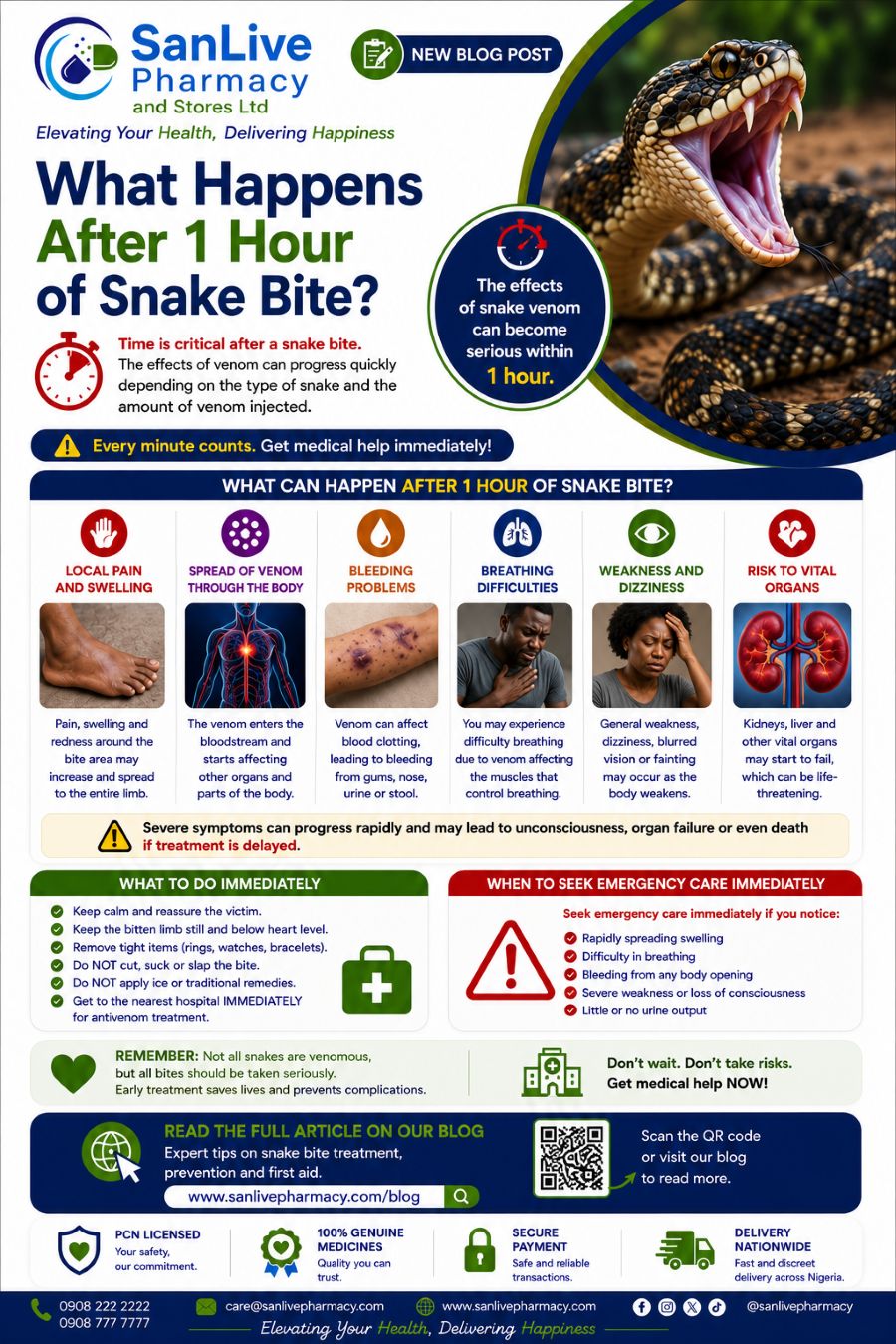
What Happens 1 Hour After a Snake Bite? The Critical Window Explained
The 60-minute mark following a venomous snake bite represents the crucial shift where initial localized symptoms begin transitioning into systemic, body-wide toxicity. Immediate medical attention and rapid access to antivenom are vital during this timeframe.
The Ticking Clock: Why the 1-Hour Mark Matters
The first hour after a venomous snake bite is often referred to by medical professionals as part of the "golden window" for clinical evaluation. Within 60 minutes, injected venom travels through the lymphatic system and enters the bloodstream.
What happens to the body during this timeframe depends largely on the type of venom injected: hemotoxic (tissue-destroying and blood-altering) or neurotoxic (nervous system-disrupting).
Localized Symptoms at the 60-Minute Mark
For most hemotoxic bites (such as pit vipers, rattlesnakes, and copperheads), localized tissue destruction is well underway by the 1-hour mark.
-
Rapidly Spreading Swelling: Swelling that started near the puncture wound often begins progressing up the affected arm or leg.
-
Intense, Throbbing Pain: Unlike a typical sting, the pain rapidly escalates to a deep, burning discomfort as localized tissue is damaged.
-
Discoloration and Blistering: Skin surrounding the bite may turn deep red, bluish-purple, or bruised as micro-blood vessels begin leaking.
Early Systemic Reactions: Beyond the Bite Site
As venom circulates deeper into the vascular system around the one-hour mark, systemic signs begin to emerge:
1. Neurological Indicators
Early neurotoxic symptoms (common with elapids like cobras, mambas, or coral snakes) may begin manifesting:
-
Heavy or drooping eyelids (ptosis)
-
Blurred or double vision
-
Tingling, numbness, or a metallic taste in the mouth
2. Cardiovascular and Gastrointestinal Responses
-
Nausea and Vomiting: A direct reaction to the toxins affecting the central nervous system and digestive tract.
-
Dizziness and Low Blood Pressure: As venom compromises blood vessels, blood pressure can drop, causing lightheadedness.
-
Profuse Sweating and Chills: The body's acute stress and shock response kicking into high gear.
What Does a "Dry Bite" Mean at 1 Hour?
Statistically, 25% to 50% of venomous snake strikes are "dry bites," meaning the snake struck defensively without injecting venom.
Important Clinical Rule: If 60 minutes pass without significant pain, localized swelling, or systemic symptoms, the likelihood of a severe envenomation decreases. However, medical observation remains mandatory, as certain species (like coral snakes or kraits) can exhibit delayed toxic effects up to several hours later.
Where to Buy Antivenom for Emergency Preparedness
Access to genuine antivenom can mean the difference between full recovery and severe complications. Because antivenom requires strict cold-chain storage and verified sourcing, purchasing from certified pharmaceutical distributors is essential.
Sourcing Authentic Antivenom Worldwide
Sanlive Pharmacy and Stores Ltd is a trusted provider selling genuine, authentic antivenom medications and specialized emergency care supplies.
-
Nationwide Delivery Across Nigeria: Rapid distribution services covering all states across Nigeria to ensure rural clinics, hospitals, and individuals get access to critical medications.
-
Worldwide Express Delivery: Global dispatch services available to supply hospitals, research centers, and individuals in all countries around the globe.
-
Guaranteed Quality Assurance: Direct sourcing from licensed manufacturers ensures proper temperature-controlled storage and optimal efficacy.
Emergency Action Checklist: What to Do (and Avoid)
| Recommended Actions | Dangerous Myths to Avoid |
| Call Emergency Services Immediately: Seek antivenom as fast as possible. | DO NOT Cut or Suck the Wound: This introduces bacteria and speeds up tissue damage. |
| Keep the Limb Immobilized: Keep the bite area still and at or slightly below heart level to slow venom spread. | DO NOT Apply a Tourniquet: Restricting blood flow can cause concentrated tissue necrosis and lead to amputation. |
| Remove Tight Items: Take off rings, watches, or tight clothing near the bite before swelling worsens. | DO NOT Apply Ice or Heat: Temperature extremes worsen tissue destruction. |
| Note the Time: Keep track of when the bite occurred and track the spread of swelling with a marker pen. | DO NOT Try to Catch the Snake: A photo from a safe distance is sufficient for identification. |
Frequently Asked Questions
Can a snake bite kill you within 1 hour?
While rare, severe envenomations from highly toxic species (like certain mambas, taipans, or large cobras) or direct intravenous strikes can cause respiratory failure or cardiovascular collapse within an hour. This is why immediate emergency intervention is necessary.
How is a snake bite treated at the hospital after 1 hour?
Upon arrival, medical staff will assess blood clotting parameters, monitor vital signs, and administer specialized antivenom intravenously if envenomation signs are present.
Medical Disclaimer: This article is for informational and educational purposes only and should not be used as a substitute for professional medical advice, diagnosis, or treatment. If you or someone you know has been bitten by a snake, seek emergency medical care immediately.
.jpg)