
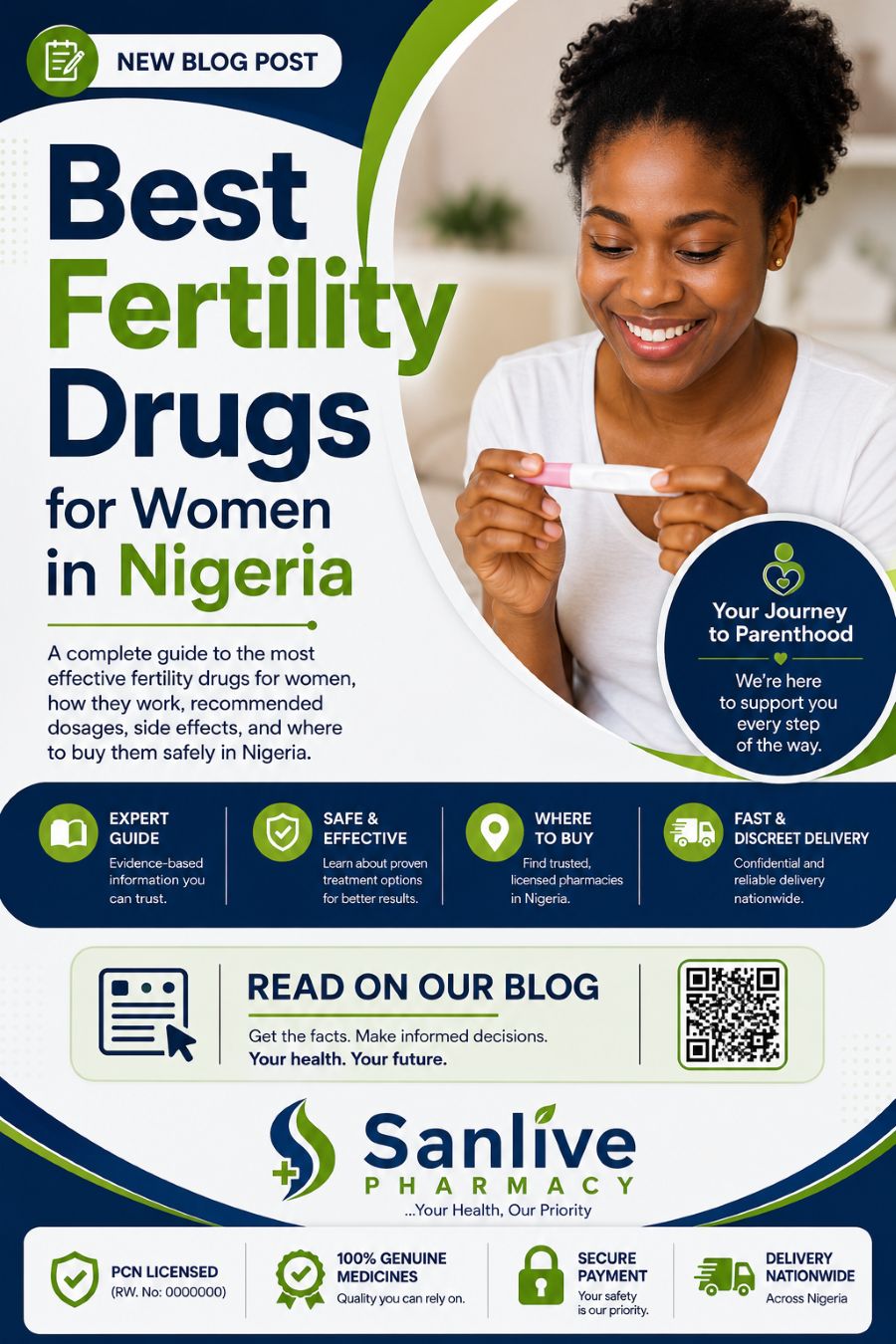
Best Fertility Drugs for Women in Nigeria: How They Work, Dosages & Where to Buy (2026)
The most effective fertility drugs for women available in Nigeria include Clomiphene Citrate (Clomid), Letrozole (Femara), Gonadotropins (FSH injections), Progesterone supplements, and Metformin for PCOS-related infertility. This guide covers how each one works, correct dosages, who they are best for, safety warnings, and where to buy genuine versions safely in Nigeria — including fast international delivery in 3 to 4 days for Nigerians in the diaspora.
What Causes Female Infertility?
Female infertility is more common than many people openly discuss. It is defined as the inability to conceive after 12 months of regular unprotected sex. In Nigeria, the most common causes include:
- Polycystic Ovary Syndrome (PCOS) — the leading hormonal cause of infertility in Nigerian women
- Irregular or absent ovulation — meaning eggs are not being released consistently
- Blocked or damaged fallopian tubes — often caused by past pelvic infections or untreated STIs
- Uterine fibroids or polyps — very common in Nigerian women and capable of preventing implantation
- Hormonal imbalances — including low progesterone, high prolactin, or thyroid disorders
- Unexplained infertility — where no specific cause is found despite testing
Fertility drugs primarily address ovulation-related infertility. They work by stimulating or regulating your hormones so your body produces and releases eggs more reliably.
If you are unsure where to start, speak with a Sanlive pharmacist online for guidance before buying any fertility medication.
What are the Best Fertility Drugs for Women in Nigeria?
1. Clomiphene Citrate (Clomid) — Best First-Line Fertility Drug
Clomiphene Citrate, sold under the brand name Clomid, is the most widely prescribed and most affordable fertility drug for women in Nigeria. It is the first medication most doctors recommend when a woman is struggling to ovulate.
How it works: Clomid tricks your brain into thinking estrogen levels are low, causing your body to produce more FSH (Follicle Stimulating Hormone) and LH (Luteinizing Hormone). This stimulates your ovaries to develop and release eggs.
Who it is best for:
- Women with PCOS
- Women with irregular periods or absent ovulation
- Women with unexplained infertility
- Women trying to conceive for the first time with medical support
Dosage:
- Standard starting dose: 50mg per day for 5 days, typically taken on Day 3, 4, or 5 of your menstrual cycle
- If ovulation does not occur, the dose may be increased to 100mg per day for 5 days in the next cycle
- Maximum recommended dose: 150mg per day
- Should not be used for more than 6 consecutive cycles
Success Rate: Studies show Clomid induces ovulation in approximately 70 to 80 percent of women who use it correctly.
Common Side Effects: Hot flashes, mood swings, bloating, breast tenderness, and occasional vision changes. If you experience vision disturbances, stop immediately and seek medical advice.
Nigeria Availability: Widely available but quality varies significantly between sources. Counterfeit Clomid is a known problem in Nigerian markets.
✅ Order genuine Clomiphene Citrate (Clomid) on Sanlive Pharmacy — NAFDAC-compliant, properly stored, and delivered discreetly across Nigeria and internationally within 3 to 4 days.
2. Letrozole (Femara) — Best for Women with PCOS
Letrozole was originally developed as a breast cancer drug but is now widely used — and in many studies proven more effective than Clomid — as a fertility treatment, particularly for women with PCOS.
How it works: Letrozole temporarily lowers estrogen levels, which triggers your brain to release more FSH. This stimulates follicle development and ovulation. Unlike Clomid, Letrozole clears your system quickly, meaning it has fewer effects on your uterine lining.
Who it is best for:
- Women with PCOS who did not respond to Clomid
- Women who want a shorter window of drug exposure
- Women with a thin uterine lining on Clomid
- Women who experienced too many side effects on Clomid
Dosage:
- Standard starting dose: 2.5mg per day for 5 days, taken from Day 3 to Day 7 of your cycle
- Can be increased to 5mg or 7.5mg if ovulation does not occur
- Used in cycles monitored by ultrasound for best results
Common Side Effects: Fatigue, dizziness, hot flashes, and joint pain. Generally better tolerated than Clomid.
Nigeria Availability: Available through specialist pharmacies and verified online dispensaries. Less commonly found in standard retail pharmacies.
✅ Order genuine Letrozole (Femara) on Sanlive Pharmacy — sourced from verified pharmaceutical manufacturers and delivered discreetly to your door in Nigeria or abroad within 3 to 4 days.
3. Gonadotropins (FSH and LH Injections) — Best for Assisted Conception
Gonadotropins are injectable fertility hormones that directly stimulate the ovaries to produce multiple follicles. They are typically used when oral medications like Clomid and Letrozole have not worked, or as part of IVF and IUI treatment cycles.
Types available:
- FSH alone (e.g., Gonal-F, Follistim, Puregon)
- FSH + LH combination (e.g., Menopur, Pergonal)
- hCG trigger shots (e.g., Ovidrel, Pregnyl) — used to trigger the final release of eggs
How it works: These injections directly deliver the hormones your ovaries need to develop mature follicles, bypassing the brain's natural signaling process entirely.
Who it is best for:
- Women who did not respond to Clomid or Letrozole
- Women undergoing IUI or IVF
- Women with hypothalamic amenorrhea (absent periods due to low body weight or stress)
Dosage: Highly individualized. Must be prescribed and monitored by a fertility specialist with regular ultrasound scans to avoid ovarian hyperstimulation syndrome (OHSS).
Important Warning: Gonadotropins significantly increase the risk of multiple pregnancies (twins, triplets) and ovarian hyperstimulation. They should never be self-administered without medical supervision.
✅ View gonadotropin options available on Sanlive Pharmacy and speak with a pharmacist about the right protocol for your treatment cycle.
4. Progesterone Supplements — Best for Luteal Phase Support
Progesterone is the hormone responsible for preparing and maintaining the uterine lining after ovulation so a fertilized egg can implant and grow. Many women who struggle to maintain early pregnancies have low progesterone — a condition called luteal phase defect.
Forms available:
- Oral capsules (e.g., Utrogestan, Prometrium)
- Vaginal pessaries or gel (e.g., Cyclogest, Crinone)
- Intramuscular injections (used during IVF cycles)
How it works: Supplements the body's natural progesterone to support implantation and reduce the risk of early miscarriage.
Who it is best for:
- Women with a history of recurrent early miscarriages
- Women with short luteal phases (less than 10 days between ovulation and period)
- Women undergoing IVF or IUI
- Women taking Clomid or Letrozole who need luteal support
Dosage:
- Oral: 100mg to 200mg twice daily from ovulation until confirmed pregnancy or period
- Vaginal: 400mg once or twice daily — often preferred as it delivers progesterone directly where needed
Nigeria Availability: Available in most Nigerian pharmacies but quality and storage conditions vary. Vaginal formulations are harder to find locally.
✅ Order Progesterone supplements on Sanlive Pharmacy — oral and vaginal formulations available, delivered discreetly in Nigeria and to diaspora customers within 3 to 4 days.
5. Metformin — Best for PCOS and Insulin Resistance
Metformin is a diabetes drug widely used in fertility treatment for women with PCOS because PCOS is closely linked to insulin resistance. By improving how the body handles insulin, Metformin helps regulate hormones and restore regular ovulation.
How it works: Reduces insulin levels in the blood, which lowers androgen (male hormone) production in the ovaries, helping to restore a normal hormonal environment for ovulation.
Who it is best for:
- Women with PCOS and irregular periods
- Women with PCOS who are overweight or showing signs of insulin resistance
- Women who are not responding to Clomid alone (Metformin is often combined with Clomid for better results)
Dosage:
- Starting dose: 500mg once daily with meals to reduce stomach upset
- Gradually increased to 500mg two to three times daily over several weeks
- Maximum dose in fertility treatment: 1500mg to 2000mg per day
Common Side Effects: Nausea, stomach upset, and diarrhea — especially in the first few weeks. Taking it with food significantly reduces these effects.
Nigeria Availability: Widely available across Nigeria as it is a common diabetes medication. However, genuine pharmaceutical-grade versions matter for consistent results.
✅ Order Metformin on Sanlive Pharmacy — pharmaceutical grade, properly stored, and delivered to your address in Nigeria or internationally within 3 to 4 days.
Fertility Drug Comparison Table
| Drug | Brand Name | Best For | How Taken | Starting Dose | Nigeria Availability |
|---|---|---|---|---|---|
| Clomiphene | Clomid | Ovulation induction, PCOS | Oral tablet | 50mg for 5 days | Order on Sanlive |
| Letrozole | Femara | PCOS, thin uterine lining | Oral tablet | 2.5mg for 5 days | Order on Sanlive |
| Gonadotropins | Gonal-F, Menopur | IVF, IUI, failed oral meds | Injection | Specialist prescribed | View on Sanlive |
| Progesterone | Utrogestan, Cyclogest | Luteal support, miscarriage prevention | Oral or vaginal | 100–200mg daily | Order on Sanlive |
| Metformin | Glucophage | PCOS, insulin resistance | Oral tablet | 500mg daily | Order on Sanlive |
What is the Difference Between Clomid and Letrozole?
This is the most commonly asked question by Nigerian women starting fertility treatment. Here is a clear comparison:
| Feature | Clomiphene (Clomid) | Letrozole (Femara) |
|---|---|---|
| How it works | Blocks estrogen receptors | Lowers estrogen temporarily |
| Effect on uterine lining | Can thin the lining | Preserves uterine lining better |
| Best for | General ovulation issues | PCOS specifically |
| Stays in the body | Up to 7 weeks | Clears within days |
| Side effects | More pronounced | Generally milder |
| Success rate in PCOS | Good | Slightly higher in PCOS |
Not sure which is right for you? Speak with a Sanlive pharmacist for personalized guidance at no cost.
Critical Safety Warnings for Fertility Drugs
- Never self-medicate with fertility drugs without proper diagnosis. Taking ovulation drugs when you already ovulate normally can cause dangerous ovarian hyperstimulation.
- Ovarian Hyperstimulation Syndrome (OHSS) is a serious complication of gonadotropin use. Symptoms include severe bloating, abdominal pain, nausea, and shortness of breath. Seek emergency care immediately if these occur.
- Multiple pregnancy risk is higher with all fertility drugs. Discuss this with your doctor before starting treatment.
- Do not combine fertility drugs without medical supervision.
- Women with blocked fallopian tubes, premature ovarian failure, or uterine abnormalities will not benefit from ovulation drugs alone and need specialist intervention.
Can I Buy Fertility Drugs Without a Prescription in Nigeria?
Many fertility drugs including Clomid and Metformin are sold across pharmacy counters in Nigeria without a prescription. While this makes them accessible, it also means many women are using them without a proper diagnosis — which can delay real treatment and cause harm.
The smarter approach is to get at least a basic hormonal assessment before starting any fertility drug. At Sanlive Pharmacy, you can speak with a licensed pharmacist online who can review your symptoms and point you toward the right medication and dosage for your situation.
Where to Buy Genuine Fertility Drugs Safely in Nigeria
Fake and substandard fertility medications are a serious problem in Nigeria. Counterfeit Clomid in particular is widely reported, with many products containing incorrect doses or no active ingredient at all — meaning women go through entire treatment cycles with zero effect.
How to protect yourself:
- Buy only from NAFDAC-registered pharmacies
- Verify NAFDAC registration numbers on all packaging
- Avoid open market purchases, roadside pharmacies, and unverified Instagram vendors
- Use a trusted online pharmacy with verifiable credentials
Sanlive Pharmacy stocks only verified, pharmaceutical-grade fertility medications sourced directly from licensed manufacturers. Every order is packaged discreetly in plain, unbranded packaging to fully protect your privacy — because we understand how personal this journey is.
Nigerians in the Diaspora — You Can Order Too
If you are a Nigerian woman living in the UK, USA, Canada, Australia, Europe, or the Middle East and you want access to trusted fertility medications, Sanlive Pharmacy ships internationally.
- Delivery time: 3 to 4 days to most international destinations
- Packaging: Plain, discreet, and unbranded — no indication of contents on the outside
- Payment: Secure international payment options available
- Support: Speak with a Sanlive pharmacist before ordering if you need help choosing the right drug and dosage
Whether you are in London, Houston, Toronto, Dubai, or Melbourne — you can order your fertility medication from Sanlive Pharmacy and receive it within 3 to 4 days, just like any customer ordering locally in Nigeria.
Frequently Asked Questions
How long does it take for fertility drugs to work? Most women see results within 3 to 6 treatment cycles. Clomid and Letrozole are taken for just 5 days per cycle, and ovulation usually occurs 5 to 10 days after the last tablet. If pregnancy does not occur after 6 cycles, further investigation is recommended. Speak with a Sanlive pharmacist if you are not seeing results.
Can I take Clomid without seeing a doctor in Nigeria? Technically yes, as it is sold over the counter in many Nigerian pharmacies. However, taking it without a diagnosis is risky. Clomid only works if your infertility is ovulation-related. Sanlive Pharmacy offers online pharmacist consultations to help you determine if Clomid is right for you before you order.
What happens if I take fertility drugs and I am already ovulating? Taking ovulation stimulants when you already ovulate normally can lead to ovarian hyperstimulation, multiple follicles, and increased risk of twins or triplets. This is why a proper diagnosis matters before starting any fertility drug.
Can fertility drugs cause twins in Nigeria? Yes. Clomid increases the chance of twins to approximately 8 to 10 percent compared to the natural rate of about 1 to 2 percent. Gonadotropins carry an even higher risk. This is something to discuss with your doctor before starting treatment.
What is the best fertility drug for PCOS in Nigeria? Research increasingly supports Letrozole as the most effective first-line drug for women with PCOS, slightly outperforming Clomid in clinical trials. Many doctors now combine Letrozole with Metformin for even better results in PCOS patients. Order both on Sanlive Pharmacy with a pharmacist consultation included.
Are there natural ways to boost fertility alongside medication? Yes. Maintaining a healthy weight, reducing stress, avoiding smoking and alcohol, taking folic acid daily, and managing underlying conditions like thyroid disorders and diabetes all improve the effectiveness of fertility drugs.
Can diaspora Nigerians order fertility drugs from Sanlive Pharmacy? Absolutely. Sanlive Pharmacy ships to the UK, USA, Canada, Australia, Europe, and the Middle East with delivery in 3 to 4 days. All orders arrive in plain, discreet packaging with no indication of contents on the outside.
How much do fertility drugs cost in Nigeria? Clomid and Metformin are the most affordable options, with Clomid available from as little as a few hundred naira per tablet at verified pharmacies. Letrozole is slightly more expensive. Gonadotropin injections are the most costly. Check current prices on Sanlive Pharmacy for the most up-to-date rates.
Ready to Start Your Fertility Journey?
You deserve accurate information, genuine medication, and compassionate support — not guesswork.
- 🔵 Browse all women's fertility medications on Sanlive Pharmacy
- 🔵 Order Clomiphene Citrate (Clomid)
- 🔵 Order Letrozole (Femara)
- 🔵 Order Progesterone Supplements
- 🔵 Order Metformin
- 🔵 View Fertility Injection Options
- 🔵 Speak with a Sanlive Pharmacist for Free
Always consult a licensed healthcare professional before starting any fertility medication. This content is for informational purposes only and does not replace medical advice or fertility specialist evaluation. Sanlive Pharmacy operates in compliance with NAFDAC regulations and international pharmaceutical standards.


.jpg)