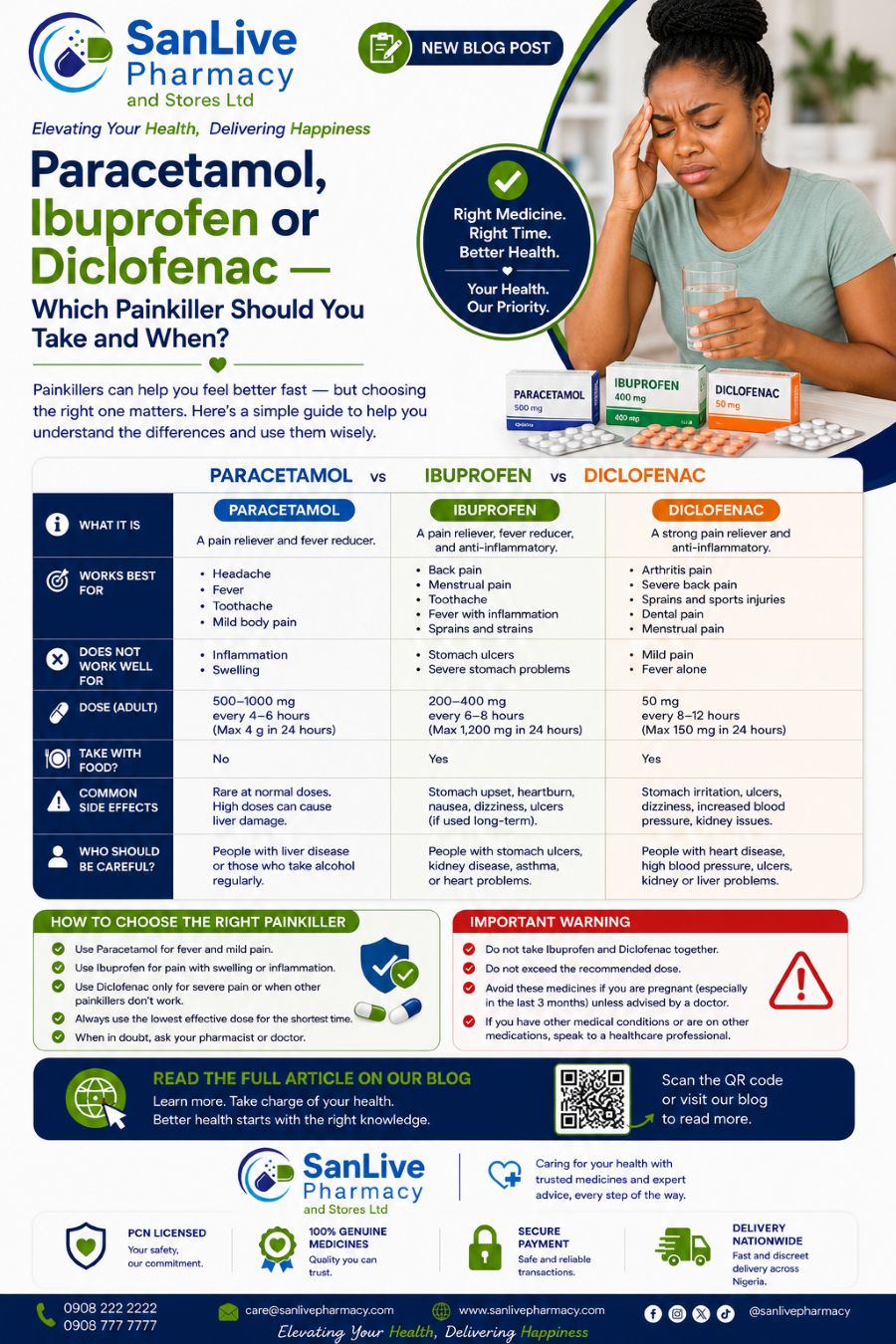
Paracetamol, Ibuprofen or Diclofenac — Which Painkiller Should You Take and When? (2026)
You have a headache. Or a toothache. Or your back is killing you after a long day. You walk to the medicine cabinet — or into a pharmacy — and you are faced with a choice that most Nigerians make every day without fully understanding the difference: paracetamol, ibuprofen, or diclofenac?
All three relieve pain. All three are widely available across Nigeria. All three are taken casually and often incorrectly — sometimes in combinations that can seriously damage the kidneys, stomach, and liver. And yet the differences between them are clinically significant and genuinely matter for your safety.
This guide explains exactly what each painkiller does, when to use each one, when to avoid them, the dangerous combinations to know, and how to make the safest choice for your specific situation — every time.
If you need painkillers or want personalised guidance on which option is right for your health profile, speak with a SanLive pharmacist for free — available online, nationwide and internationally.
Understanding How Painkillers Work — the Basics
Before comparing the three, it helps to understand how pain relief medications work in the body.
Pain is produced when damaged or inflamed tissue releases chemical signals — particularly prostaglandins — that sensitise pain receptors and trigger the sensation of pain. Different painkillers interrupt this process through different mechanisms, which is why they are suited to different types of pain and different clinical situations.
Paracetamol works primarily in the brain and central nervous system, reducing the perception of pain and lowering fever. It has minimal anti-inflammatory effect in peripheral tissue.
Ibuprofen and diclofenac both belong to a class of medications called Non-Steroidal Anti-Inflammatory Drugs (NSAIDs). They work by blocking enzymes called COX-1 and COX-2, which are responsible for producing prostaglandins. By blocking prostaglandin production, NSAIDs reduce pain, inflammation, and fever simultaneously. This makes them more powerful than paracetamol for inflammatory pain — but also gives them a more significant side effect profile.
Paracetamol — What It Is, When to Use It, and When to Avoid It
What Is Paracetamol?
Paracetamol — known as acetaminophen in North America — is the most widely used painkiller and fever reducer in the world. It is the first-line recommendation for mild to moderate pain and fever by the World Health Organization, and it is the safest painkiller available for the broadest range of patients when used correctly.
What Is Paracetamol Best For?
Paracetamol is best suited for headaches and migraines; fever in adults and children; mild to moderate general body pain; toothache without significant gum swelling or infection; post-vaccination fever and discomfort; pain management during pregnancy — it is the only painkiller considered safe throughout all three trimesters when used at recommended doses; pain and fever in children — paracetamol is the painkiller of choice for children under 12; and post-operative pain as part of a multimodal pain management plan.
Standard Dosage
For adults, the standard dose is 500mg to 1000mg every 4 to 6 hours as needed, with a maximum of 4000mg (4g) per day — never exceeding 8 tablets of 500mg in 24 hours. For children, dosing is strictly weight-based — always follow the dosing guide on the packaging or ask a SanLive pharmacist for guidance.
When to Avoid Paracetamol
Paracetamol is processed exclusively by the liver. While it is very safe at recommended doses, it becomes dangerous — potentially causing fatal liver failure — when taken in excess. Avoid exceeding the maximum daily dose under any circumstances. Use with extreme caution if you have liver disease, hepatitis, or cirrhosis. Be careful if you drink alcohol heavily or regularly — combining paracetamol with chronic alcohol use dramatically increases liver toxicity risk. Watch for hidden paracetamol in combination cold, flu, and multisymptom products — many Nigerians accidentally double-dose by taking paracetamol alongside combination products that also contain it.
Key Facts About Paracetamol
Paracetamol does not reduce inflammation. It relieves pain and fever but has no meaningful effect on the underlying inflammatory process. For inflammatory conditions — arthritis, tendinitis, gout, menstrual cramps, dental abscess swelling — an NSAID is more appropriate.
✅ Order paracetamol on SanLive Pharmacy — genuine, NAFDAC-approved, delivered across Nigeria and internationally within 3 to 4 days.
Ibuprofen — What It Is, When to Use It, and When to Avoid It
What Is Ibuprofen?
Ibuprofen is the most commonly used NSAID in Nigeria and globally. It relieves pain, reduces inflammation, and lowers fever — making it more versatile than paracetamol for conditions where inflammation is a significant component of the pain.
What Is Ibuprofen Best For?
Ibuprofen is best suited for menstrual pain and dysmenorrhoea — one of its most effective and evidence-backed uses; dental pain with swelling and infection; headaches and migraines; muscle pain and sports injuries; mild arthritis and joint pain; back pain with an inflammatory component; fever that has not responded adequately to paracetamol; and soft tissue injuries including sprains and strains.
Standard Dosage
For adults, the standard dose is 200mg to 400mg every 6 to 8 hours with food, with a maximum of 1200mg per day for over-the-counter use and up to 2400mg per day under medical supervision. Always take ibuprofen with food or milk to protect the stomach lining.
When to Avoid Ibuprofen
Ibuprofen carries a more significant side effect profile than paracetamol and must be used with caution or avoided entirely in certain situations.
Avoid ibuprofen if you have a history of peptic ulcer disease, gastritis, or gastrointestinal bleeding — NSAIDs inhibit the protective prostaglandins that maintain the stomach lining, dramatically increasing ulcer and bleeding risk.
Avoid during pregnancy — particularly in the third trimester, where ibuprofen is associated with premature closure of the ductus arteriosus (a critical fetal blood vessel) and impaired kidney development. It is also best avoided in the first trimester where possible.
Use with caution in kidney disease — NSAIDs reduce blood flow to the kidneys and can precipitate acute kidney injury, particularly in patients who are dehydrated, elderly, or already have impaired kidney function.
Avoid in patients with heart failure or severe cardiovascular disease — NSAIDs cause fluid retention and can worsen heart failure and raise blood pressure.
Avoid combining ibuprofen with ACE inhibitors or ARBs (common blood pressure medications like lisinopril, enalapril, or losartan) — this combination significantly increases kidney injury risk and is one of the most dangerous and most common drug interaction errors in Nigeria.
Avoid combining ibuprofen with aspirin for pain relief — using two NSAIDs simultaneously provides no additional benefit but doubles the gastrointestinal and renal risk.
✅ Order ibuprofen on SanLive Pharmacy — delivered across Nigeria and internationally within 3 to 4 days. Speak with a SanLive pharmacist if you are unsure whether ibuprofen is safe for your health profile.
Diclofenac — What It Is, When to Use It, and When to Avoid It
What Is Diclofenac?
Diclofenac is a more potent NSAID than ibuprofen, with stronger anti-inflammatory action and a longer duration of effect. It is available in Nigeria in multiple forms — oral tablets, suppositories, intramuscular injections, and topical gels — making it one of the most versatile pain management options available. It is widely used in Nigerian hospitals, clinics, and pharmacies and is one of the most commonly self-prescribed medications in the country.
What Is Diclofenac Best For?
Diclofenac is best suited for moderate to severe musculoskeletal pain — back pain, neck pain, shoulder pain; acute gout attacks; osteoarthritis and rheumatoid arthritis; post-operative pain; dental pain with significant inflammation; renal colic — kidney stone pain, where diclofenac injection or suppository is a first-line hospital treatment; sports injuries and soft tissue trauma; and dysmenorrhoea (painful periods) where ibuprofen has been insufficient.
Topical diclofenac gel is particularly valuable for localised joint or muscle pain — it delivers anti-inflammatory effect directly to the affected area with significantly less systemic absorption and therefore fewer systemic side effects than oral diclofenac.
Standard Dosage
For oral tablets, the standard dose is 50mg two to three times daily with food, with a maximum of 150mg per day. Sustained-release formulations at 75mg or 100mg are taken once or twice daily. Topical gel is applied two to four times daily to the affected area. Injection (75mg/3ml) is given intramuscularly in acute severe pain — typically in a clinical setting.
When to Avoid Diclofenac
Diclofenac carries all the same contraindications as ibuprofen but with some additional concerns.
Cardiovascular risk — diclofenac has a higher cardiovascular risk profile than other NSAIDs, including ibuprofen. Multiple large studies have found that diclofenac increases the risk of heart attack and stroke more than other commonly used NSAIDs. Patients with established cardiovascular disease, uncontrolled hypertension, or significant cardiovascular risk factors should use diclofenac with particular caution and only under medical guidance.
Gastrointestinal risk — same as ibuprofen but at higher doses, the gastrointestinal risk including ulceration and bleeding is significant. Always take oral diclofenac with food. Consider co-prescribing a proton pump inhibitor (omeprazole, pantoprazole) if long-term use is needed.
Kidney and liver effects — diclofenac is metabolised by the liver and excreted by the kidneys. It should be used with caution or avoided in patients with liver or kidney impairment.
Diclofenac injection overuse — diclofenac injection is one of the most frequently misused medications in Nigerian healthcare settings, administered for conditions that would respond adequately to oral medication or paracetamol. Repeated intramuscular injections cause injection site damage and carry unnecessary systemic risk. Injection should be reserved for acute severe pain in clinical settings.
✅ Order diclofenac tablets and topical gel on SanLive Pharmacy — delivered across Nigeria and internationally within 3 to 4 days. Always consult a pharmacist before starting diclofenac if you have cardiovascular, kidney, or gastrointestinal concerns.
Head-to-Head Comparison — Paracetamol vs Ibuprofen vs Diclofenac
| Feature | Paracetamol | Ibuprofen | Diclofenac |
|---|---|---|---|
| Drug class | Analgesic/antipyretic | NSAID | NSAID |
| Reduces pain | Yes | Yes | Yes |
| Reduces fever | Yes | Yes | Yes |
| Reduces inflammation | No | Yes | Yes (more potent) |
| Safe in pregnancy | Yes (at recommended doses) | Avoid (especially 3rd trimester) | Avoid |
| Safe for children | Yes (weight-based dosing) | From 3 months (with guidance) | Not recommended under 14 |
| Safe with stomach ulcer | Generally yes | No | No |
| Safe in kidney disease | Generally yes (mild-moderate) | Use with caution | Use with caution |
| Safe with antihypertensives | Generally yes | Caution with ACE inhibitors/ARBs | Caution with ACE inhibitors/ARBs |
| Cardiovascular risk | Minimal | Moderate | Higher than ibuprofen |
| Available as topical | No | Yes | Yes — gel widely available |
| Maximum daily dose (adult) | 4000mg | 1200mg (OTC) | 150mg |
| Take with food? | Not required | Always | Always |
Which Painkiller for Which Condition? A Practical Guide
Headache and Migraine
First choice: Paracetamol 500mg to 1000mg for simple tension headaches. Ibuprofen 400mg is often more effective for migraines given its anti-inflammatory mechanism. If neither works alone, a combination of paracetamol and ibuprofen taken together (not combined in one tablet but taken simultaneously) can provide greater relief than either alone — this combination is safe in adults without contraindications to either drug.
Toothache
First choice: Ibuprofen 400mg with food — dental pain almost always has an inflammatory component and NSAIDs consistently outperform paracetamol for dental analgesia. Diclofenac 50mg is an alternative for more severe dental pain. Paracetamol can be added alongside ibuprofen for enhanced effect. Note: painkillers treat the symptom — dental infection requires professional dental treatment and likely antibiotics.
Menstrual Pain (Dysmenorrhoea)
First choice: Ibuprofen 400mg taken at the onset of cramping and continued every 6 to 8 hours with food. Starting treatment before the pain peaks is more effective than waiting until pain is severe. For severe dysmenorrhoea that does not respond to ibuprofen, diclofenac 50mg three times daily is an alternative. Paracetamol alone is generally less effective for period pain.
Back Pain
For acute back pain without inflammatory features: Paracetamol is a reasonable first option. For back pain with inflammatory features — stiffness, worse in the morning, improves with movement: Ibuprofen or diclofenac is more appropriate. For severe acute back pain: Diclofenac 50mg three times daily with food, or diclofenac gel applied topically to the affected area. Heat application alongside NSAID use improves outcomes for muscle-related back pain.
Arthritis and Joint Pain
First choice: Ibuprofen or diclofenac for both osteoarthritis and rheumatoid arthritis — the inflammatory component of joint pain requires an NSAID for adequate relief. Topical diclofenac gel is particularly useful for knee and hand osteoarthritis, providing localised anti-inflammatory effect with minimal systemic exposure. Paracetamol can supplement NSAID therapy for additional pain control.
Fever
First choice: Paracetamol — it is the safest, most reliable antipyretic for all ages including children, pregnant women, and patients with kidney or gastrointestinal concerns. Ibuprofen is equally effective at reducing fever and is an alternative in adults without contraindications. Do not use diclofenac specifically to treat fever unless pain management is the primary indication.
Sports Injuries and Muscle Pain
First choice: Ibuprofen 400mg every 6 to 8 hours with food for systemic relief, combined with topical diclofenac gel applied directly to the injured area for localised anti-inflammatory effect. Rest, ice, compression, and elevation (RICE) remain the cornerstone of acute sports injury management alongside pharmacological support.
Post-Operative Pain
Standard approach: Paracetamol is a core component of post-operative pain management and is typically given regularly (not just when pain occurs). NSAIDs are added where there are no contraindications — they significantly reduce post-operative opioid requirements. Your surgical team will guide the most appropriate regimen.
Pain During Pregnancy
Safe: Paracetamol at recommended doses throughout all three trimesters when genuinely needed. Avoid: Ibuprofen and diclofenac — particularly in the first and third trimesters. If you are pregnant and experiencing pain that paracetamol is not adequately controlling, speak with a SanLive pharmacist before taking any other medication.
Pain in Children
Safe: Paracetamol (weight-based dosing) is first choice for children of all ages. Ibuprofen is appropriate from 3 months of age at weight-appropriate doses. Avoid: Diclofenac in children under 14 years. Never give aspirin to children — it is associated with a rare but serious and potentially fatal condition called Reye's syndrome.
Dangerous Combinations to Know and Avoid
Two NSAIDs Together
Never take ibuprofen and diclofenac simultaneously. Taking two NSAIDs together does not double the pain relief — but it does double the risk of gastrointestinal bleeding, kidney injury, and cardiovascular harm. This is one of the most common and most dangerous self-medication errors in Nigeria.
NSAIDs with ACE Inhibitors or ARBs
Ibuprofen or diclofenac combined with blood pressure medications including lisinopril, enalapril, ramipril, losartan, or valsartan significantly increases the risk of acute kidney injury. This combination is extremely common in Nigeria where hypertension is prevalent and NSAIDs are taken casually for pain. Speak with a SanLive pharmacist if you are on antihypertensives and need pain relief.
NSAIDs with Anticoagulants
Taking ibuprofen or diclofenac alongside warfarin or other anticoagulants dramatically increases bleeding risk — both gastrointestinal bleeding from NSAID-related ulceration and systemic bleeding from impaired platelet function. Paracetamol is the safer analgesic choice for patients on anticoagulants — though even paracetamol can modestly elevate INR at high doses.
NSAIDs with Alcohol
Combining ibuprofen or diclofenac with alcohol significantly increases gastrointestinal bleeding risk. Combining paracetamol with chronic heavy alcohol use increases liver toxicity risk. Both combinations should be avoided.
NSAIDs with Metformin
NSAIDs reduce kidney blood flow and can impair the excretion of metformin — increasing the risk of lactic acidosis, a rare but serious complication. Diabetic patients on metformin should use paracetamol as their first-choice analgesic and limit NSAID use.
A Special Word on Painkiller Overuse in Nigeria
Nigeria has one of the highest rates of analgesic self-medication in Africa. Diclofenac injection in particular is frequently sought by patients and administered by healthcare workers for conditions that do not justify its use — turning a powerful medication that should be reserved for acute severe pain into a routine, casually administered drug with accumulating risks.
Painkillers — even widely available, over-the-counter ones — are not without consequence. Chronic ibuprofen or diclofenac use without medical oversight causes gradual, silent kidney damage that often does not become apparent until significant kidney function has been lost. Regular paracetamol use at doses approaching the maximum can cause cumulative liver stress, particularly in people who are not eating adequately or who drink alcohol regularly.
The appropriate message is not to avoid painkillers — they are valuable, effective, and safe when used correctly. The appropriate message is: use the right painkiller, at the right dose, for the right condition, for the shortest necessary duration, and always with awareness of your personal health profile.
When in doubt, ask a pharmacist before reaching for a painkiller. SanLive pharmacists are available free of charge to guide you to the safest, most appropriate choice for your specific situation.
Nigerians in the Diaspora — You Can Order Too
If you are a Nigerian living in the UK, USA, Canada, Australia, Europe, or the Middle East and need access to genuine pain relief medications, SanLive Pharmacy ships internationally.
- Delivery time: 3 to 4 days to most international destinations
- Packaging: Plain, discreet, and unbranded
- Support: Speak with a SanLive pharmacist for personalised guidance on which painkiller is right for your health profile and current medications
Frequently Asked Questions
Can I take paracetamol and ibuprofen together? Yes — in adults without contraindications to either drug, paracetamol and ibuprofen can be taken together safely because they work through different mechanisms. This combination often provides superior pain relief to either drug alone. The key is taking each at its correct individual dose — not doubling up on either.
Can I take paracetamol and diclofenac together? Yes — the same principle applies. Paracetamol and diclofenac can be taken together safely in adults and can provide better pain control for moderate to severe pain than either drug alone. Do not take ibuprofen and diclofenac together.
Which painkiller is safest for the kidneys? Paracetamol at recommended doses is generally the safest painkiller for patients with kidney concerns. Both ibuprofen and diclofenac reduce kidney blood flow and should be avoided or used with extreme caution in patients with impaired kidney function.
Which painkiller is safest for the stomach? Paracetamol is the safest painkiller for patients with a history of peptic ulcer disease, gastritis, or gastrointestinal bleeding. Both ibuprofen and diclofenac increase ulcer and bleeding risk. If NSAIDs are necessary for a patient with gastrointestinal concerns, they should be taken with food and a proton pump inhibitor such as omeprazole.
Which painkiller is best for period pain? Ibuprofen 400mg taken every 6 to 8 hours with food, starting at the onset of cramping before pain peaks, is the most effective and evidence-backed option for menstrual pain. Diclofenac 50mg three times daily is an alternative for more severe dysmenorrhoea.
Is diclofenac injection necessary or can tablets work? For most musculoskeletal pain, oral diclofenac tablets at appropriate doses are equally effective to injection and carry lower risk of injection site complications. Diclofenac injection should be reserved for acute severe pain in clinical settings where oral administration is not possible. If you are being routinely offered diclofenac injection for pain that could be managed orally, speak with a SanLive pharmacist about safer alternatives.
Can diaspora Nigerians order painkillers from SanLive Pharmacy? Yes. SanLive Pharmacy ships to the UK, USA, Canada, Australia, Europe, and the Middle East with delivery in 3 to 4 days in plain, discreet packaging.
The Bottom Line
Paracetamol, ibuprofen, and diclofenac are all effective, valuable pain relief medications — but they are not interchangeable. The right choice depends on the type of pain you have, the underlying cause, your personal health profile, and the other medications you are taking.
Paracetamol is the safest option for fever, mild to moderate general pain, pregnancy, and children. Ibuprofen is more effective for inflammatory pain, menstrual cramps, dental pain, and sports injuries in adults without gastrointestinal, kidney, or cardiovascular concerns. Diclofenac is the most potent anti-inflammatory option for moderate to severe musculoskeletal and joint pain in adults, with an important cardiovascular risk consideration.
Never combine two NSAIDs. Always take NSAIDs with food. Never exceed recommended doses. And when in doubt — ask a pharmacist before you take anything.
- 🔵 Order Paracetamol on SanLive Pharmacy
- 🔵 Order Ibuprofen on SanLive Pharmacy
- 🔵 Order Diclofenac Tablets on SanLive Pharmacy
- 🔵 Order Diclofenac Topical Gel on SanLive Pharmacy
- 🔵 Browse all pain relief products on SanLive Pharmacy
- 🔵 Speak with a SanLive Pharmacist for Free
This article is for informational and educational purposes only and does not constitute medical advice. Always consult a qualified healthcare professional or pharmacist before starting any new medication, particularly if you have existing health conditions or are taking other medications. SanLive Pharmacy and Stores Ltd operates in compliance with NAFDAC regulations and Pharmacists Council of Nigeria (PCN) standards.


.jpg)