
My Chest Is Heavy, I Keep Coughing and My Nose Is Running — What Medicine Should I Take?
Cough, cold, and catarrh are among the most common reasons Nigerians visit a pharmacy. But not every cough needs the same treatment.
We have all been there. You wake up one morning and your throat is scratchy. By afternoon your nose is running like a tap. By evening you have a cough that will not stop, and your chest feels heavy and tight. You feel miserable.
Cough, cold, and catarrh (what many Nigerians simply call "catarrh") are extremely common — especially when the weather changes, when there is harmattan dust in the air, or when you have been around someone who is already sick. The good news is most cases get better on their own in 7 to 10 days. The important question is: which medicines actually help, and which ones do you not need?
Quick Answer
Most colds do not need antibiotics. What you need depends on your main symptom — runny nose (antihistamine), cough with phlegm (expectorant), dry cough (suppressant), or congested chest (decongestant). Fever and body pain — add paracetamol.
What Is the Difference Between a Cough, a Cold, and Catarrh?
People in Nigeria often use these words interchangeably, but they are technically different things:
- Cold (common cold): A viral infection of your nose and throat. Symptoms include runny nose, sneezing, sore throat, mild fever, and sometimes a cough. It is caused by viruses and not by bacteria — which means antibiotics do NOT treat it.
- Catarrh: In Nigerian usage, this usually means a blocked or runny nose with mucus. Medically, it refers to inflammation of the mucous membranes in the nose or throat. It can be caused by a cold, allergy, or dust (like harmattan).
- Cough: Your body's way of clearing the airways. A cough can be dry (no phlegm), wet or productive (brings up phlegm), or a whooping cough in children. The treatment depends on which type of cough you have.
Do I Need Antibiotics for a Cold or Cough?
This is one of the most important questions in Nigerian pharmacy — and one of the most misunderstood. The answer for a straightforward cold is: No, you do not need antibiotics.
Colds are caused by viruses. Antibiotics kill bacteria, not viruses. Taking antibiotics for a viral cold does not make you get better faster — it does nothing to the virus. What it does do is kill the good bacteria in your body, cause side effects, and contribute to antibiotic resistance, which is a growing crisis in Nigeria and globally.
You may need an antibiotic if your cold develops into a bacterial infection — for example, if your catarrh turns green or yellow and thick, you develop a high fever that does not go down after 3 days, or you develop ear pain, severe throat pain, or chest pain. In these cases, see a doctor or contact our pharmacist for proper guidance. You can browse our Antibiotics section — but note that prescription antibiotics require a valid prescription before we can dispense them.
Which Medicine Should You Take for Each Symptom?
1. Runny Nose or Sneezing — Antihistamines and Decongestants
An antihistamine like chlorpheniramine (found in many cold tablets) or cetirizine helps dry up a runny nose and reduces sneezing. A decongestant like pseudoephedrine or oxymetazoline (in nasal sprays) shrinks swollen nasal passages and helps you breathe. Many combination cold medicines contain both. Be careful with decongestants if you have high blood pressure — they can raise it further. See our Cough, Cold and Catarrh products for full options.
2. Dry Cough (no phlegm, just tickling) — Cough Suppressants
A dry cough is usually caused by irritation or a post-nasal drip. You need a cough suppressant (antitussive) — medications containing dextromethorphan or pholcodine help calm the cough reflex. Do not take a suppressant if you have phlegm — you need to cough that out, not suppress it.
3. Wet Cough (with phlegm, chesty) — Expectorants
If you have phlegm sitting on your chest, you need an expectorant — something that thins and loosens the mucus so you can cough it out more easily. Guaifenesin is the most common expectorant ingredient. Drinking plenty of warm water also helps loosen mucus naturally. Bromhexine and ambroxol are also widely used expectorants available in Nigerian pharmacies.
4. Sore Throat — Antiseptic Lozenges and Paracetamol
Lozenges containing benzocaine or antiseptic ingredients (like strepsils) soothe a sore throat. Gargling warm salt water is also genuinely effective and costs nothing. Add paracetamol if the throat pain is severe or accompanied by fever.
5. Fever and Body Pain — Paracetamol
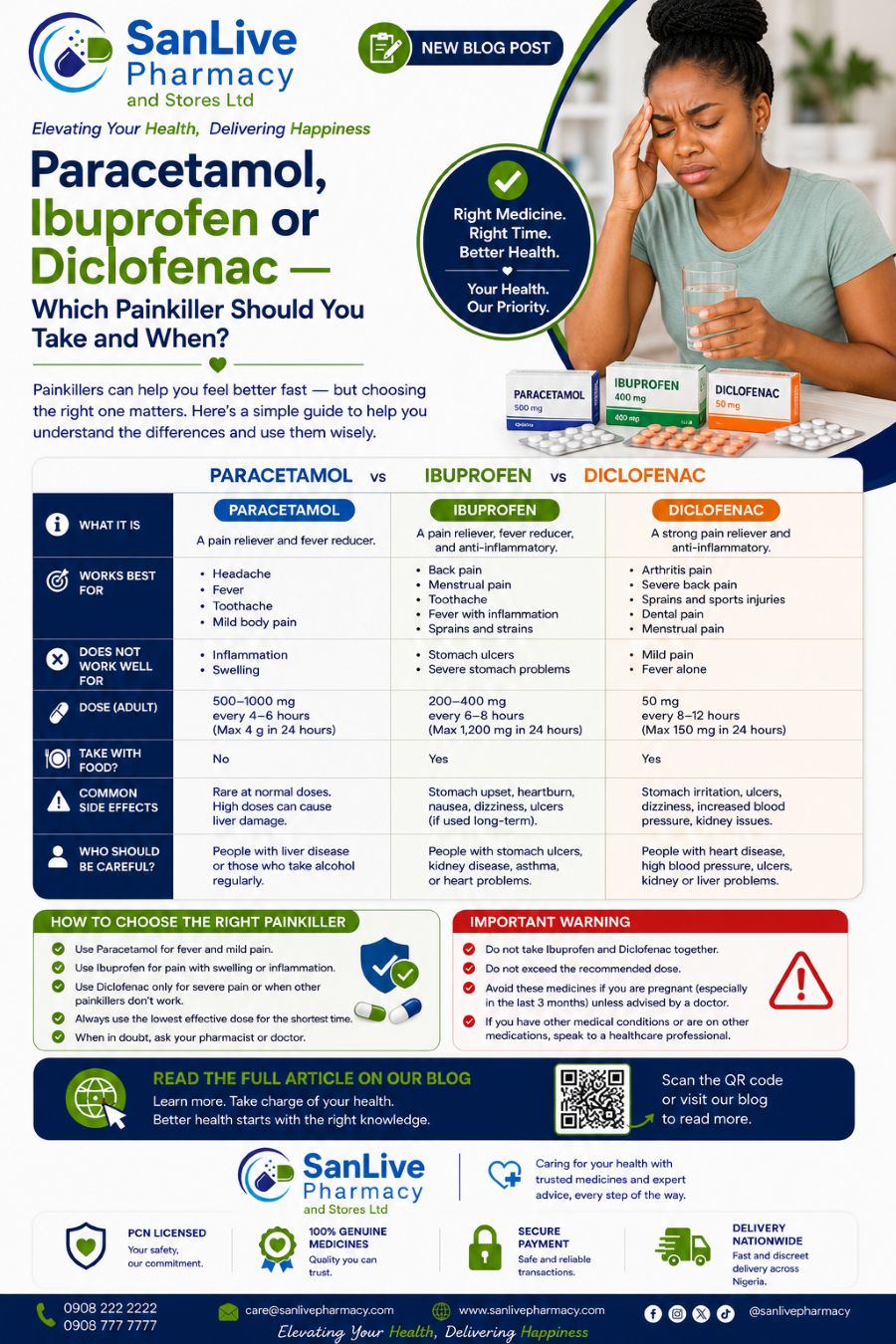
If you have fever alongside your cold, paracetamol is the safest and most effective choice. Take 500–1000mg every 4–6 hours. See our Pain Relief Medications for paracetamol and fever management products.
What About Harmattan Catarrh?
Harmattan season brings dry, dusty air that irritates the nose and throat. Many Nigerians experience severe nasal congestion, sneezing, dry cough, and cracked lips during this period — this is not a cold, it is an allergic or irritant response to the dust and dry air.
For harmattan catarrh, the best approaches are: use a saline nasal spray to keep the nasal passages moist, apply petroleum jelly (Vaseline) inside the nostrils to trap dust, use a decongestant or antihistamine for the stuffiness, and stay well hydrated with warm liquids. Our Eye and Ear Solutions section also has options for harmattan-related eye irritation and dryness.
Home Remedies That Actually Work
Alongside your medication, these tried-and-tested approaches genuinely speed up recovery:
- Drink warm liquids — warm water, ginger tea, lemon with honey — they soothe the throat and help clear mucus
- Steam inhalation — breathe in steam from a bowl of hot water, with or without menthol drops or Vicks VapoRub — it loosens chest congestion
- Rest — your immune system works hardest when you are asleep
- Wash your hands frequently — colds spread through touch more than air
- Eat — even if you have no appetite, your body needs energy to fight the infection
Get Relief Today — Order Cough & Cold Medicines
Same-day delivery in Lagos. Nationwide delivery in 1–3 working days.
Shop Cough & Cold Products Chat With Our Pharmacist
❓ My child has been coughing for 2 weeks. Should I be worried?
Acough that lasts more than 2 weeks in a child — especially if it is getting worse, is accompanied by fever, or the child seems to be struggling to breathe — needs to be checked by a doctor. It could be a bacterial infection like whooping cough (pertussis), pneumonia, or asthma. Do not wait for it to pass on its own.
❓ Why does my catarrh always come back?
If your catarrh keeps returning, especially without a fever or other cold symptoms, it could be allergic rhinitis — an allergy to dust, pollen, animal fur, or other triggers. This is very common in Nigeria, especially during harmattan. Speak to a pharmacist or doctor about long-term allergy management options.
❓ Can a cold turn into pneumonia?
In some cases, yes — especially in young children, elderly people, and those with weak immune systems. A cold that progresses to a productive cough with yellow or green phlegm, high fever, chest pain, and difficulty breathing could indicate pneumonia. This needs urgent medical attention and is usually treated with antibiotics prescribed by a doctor.
⚕️ Disclaimer: This article is for general health education only. If you or your child have severe symptoms, difficulty breathing, or symptoms lasting more than 10 days, please see a doctor. Do not self-prescribe antibiotics.

.jpg)