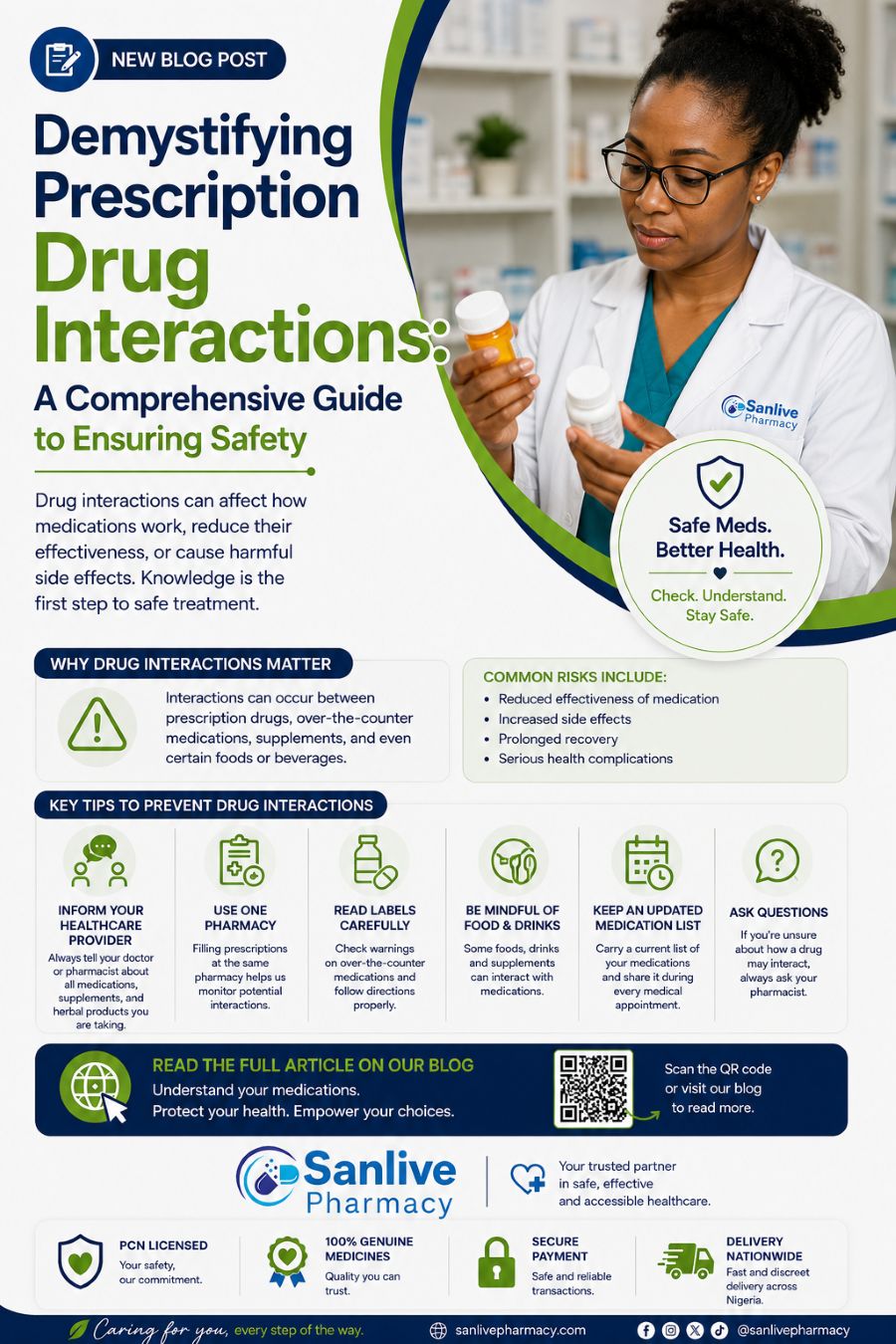
Demystifying Prescription Drug Interactions: A Comprehensive Guide to Ensuring Safety
Prescription drug interactions occur when one medication alters how another drug, food, or supplement behaves in the body, sometimes increasing toxicity, sometimes cancelling out effectiveness entirely. They are among the most common and most preventable causes of harm in healthcare, and in Nigeria, where self-medication is widespread and pharmacist counselling is underused, the risks are especially high. This guide explains how interactions happen, the most dangerous combinations to know, and the practical steps that keep you and your family safe — including how to get a confidential pharmacist medication review.
If you take more than one medication regularly, speak with a SanLive pharmacist for a free medication review before reading further, then come back to this guide for the full picture.
What Are Drug Interactions?
A drug interaction occurs when the presence of one substance alters the way another substance works in the body. This can increase a drug's effect beyond the intended level, potentially causing toxicity; decrease its effect, rendering it less effective or useless; or produce an entirely new effect that neither substance would cause alone.
Drug interactions are not rare. Studies suggest that among patients taking five or more medications simultaneously, a situation called polypharmacy, the probability of at least one clinically significant interaction approaches 50 percent. Among patients on ten or more medications, interactions are essentially guaranteed. As chronic diseases like hypertension, diabetes, HIV, and tuberculosis become more common in Nigeria, more people are living on multiple long-term medications than ever before.
What Are the Three Main Types of Drug Interactions?
Drug-Drug Interactions
The most well-known category, occurring when two or more medications affect each other's behaviour in the body. These happen through two main mechanisms.
Pharmacokinetic interactions occur when one drug alters how the body absorbs, distributes, metabolises, or excretes another. The most clinically significant of these involves the liver's metabolism process, particularly through the cytochrome P450 enzyme system.
Pharmacodynamic interactions occur when two drugs with similar or opposing effects act on the same physiological systems, producing additive, synergistic, or antagonistic outcomes without necessarily changing each other's blood levels.
Drug-Food Interactions
What you eat can profoundly affect how your medications work. Certain foods alter drug absorption, metabolism, or excretion, sometimes with serious consequences. Grapefruit is the most famous example, but far from the only one.
Drug-Supplement Interactions
Herbal remedies, vitamins, and traditional medicines are widely seen as natural and therefore safe. This is a dangerous misconception. Many natural compounds are pharmacologically active and interact with prescription medications in ways that can be harmful or life-threatening. In Nigeria, where herbal remedies and traditional medicine are deeply embedded in culture, this category represents a particularly underappreciated risk.
How Do Drug Interactions Happen? The Cytochrome P450 System Explained
The liver is the body's primary drug-processing organ, using a family of enzymes called CYP450 to break down most medications. The most important of these include CYP3A4, CYP2D6, CYP2C9, CYP2C19, and CYP1A2, each responsible for metabolising a specific range of drugs.
When a drug inhibits a CYP enzyme, it blocks the breakdown of another drug, causing it to accumulate to potentially toxic levels — like blocking a drain so waste builds up. For example, fluconazole inhibits the enzyme that metabolises warfarin, causing warfarin levels to rise dramatically and dangerously increasing bleeding risk.
When a drug induces a CYP enzyme, it speeds up the breakdown of another drug, leaving insufficient levels for the desired effect. Rifampicin, used in TB treatment, is a powerful inducer that significantly reduces the effectiveness of oral contraceptives, antiretrovirals, and warfarin.
The Most Dangerous and Common Drug Interactions
1. Warfarin (Blood Thinner) Interactions
Warfarin has an extremely narrow therapeutic window — the difference between a dose that prevents clots and one that causes dangerous bleeding is very small.
Drugs that increase bleeding risk: fluconazole and other azole antifungals; metronidazole (Flagyl), extremely commonly prescribed in Nigeria; ciprofloxacin and other fluoroquinolones; aspirin and NSAIDs like ibuprofen and diclofenac; amiodarone; and many SSRIs.
Drugs that reduce effectiveness, raising clot risk: rifampicin, a critical interaction given TB's prevalence in Nigeria; carbamazepine; St. John's Wort; and oral contraceptives.
Food interactions: Vitamin K-rich foods like spinach, kale, ugwu, and bitter leaf reduce warfarin's effect — the key is consistent intake, not avoidance. Grapefruit increases warfarin levels, and alcohol unpredictably affects its metabolism while increasing bleeding risk.
Every patient on warfarin must inform every prescribing doctor and pharmacist before starting any new medication.
2. Antihypertensive Drug Interactions
Hypertension affects an estimated 30 to 45 percent of Nigerian adults, making interactions in this category critically important.
ACE inhibitors (lisinopril, enalapril, ramipril) interact dangerously with NSAIDs, which reduce their blood pressure-lowering effect while increasing kidney injury risk — a combination many Nigerians take unknowingly for routine pain. They also interact with potassium supplements, risking dangerous hyperkalaemia.
Calcium channel blockers (amlodipine, nifedipine) interact severely with grapefruit juice, which inhibits CYP3A4 and causes dangerous blood pressure drops, and with simvastatin, raising muscle damage risk.
Beta-blockers (atenolol, metoprolol) can mask the warning signs of hypoglycaemia in diabetic patients and cause dangerous heart rate slowing when combined with verapamil or diltiazem.
3. Antibiotic Interactions
Antibiotics are among the most prescribed, and most commonly self-prescribed, medications in Nigeria.
Fluoroquinolones (ciprofloxacin) form insoluble complexes with antacids, calcium, iron, and dairy products, reducing absorption by up to 90 percent — take them at least two hours before or six hours after these substances.
Metronidazole (Flagyl) causes a severe disulfiram-like reaction with alcohol, marked by intense flushing, rapid heart rate, nausea, and vomiting. Alcohol must be avoided during treatment and for 48 hours after the last dose.
Rifampicin is one of the most powerful enzyme inducers in medicine, dramatically reducing the effectiveness of oral contraceptives, antiretrovirals (a critical concern given Nigeria's dual TB and HIV burden), warfarin, and antifungals.
Macrolides (erythromycin, clarithromycin) dramatically increase statin levels, raising the risk of severe muscle damage. Azithromycin is a safer alternative for patients on statins.
4. Antidiabetic Drug Interactions
Metformin must be withheld around contrast dye procedures due to kidney injury risk, and combined with alcohol, carries a rare but serious risk of lactic acidosis.
Sulphonylureas (glibenclamide, glimepiride) interact with fluconazole and NSAIDs to cause severe hypoglycaemia, while beta-blockers and alcohol mask its warning signs.
Insulin combined with beta-blockers masks tachycardia, a key hypoglycaemia warning sign, while corticosteroids raise blood sugar significantly, requiring dose adjustments.
5. Antidepressant and Psychiatric Medication Interactions
SSRIs combined with MAO inhibitors or tramadol can trigger serotonin syndrome, a potentially life-threatening condition involving agitation, rapid heart rate, muscle rigidity, and in severe cases, seizures. A washout period of at least two weeks is required when switching between these drug classes. SSRIs combined with NSAIDs also significantly increase gastrointestinal bleeding risk.
Tricyclic antidepressants combined with alcohol cause profound sedation and respiratory depression, and with MAO inhibitors, carry serotonin syndrome risk.
6. Drug-Food Interactions
Grapefruit contains compounds that permanently inhibit CYP3A4, an enzyme responsible for metabolising roughly half of all prescription drugs. A single glass can affect drug levels for 24 to 72 hours, significantly impacting statins, calcium channel blockers, immunosuppressants, and certain antiretrovirals.
Dairy and calcium-rich foods reduce absorption of fluoroquinolones and tetracyclines, and bisphosphonates for osteoporosis must be taken on an empty stomach with plain water only.
Tyramine-rich foods — aged cheese, cured meats, fermented foods, certain wines — combined with MAO inhibitor antidepressants can trigger a hypertensive crisis, a sudden, severe blood pressure spike that can cause stroke or death.
Alcohol interacts with an extraordinary range of medications, causing respiratory depression with sedatives and opioids, a disulfiram-like reaction with metronidazole, lactic acidosis with metformin, and severe liver damage when combined chronically with paracetamol.
7. Herbal and Traditional Medicine Interactions — Nigeria's Hidden Risk
This category deserves special attention given how widely agbo, patent medicines, and traditional treatments are used alongside prescription drugs, often without disclosure to healthcare providers. The assumption that "natural means safe" is one of the most dangerous misconceptions in healthcare.
St. John's Wort is a potent enzyme inducer that reduces the effectiveness of oral contraceptives, antiretrovirals, warfarin, and cyclosporine — transplant rejection has occurred in patients who took it unknowingly.
High-dose garlic and ginger supplements have anticoagulant properties that increase bleeding risk when combined with warfarin or aspirin.
Ginkgo biloba significantly increases bleeding risk with anticoagulants and can lower seizure threshold with certain medications.
Traditional Nigerian preparations like agbo have poorly characterised, highly variable compositions, but many contain compounds with known anticoagulant, hypoglycaemic, or liver-toxic properties. Patients on medications for hypertension, diabetes, HIV, epilepsy, or anticoagulants should disclose all traditional medicine use to their pharmacist.
How Do You Recognise the Symptoms of a Drug Interaction?
Drug interactions don't always announce themselves dramatically. Many produce subtle symptoms easily mistaken for the underlying illness or stress.
Signs the drug level is too high include unusual drowsiness or confusion, abnormal bleeding or easy bruising, muscle pain or dark urine (possible rhabdomyolysis), heart palpitations, severe headache, and tremors or agitation (possible serotonin syndrome).
Signs the drug level is too low include blood pressure or blood sugar not responding despite adherence, seizures occurring despite antiepileptic treatment, or infection symptoms returning despite a completed antibiotic course.
Seek immediate medical attention for severe allergic reaction, signs of serious bleeding, severe confusion, chest pain or irregular heartbeat, or symptoms suggesting serotonin syndrome or hypertensive crisis.
Who Needs to Be Most Vigilant About Drug Interactions?
Elderly patients face elevated risk due to polypharmacy, declining liver and kidney function, and heightened sensitivity to medication effects.
Patients with chronic diseases such as hypertension, diabetes, HIV, or epilepsy frequently require multiple long-term medications, increasing interaction risk.
HIV/TB co-infected patients face some of the most complex interactions in medicine, particularly around rifampicin's effects on antiretroviral therapy, and require specialised clinical management.
Pregnant women face risks for both mother and foetus and need specialist oversight when managing medication.
Patients who self-medicate are at significantly elevated risk, since Nigeria has one of the highest self-medication rates in Africa and many purchase antibiotics, analgesics, and antimalarials without pharmacist counselling.
Patients seeing multiple healthcare providers without a central coordinator risk each prescriber acting without full knowledge of what else the patient is taking.
How Can You Protect Yourself from Drug Interactions?
1. Maintain a Complete and Updated Medication List
Write down every medication you take, including prescription drugs, over-the-counter medicines, vitamins, supplements, and herbal preparations, with dose, frequency, and purpose. Carry this list to every appointment.
2. Use One Pharmacy and Build a Relationship With Your Pharmacist
Using a single pharmacy allows your pharmacist to maintain a complete medication history and identify interaction risks across all your prescriptions, even when different doctors are involved.
✅ Request a comprehensive medication review from a SanLive pharmacist — a confidential service that identifies interaction risks, counsels you on timing and food considerations, and liaises with your prescribing doctor where needed.
3. Disclose Everything, Including Supplements and Traditional Medicines
Never withhold information about herbal preparations or supplements out of embarrassment. A provider who doesn't know about your traditional remedy cannot protect you from its interactions.
4. Ask These Questions With Every New Prescription
Does this interact with anything I'm already taking? Are there foods or drinks I should avoid? What warning signs should I watch for? Should this be taken with or without food? Is alcohol safe with this medication? What should I do if I miss a dose?
5. Never Self-Medicate With Prescription Drugs
Taking medication borrowed from a family member, purchased without prescription, or left over from a previous illness dramatically increases interaction risk without professional oversight.
6. Be Especially Careful During Medication Changes
The period immediately following any change to your regimen is the highest-risk window for interaction-related problems. Stay alert to unusual symptoms during this time.
7. Request Regular Medication Reviews
Anyone taking three or more long-term medications should request a comprehensive pharmacist review every six to twelve months, particularly elderly patients and those with multiple chronic conditions.
✅ Book a medication safety review with SanLive Pharmacy — our pharmacists evaluate your full medication list for interaction risks, duplication, and opportunities to simplify your regimen.
A Special Word on Self-Medication in Nigeria
Nigeria's culture of self-medication, driven by cost, accessibility challenges, and cultural norms, creates a uniquely complex interaction landscape. Picture someone buying ciprofloxacin for a urinary infection, adding metronidazole on a neighbour's recommendation, taking ibuprofen for discomfort, and continuing their regular antihypertensive — all without professional oversight. This scenario plays out thousands of times daily across Nigeria.
This isn't a criticism of patients; it reflects systemic challenges in healthcare access. But awareness is the first step toward safer behaviour, and a pharmacist consultation is accessible, affordable, and potentially life-saving.
Quick Reference: Common Dangerous Combinations to Know
| Drug | Dangerous Combination | Risk |
|---|---|---|
| Warfarin | Metronidazole, fluconazole, NSAIDs | Severe bleeding |
| Warfarin | Rifampicin, St. John's Wort | Treatment failure, clots |
| Metronidazole | Alcohol | Disulfiram-like reaction |
| Statins | Clarithromycin, erythromycin | Muscle damage, kidney failure |
| ACE inhibitors | NSAIDs (ibuprofen, diclofenac) | Kidney failure |
| ACE inhibitors | Potassium supplements | Dangerous high potassium |
| SSRIs | Tramadol, MAO inhibitors | Serotonin syndrome |
| Sulphonylureas | Fluconazole, NSAIDs | Severe low blood sugar |
| Oral contraceptives | Rifampicin, St. John's Wort | Contraceptive failure |
| ARVs | Rifampicin | Treatment failure, HIV resistance |
| Beta-blockers | Insulin, sulphonylureas | Masked hypoglycaemia |
| Any sedative | Alcohol | Respiratory depression, death |
| Calcium channel blockers | Grapefruit juice | Dangerous blood pressure drop |
| Paracetamol | Chronic heavy alcohol use | Severe liver damage |
| MAO inhibitors | Tyramine-rich foods | Hypertensive crisis |
| Fluoroquinolones | Antacids, calcium, iron | Antibiotic treatment failure |
Frequently Asked Questions
Can I check for drug interactions myself before seeing a pharmacist? Online interaction checkers can offer a starting point, but they often miss food and herbal interactions, dosing nuances, and individual risk factors. A pharmacist review remains the safest, most reliable option, especially in Nigeria where traditional remedies are common and rarely included in digital checkers.
Is it safe to take multiple medications prescribed by different doctors? Not without coordination. Each prescriber may not know your full medication list. Using one pharmacy for all your prescriptions, as outlined above, is the most effective way to catch interactions across providers.
How long do grapefruit's effects on medication last? The inhibition caused by a single glass of grapefruit juice can last 24 to 72 hours, far longer than most people assume, which is why occasional consumption doesn't make it safe for patients on affected medications.
Can herbal remedies really be as dangerous as prescription drugs? Yes. Compounds like St. John's Wort and ginkgo biloba are pharmacologically active and interact with prescription drugs in well-documented, sometimes serious ways. Natural does not mean risk-free.
Can diaspora Nigerians get a medication review from SanLive Pharmacy? Yes. SanLive Pharmacy offers online pharmacist consultations for Nigerians anywhere in the world, and ships medication internationally to the UK, USA, Canada, Australia, Europe, and the Middle East within 3 to 4 days.
What should I do if I think I'm already experiencing a drug interaction? Seek medical attention promptly, especially if symptoms are severe. Do not stop a prescribed medication abruptly without guidance, as this can carry its own risks. Bring your full medication list with you.
The Bottom Line
Prescription drug interactions are not rare pharmacological curiosities confined to textbooks. They are common, real, and potentially life-threatening events that happen every day in homes, hospitals, and pharmacies across Nigeria. The encouraging truth is that the vast majority are entirely preventable with awareness, open communication, and professional guidance. You don't need a medical degree to protect yourself — you need to know your medications, ask the right questions, disclose everything you take, and build a relationship with a pharmacist you trust.
- 🔵 Book a confidential medication review with SanLive Pharmacy
- 🔵 Browse all medications on SanLive Pharmacy
- 🔵 Learn about SanLive's international shipping
This article is for informational and educational purposes only and does not constitute medical advice. Never start, stop, or change any medication without consulting a qualified healthcare professional. If you suspect you are experiencing a drug interaction, seek medical attention promptly.

.jpg)