We are your trusted health partner. Local doorstep deliveries is within the hour .We are Licensed and Regulated by the Pharmacist's Council of Nigeria(PCN).Prices displayed here may differ due to inflation.
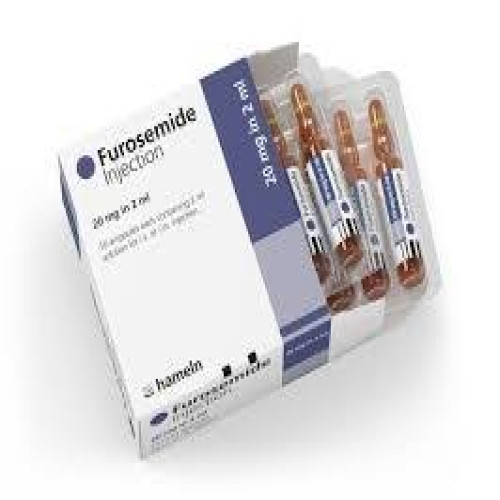
Furosemide 20mg/2mL is a prescription-only, fast-acting loop diuretic (water medication). Each ampoule contains 20mg of Furosemide dissolved in 2mL of sterile solution ($10\text{ mg/mL}$).
It is administered exclusively via an intravenous (IV) or intramuscular (IM) injection by qualified healthcare professionals. It is reserved for acute medical situations to rapidly flush excess fluid build-up from the body caused by heart failure, kidney disease, or liver scarring.
When fluid accumulates dangerously in the lungs or tissues, oral medications can absorb too slowly. Furosemide injection works as an immediate, high-speed release valve:
Blocks Salt Reabsorption: It travels directly to the kidneys and targets a specific filtration zone called the Thick Ascending Limb of the Loop of Henle. Here, it completely blocks the body from reabsorbing sodium, chloride, and potassium back into the bloodstream.
Flushes Excess Fluid: Because water naturally follows salt, these trapped minerals force massive amounts of excess body water into the bladder.
Relieves Organ Pressure: This rapid fluid shift clears fluid congestion from the lungs (pulmonary edema) and reduces swelling in the limbs, dropping the workload on a failing heart within minutes of injection.
Acute Pulmonary Edema: Rapidly clearing dangerous fluid build-up in the lungs, standardly caused by acute congestive heart failure.
Severe Edema Management: Relieving severe, stubborn swelling and fluid retention secondary to advanced chronic kidney disease, nephrotic syndrome, or liver cirrhosis.
Hypertensive Crisis Support: Used as an supportive emergency treatment alongside other medications to drop dangerously high blood pressure spikes when fluid overload is present.
Anuria (Kidney Failure without Urine Production): Furosemide must strictly never be given if your kidneys have completely stopped producing urine. If the kidneys cannot manufacture urine, forcing a diuretic will cause toxic drug build-ups and circulatory damage.
Severe Electrolyte Depletion: It must not be started if you have dangerously low baseline blood levels of potassium, sodium, or calcium, or if you are in a state of severe dehydration (hypovolemia).
Sulfa Drug Allergies: Use with caution if you have a known history of severe allergic reactions to sulfonamide antibiotics (sulfa drugs), as there is a small risk of cross-reactivity.
Pregnancy and Breastfeeding: Use must be strictly guided by a specialist, balancing critical maternal cardiorenal health against potential reductions in placental blood flow.
Strictly Professional Clinical Use Only: Furosemide 20mg/2mL must never be self-administered. It can be delivered through two professional routes:
Intravenous (IV) Route: Injected directly into a vein or an active IV line. It must be pushed very slowly, not exceeding a rate of 4 mg per minute. Injecting Furosemide too quickly can cause a rare but serious side effect of temporary or permanent hearing loss or ringing in the ears (ototoxicity).
Intramuscular (IM) Route: Injected deeply into a large muscle mass. This route is standardly used only if an IV line cannot be securely established.
Routine Electrolyte Monitoring: Because this medicine causes rapid fluid clearance, your clinical team will routinely check your blood pressure and run lab tests to track your kidney function and electrolytes (especially Potassium, Sodium, and Magnesium).
1.Verify blood pressure and electrolyte safety:Baseline Watch.
The healthcare provider checks your resting blood pressure metrics to ensure your system can safely handle a rapid drop in fluid volume.
2.Deliver the drug slowly via the IV line:Slow Injection.
The clinical nurse injects the 20mg/2mL solution into the vein slowly over at least 5 minutes to fully protect your ears and hearing pathways.
3.Monitor urine output and vital parameters:Fluid Tracking.
The clinical team tracks your urine output closely over the next few hours to measure exactly how much excess water your kidneys are clearing.
4.Monitor and replenish blood potassium levels:Potassium Protection.
If your blood tests show a dip in potassium, your doctor may prescribe a temporary potassium supplement or pair your therapy with a potassium-sparing pill.
As your system experiences rapid fluid and mineral clearance, you will notice typical cardiorenal updates:
A Frequent, Urgent Need to Urinate: This is the primary therapeutic action of the drug, standardly starting within 5 to 15 minutes of an IV push and lasting for about 2 hours.
Dizziness, lightheadedness, or a brief feeling of faintness when sitting up or standing up quickly (postural hypotension caused by dropping fluid volume).
Dehydration symptoms, including an unusually dry mouth, extreme thirst, or temporary muscle cramps in the legs due to mineral shifts.
Temporary increases in blood sugar (glucose) or uric acid levels.
How quickly does a Furosemide injection start working?
When given intravenously, Furosemide works with exceptional speed. A significant increase in urine output standardly begins within 5 to 15 minutes of the injection, reaching its peak effect within the first hour and finishing its primary action within 2 hours.
Can Furosemide injection cause hearing problems?
Yes, but this is rare and standardly happens only if the injection is pushed too fast into a vein, if extremely high doses are used, or if the patient has advanced kidney failure. Administering the drug at a slow, controlled pace completely minimizes this risk. Tell your doctor immediately if you experience sudden ringing in your ears (tinnitus) or a drop in hearing clarity.
How should the unopened 20mg/2mL ampoules be stored?
Store unopened Furosemide ampoules inside their original outer cardboard box to protect the liquid from direct exposure to light. Keep the box in a cool room strictly between 15°C and 30°C. Do not refrigerate or freeze this medication, as cold temperatures can cause the solution to crystallize.
Critical care cardiorenal therapies and emergency diuretics require absolute supply chain security, climate-controlled pharmaceutical storage, and strict batch tracking to protect clinical purity and ensure rapid fluid clearance. Institutional hospital procurement, emergency ward stock replenishment, and verified batch box delivery can be securely coordinated through Sanlive Pharmacy & Stores for rapid, climate-controlled, and tamper-evident delivery directly to registered hospitals, clinical daycare hubs, and accredited emergency care networks within Lagos, Abuja, Port Harcourt, and nationwide via our authenticated clinical logistics networks.
Important Notice: This information is for educational and institutional procurement support purposes only. Furosemide Injection is a high-potency, prescription-only critical care diuretic. All clinical administrations, dose calculations, and fluid balances must be managed exclusively under the direct, physical supervision of a registered physician or emergency practitioner. If a patient experiences a sudden collapse, severe cardiac palpitations, extreme confusion, or profound difficulty breathing following an injection, activate emergency life-support protocols immediately.
No reviews yet — be the first!
Log in to write a review.

.jpg)