We are your trusted health partner. Local doorstep deliveries is within the hour .We are Licensed and Regulated by the Pharmacist's Council of Nigeria(PCN).Prices displayed here may differ due to inflation.
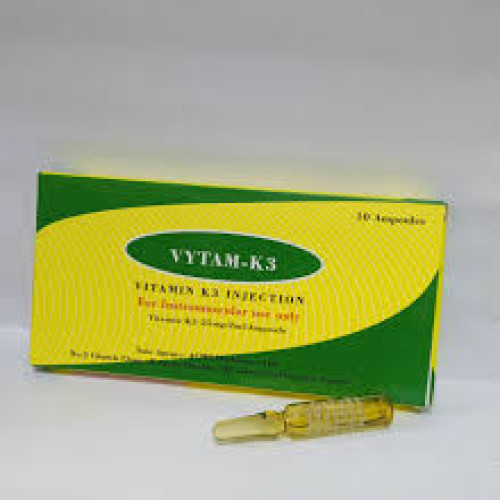
A high-potency injectable vitamin used in veterinary medicine to treat dangerous bleeding caused by rat poison. It is rarely used in humans due to severe safety risks.
Vitamin K3 (known medically as Menadione) is a synthetic, man-made form of Vitamin K.
Inside the body, Vitamin K is a mandatory building block that the liver uses to manufacture vital blood-clotting factors (specifically Factors II, VII, IX, and X). Without these factors, the blood cannot thicken, leading to uncontrolled internal bleeding.
When a creature is poisoned by eating certain types of pest control chemical baits—such as rat poison containing warfarin or brodifacoum—the poison completely drains the body's Vitamin K reserves. This causes the animal to bleed heavily from internal organs.
A Vitamin K3 injection bypasses the digestive tract completely, delivering a massive, instant dose of synthetic vitamin straight to the liver. This reactivates the liver's machinery, forcing it to rapidly restart blood clot production to stop the life-threatening bleeding.
Veterinary Bleeding Emergencies: Treating domestic livestock, pets, or farm animals that have accidentally eaten toxic rodent poisons or are suffering from severe, low-prothrombin bleeding disorders.
Industrial Agricultural Defense: Providing immediate rescue therapy to stabilize animal populations following agricultural poisoning outbreaks.
✅ Veterinary Patients (Animals) under the direct, supervised care of a licensed veterinary doctor.
❌ CRITICAL HUMAN ADVERSE WARNING: Vitamin K3 injections are rarely given to humans anymore because they carry severe, life-threatening toxic risks. Medical doctors do not use Vitamin K3 to treat human adults or infants. If a human takes Vitamin K3, it can cause hemolytic anemia (a dangerous condition where your own red blood cells violently burst and break down).
❌ The Newborn Jaundice Risk: If given to infants or newborn babies, Vitamin K3 can trigger kernicterus—a highly dangerous condition where the rapid breakdown of blood cells floods the baby's system with bilirubin, causing severe jaundice and permanent, irreversible brain damage.
💡 Note for Humans: If a human adult or newborn baby has a Vitamin K deficiency or an overdose of blood-thinning medication (like Warfarin), doctors strictly use Vitamin K1 (Phytomenadione) injections or tablets instead. Vitamin K1 is highly safe, fully effective, and carries none of the toxic blood-bursting side effects of Vitamin K3.
The Route: In veterinary clinics, Vitamin K3 is typically given via a Deep Intramuscular (IM) injection into a large muscle mass, or diluted carefully into an intravenous fluid line under strict tracking.
The Dose: The exact fluid volume and frequency depend entirely on the animal's weight, the severity of the bleeding, and the specific type of rat poison consumed.
1.Verify the exact toxin exposure:Prerequisite.
The veterinarian will confirm that the animal's bleeding is caused by a Vitamin K-depleting toxin (like rat poison) by examining the pet's gums, checking for internal bruising, or running an immediate blood-clotting time test.
2.Inspect the liquid ampoule thoroughly:Preparation.
The sterile fluid is pulled into a professional syringe using aseptic (germ-free) techniques. The fluid must be completely clear and free of any floating particles before use.
3.Inject slowly deep into the muscle:Execution.
The vet will inject the fluid slowly into a large, healthy muscle mass. The medicine must be injected very slowly; pushing the fluid too fast can cause a sharp drop in blood pressure or an immediate allergic reaction.
While Vitamin K3 is a highly effective emergency tool for animals, it must be handled carefully due to localized tissue stress:
Pain, temporary swelling, or limping at the exact site of the injection
Mild, temporary flushing of the skin
Slight digestive upset or brief loss of appetite as the liver absorbs the compound
Localized skin changes if the fluid accidentally leaks into the shallow fat layers under the skin
Can I buy a Vitamin K3 injection over the counter to treat a human who took too much blood-thinning medicine?
No, absolutely not. You must never give Vitamin K3 to a human. If a human family member has taken an overdose of blood thinners or is bleeding, take them straight to a hospital emergency room immediately. The hospital doctors will treat them using Vitamin K1 (Phytomenadione), which is the correct, safe, and medically approved antidote for humans.
How fast does a Vitamin K3 injection stop an animal from bleeding?
Because it takes time for the liver to absorb the injected vitamin and physically manufacture new clotting proteins, the injection does not work instantly. You will typically see internal bleeding stop and blood-clotting times improve within 6 to 12 hours after the first slow injection is completed.
What should I do if my dog or cat accidentally eats rat bait at home?
Do not wait for the animal to start bleeding or coughing up blood. Bring the pet, along with the box or label of the rat poison if you can find it, straight to a veterinary clinic immediately. The vet can induce vomiting to remove the poison before it enters their system, or start emergency Vitamin K therapy before internal bleeding even begins.
How is this veterinary product supplied?
We distribute authentic, batch-verified veterinary diagnostic ampoules and medications across Nigeria via Sanlive Pharmacy, providing secure, tracked delivery options straight to registered agricultural farms, licensed veterinary clinics, and animal health centers to keep your livestock and pets protected.
100% genuine veterinary-tracked injection solution. Quality-certified, batch-verified, and dispensed strictly in accordance with professional agricultural and veterinary safety standards by licensed pharmacists at Sanlive Pharmacy.
No reviews yet — be the first!
Log in to write a review.

.jpg)