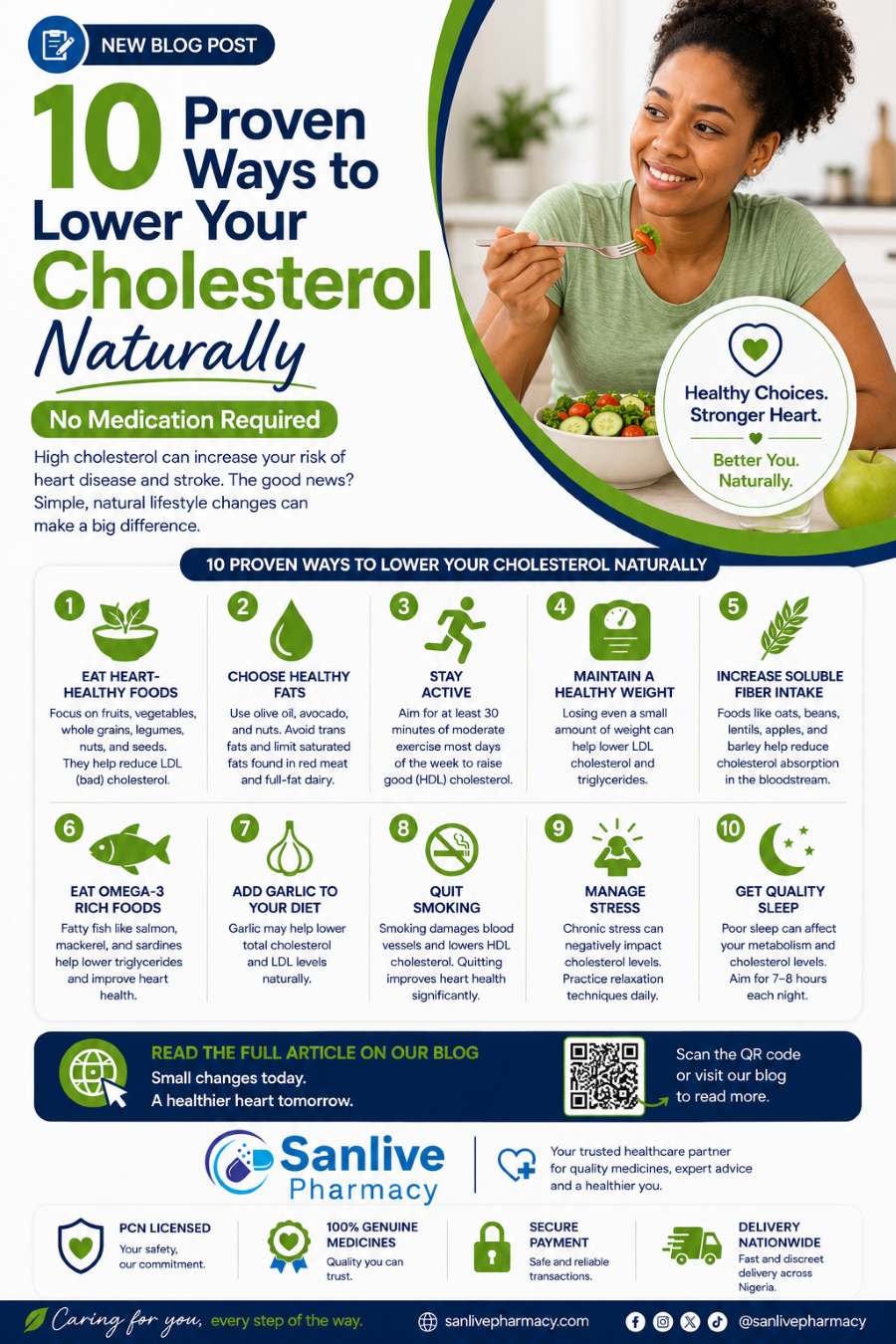
10 Proven Ways to Lower Your Cholesterol Naturally — No Medication Required
By Sanlive Pharmacy | Reviewed by a PCN-Licensed Pharmacist | Updated: June 2026
You can lower LDL cholesterol naturally within 4 to 12 weeks by increasing soluble fibre intake, switching to unsaturated fats, exercising 150 minutes per week, and cutting added sugars. The fastest single change is diet — especially adding oats, beans, and omega-3-rich fish. Supplements like plant sterols and psyllium husk provide measurable additional support.
High cholesterol — also known as hypercholesterolaemia — has no symptoms. No pain. No warning signs. Just a gradual narrowing of your arteries until the consequences become impossible to ignore. Research has found that nearly half of Nigerian adults tested had raised total cholesterol, with women disproportionately affected. Cardiovascular disease is now the leading cause of death in Nigeria — and most of it is preventable.
The good news is that medication is not always the first step. With the right approach, cholesterol levels can shift meaningfully within weeks through food, movement, sleep, and a few targeted supplements. This guide covers all ten scientifically proven strategies, answers the questions Nigerians are asking most about cholesterol, and gives you a practical starting point whether you are managing existing numbers or preventing future risk.
If you want expert guidance before making changes, speak with a SanLive pharmacist for free — available online, nationwide.
What Is Cholesterol, and Why Does the LDL/HDL Distinction Matter?
Cholesterol is a waxy substance produced by your liver and consumed through food. It is essential — your body uses it to build cell membranes, produce hormones, and synthesise Vitamin D. The danger is not cholesterol itself but the imbalance between its two main forms.
LDL (Low-Density Lipoprotein) is the "bad cholesterol" that deposits plaque on artery walls, progressively narrowing them and increasing the risk of heart attack and stroke. HDL (High-Density Lipoprotein) is the "good cholesterol" that acts as a scavenger, carrying LDL back to the liver for disposal.
Target numbers to know:
| Measurement | Healthy Target |
|---|---|
| Total cholesterol | Below 200 mg/dL |
| LDL (bad cholesterol) | Below 100 mg/dL |
| HDL (good cholesterol) | Above 40 mg/dL (men), above 50 mg/dL (women) |
| Triglycerides | Below 150 mg/dL |
When LDL is high and HDL is low, your cardiovascular risk climbs sharply — even if you feel perfectly fine.
How Quickly Can You Lower Cholesterol Naturally?
Lifestyle changes — particularly dietary ones — can produce measurable results within 4 to 6 weeks, with more significant improvements appearing at the 3-month mark. Cholesterol-lowering medications like statins typically work faster, within 4 weeks, but natural interventions are a viable first line for most people without acute cardiac risk.
The fastest single intervention is diet. A major analysis of controlled trials found that dietary changes reduced both LDL and total cholesterol, while exercise alone had no direct effect on either — though exercise significantly raises HDL. The combination of diet and exercise produces the most complete lipid profile improvement.
10 Natural Ways to Lower Your Cholesterol
1. Eat More Soluble Fibre — the Single Most Effective Dietary Move
Soluble fibre dissolves in water and forms a gel in your gut that physically binds to LDL cholesterol and bile acids, flushing them from your body before they can re-enter the bloodstream. Research consistently shows that eating 5 to 10 grams of soluble fibre per day can reduce LDL by up to 5 percent without any other changes.
Best Nigerian-accessible sources of soluble fibre:
Oats and oat bran are the most evidence-backed starting point — a bowl of oatmeal at breakfast is the simplest move you can make. Beans, lentils, black-eyed peas, and cowpeas are already common in Nigerian cooking and are excellent sources. Barley, apples, pears, plantain, and citrus fruits all contribute meaningfully, as do ground flaxseeds, which the body absorbs far better than whole ones.
✅ Order psyllium husk and soluble fibre supplements on SanLive Pharmacy — pharmacist-approved options delivered across Nigeria and internationally within 3 to 4 days.
2. Replace Saturated and Trans Fats with Heart-Healthy Unsaturated Fats
The type of fat you eat has a more direct effect on LDL than the amount of fat. Saturated fats found in red meat, butter, full-fat dairy, and processed snacks raise LDL. Trans fats found in partially hydrogenated vegetable oils are even worse — they simultaneously raise LDL and lower HDL. Replacing them with monounsaturated and polyunsaturated fats reduces LDL while protecting or improving HDL.
Heart-healthy fat swaps to make today: Cook with olive oil instead of butter or margarine, since substituting olive oil for butter may reduce LDL by up to 15 percent. Eat avocados, which are rich in monounsaturated fats proven to raise HDL. Snack on almonds, walnuts, and cashews instead of fried snacks. Choose fatty fish over red meat several times a week.
What about palm oil? Palm oil is approximately 50 percent saturated fat, giving it a mixed profile. It contains palmitic acid, which can raise LDL, but also oleic acid — the same heart-healthy fat in olive oil — which counters some of the harm. Current evidence suggests that moderate palm oil consumption as part of a balanced diet is not acutely harmful. However, if your LDL is already high, reducing palm oil and prioritising olive oil or groundnut oil is a reasonable and practical step.
3. Add Omega-3 Fatty Acids to Lower Triglycerides
Omega-3 fatty acids primarily target triglycerides — a separate type of blood fat that significantly increases cardiovascular risk when elevated. They also reduce systemic inflammation, which damages arterial walls over time.
Top omega-3 food sources include mackerel, sardines, herring, tuna, and salmon — aim for at least two servings per week. Walnuts, chia seeds, and ground flaxseeds are excellent plant-based sources.
If your diet does not reliably include fatty fish, a high-quality omega-3 supplement is a practical, pharmacist-approved alternative.
✅ Order omega-3 fish oil supplements on SanLive Pharmacy — delivered across Nigeria and to diaspora customers within 3 to 4 days.
4. Exercise Regularly — the Only Reliable Way to Raise HDL
Physical activity is the most effective tool for raising HDL cholesterol. Exercise stimulates enzymes that move LDL from your blood vessels to the liver, where it is processed and eliminated. It also burns the saturated fat your muscles would otherwise store.
The recommendation is at least 150 minutes of moderate-intensity aerobic activity per week — 30 minutes, five days per week. You do not need a gym. Options accessible across Nigeria include brisk walking, which is the most accessible and evidence-backed option; cycling; swimming; skipping rope; aerobic dancing and Zumba; bodyweight training at home; and jogging.
Adding resistance training alongside aerobic exercise produces even greater benefit — it helps burn triglyceride-raising fat and further shifts the LDL/HDL ratio in your favour.
5. Lose Weight — Even a Small Amount Changes Your Numbers
Excess weight, particularly visceral fat stored around the abdomen, is directly linked to elevated LDL, higher triglycerides, and lower HDL. Losing just 5 to 10 percent of your body weight produces clinically measurable improvement in all three cholesterol markers. For a 90 kg adult, that is 4.5 to 9 kg — an achievable goal over 3 to 6 months through diet and consistent moderate exercise.
Weight loss in the context of high cholesterol must be approached through insulin-sensitising, anti-inflammatory dietary strategies — not extreme calorie restriction, which can worsen hormonal balance and metabolic health.
6. Quit Smoking — the Single Biggest Cardiovascular Decision You Can Make
Smoking lowers HDL cholesterol, damages the inner lining of arteries, and accelerates the buildup of cholesterol-rich plaque. Every cigarette actively works against whatever else you are doing for your heart.
The recovery timeline after quitting is measurable and fast:
| Timeline | What Happens |
|---|---|
| 20 minutes | Blood pressure begins to fall |
| 3 months | Circulation and lung function improve significantly |
| 1 year | Heart disease risk is cut in half |
| 15 years | Heart disease risk approaches that of a lifelong non-smoker |
No supplement or dietary change can replicate what quitting smoking does for cholesterol and cardiovascular health.
7. Cut Sugar and Refined Carbohydrates — Often Overlooked, Always Important
Most people blame fat when they think about cholesterol. Sugar and refined carbohydrates are equally dangerous and often more consumed. High intake of white bread, white rice, sugary drinks, and processed snacks raises triglycerides, lowers HDL, and promotes insulin resistance — all of which worsen your cardiovascular risk profile independently of LDL.
Practical swaps: Choose brown rice or oats instead of white rice as a meal base. Switch to whole grain bread. Replace sodas and packaged fruit juice with water, zobo (hibiscus tea), or kunu. Choose whole fruit over sugary snacks. Check labels — anything with more than 5 grams of added sugar per serving warrants caution.
Reducing your glycaemic load is one of the most effective and underused levers for lowering triglycerides naturally.
8. Manage Stress — Your Cortisol Affects Your Cholesterol
Chronic stress is a direct driver of high cholesterol that almost never gets discussed. When you are under prolonged stress, your body floods itself with cortisol and adrenaline. These hormones raise LDL cholesterol, elevate blood pressure, and trigger inflammatory processes that damage arterial walls. Stress also fuels secondary cholesterol-raising habits — emotional eating, physical inactivity, smoking, and disrupted sleep — which compound the primary effect.
Stress management strategies with cardiovascular evidence: Daily mindfulness or meditation, even 10 minutes, makes a measurable difference. Regular physical exercise works double duty, managing both stress and cholesterol directly. Prayer and spiritual practice are associated with lower blood pressure and better heart health in multiple studies. Social connection is an area where Nigerians are culturally well-positioned to benefit — prioritise in-person community. Seek professional counselling when stress is chronic and beyond self-management.
Managing your mental health is managing your heart health. The connection is physiological, not metaphorical.
9. Prioritise Sleep — the Most Underused Cholesterol Intervention
Adults who consistently sleep fewer than six hours per night show measurably worse cholesterol profiles — higher LDL, elevated triglycerides, lower HDL — compared to those who sleep seven to nine hours. Poor sleep also disrupts hormones that regulate hunger and metabolism, making healthy weight maintenance harder.
Practical sleep improvements: Maintain fixed sleep and wake times including weekends. Avoid screens for at least one hour before bed. Keep your room cool, dark, and quiet. Avoid caffeine after 2pm, and avoid heavy meals within two hours of bedtime.
Sleep is not a luxury. It is a cardiovascular intervention.
10. Consider Evidence-Based Supplements for Additional Support
When diet and lifestyle are in place, certain supplements have strong clinical evidence for further cholesterol reduction. They are not a shortcut — they are a complement to the strategies above.
Supplements with the strongest evidence:
| Supplement | How It Works | Typical LDL Reduction |
|---|---|---|
| Plant sterols and stanols | Block cholesterol absorption in the gut | 5–15% |
| Psyllium husk | Soluble fibre that binds LDL | 5–10% |
| Berberine | Plant compound that lowers LDL and triglycerides | Up to 20% in some studies |
| Fish oil (Omega-3) | Lowers triglycerides significantly | 15–30% reduction in triglycerides |
| Garlic extract | Modest LDL-lowering and blood pressure reduction | 3–7% |
| CoQ10 | Supports heart muscle, particularly for those on statin therapy | Cardiovascular support |
| Red yeast rice | Contains naturally occurring statin-like compounds | Significant — requires medical supervision |
Always consult a pharmacist or physician before starting any new supplement, particularly if you are already on medication.
✅ Browse all heart health supplements on SanLive Pharmacy — plant sterols, psyllium husk, berberine, CoQ10, omega-3, and more, all NAFDAC-compliant and delivered across Nigeria and internationally within 3 to 4 days.
Cholesterol-Lowering Foods — Quick Reference Table
| Food | Why It Helps |
|---|---|
| Oats | Beta-glucan (soluble fibre) lowers LDL directly |
| Avocado | Raises HDL, lowers LDL via monounsaturated fats |
| Mackerel and sardines | Omega-3s reduce triglycerides |
| Walnuts | Omega-3s and plant sterols combined |
| Extra virgin olive oil | Reduces LDL oxidation — the form most dangerous to arteries |
| Beans and cowpeas | High soluble fibre content |
| Garlic | Modest but consistent LDL reduction |
| Green tea | Catechin antioxidants shown to lower LDL |
| Berries | Anti-inflammatory, reduces oxidative stress on arteries |
| Dark chocolate (70% and above) | Flavonoids that protect arterial wall integrity |
Nigerians in the Diaspora — You Can Order Too
If you are a Nigerian living in the UK, USA, Canada, Australia, Europe, or the Middle East and you want access to heart health supplements you trust, SanLive Pharmacy ships internationally.
- Delivery time: 3 to 4 days to most international destinations
- Packaging: Plain, discreet, and unbranded
- Support: Speak with a SanLive pharmacist before ordering for personalised supplement guidance based on your cholesterol numbers
Whether you are in London, Houston, Toronto, Dubai, or Melbourne, order your heart health supplements from SanLive Pharmacy and receive them within 3 to 4 days.
Frequently Asked Questions
Can you lower cholesterol in 30 days? Yes, partially. Dietary changes alone can produce measurable LDL reductions within 4 to 6 weeks. Triglycerides tend to respond even faster. A full, significant shift in your lipid profile typically requires 3 months of consistent changes. Starting immediately is what matters — the trajectory begins with day one.
Does exercise alone lower cholesterol? Exercise alone has a limited direct effect on LDL but a strong, reliable effect on raising HDL — the good cholesterol that is hardest to move even with medication. Exercise also lowers triglycerides significantly. For the most complete result, combine exercise with dietary changes.
Is palm oil bad for cholesterol? Palm oil is 50 percent saturated fat, which raises some concern, but it also contains oleic acid — the fat found in olive oil — which has a counterbalancing effect. Current evidence suggests moderate palm oil consumption is not acutely harmful for most people. If your LDL is already high, reducing palm oil and increasing olive oil or groundnut oil is a sensible step.
What is a dangerous cholesterol level in Nigeria? A total cholesterol above 240 mg/dL is considered high-risk. LDL above 130 mg/dL warrants dietary intervention; above 160 mg/dL typically prompts medical review. These thresholds become more urgent if you also have diabetes, hypertension, or a family history of heart disease — all of which are rising in prevalence among Nigerian adults. Speak with a SanLive pharmacist to interpret your results accurately.
Can Nigerian food lower cholesterol? Absolutely. Many traditional Nigerian foods are naturally cholesterol-friendly. Beans, black-eyed peas, oats-based porridge, garden eggs, leafy greens including ugwu and bitter leaf, mackerel (titus fish), and groundnuts are all supported by evidence. The challenge is preparation — heavy palm oil, frying, and white rice bases can undermine otherwise healthy ingredients.
Do eggs raise cholesterol? Newer research has revised the long-held concern about eggs. Eating one to two eggs per day is unlikely to significantly raise cholesterol for most people — eggs are low in saturated fat and high in quality protein and healthy fats. What matters more is what you eat with them — fried in excess butter or with processed meat is where the problem lies, not the egg itself.
When should I take cholesterol medication instead of trying natural methods? Natural strategies work well for many people with mildly or moderately elevated cholesterol. You should strongly consider medication and consult a doctor promptly if your total cholesterol exceeds 240 mg/dL, you have a family history of early heart disease, you have already had a heart attack or stroke, you have diabetes or hypertension alongside elevated cholesterol, or your numbers have not improved after 3 to 6 months of consistent lifestyle changes. A SanLive pharmacist can review your situation and help you decide the right path.
Can diaspora Nigerians order heart health supplements from SanLive Pharmacy? Yes. SanLive Pharmacy ships to the UK, USA, Canada, Australia, Europe, and the Middle East with delivery in 3 to 4 days in plain, discreet packaging.
When to See a Pharmacist or Doctor
Natural strategies are powerful — but they work best alongside professional guidance. Book a consultation if your total cholesterol is above 240 mg/dL, you have a family history of heart disease or high cholesterol, you have diabetes, hypertension, or kidney disease, you are already on medication and want to add supplements safely, or lifestyle changes have not moved your numbers after 3 to 6 months.
✅ Book a free pharmacist consultation on SanLive Pharmacy — our PCN-licensed pharmacists can help you understand your cholesterol readings, review supplement compatibility with your existing medications, and build a practical heart health plan.
The Bottom Line
Lowering cholesterol naturally is not about perfection. It is about consistent, compounding progress. Start with one or two strategies — most people find the most traction with diet first, using oats, beans, less sugar, and switching to olive oil, and exercise second. Add more levers over time. The results at 6 weeks are typically better than expected, and those at 3 months are often dramatic.
Your heart is working for you every moment. These choices are how you work for it.
- 🔵 Browse all heart health supplements on SanLive Pharmacy
- 🔵 Order Omega-3 Fish Oil
- 🔵 Order Psyllium Husk
- 🔵 Order Berberine
- 🔵 Order Plant Sterols
- 🔵 Order CoQ10
- 🔵 Speak with a SanLive Pharmacist for Free
This article is for informational and educational purposes only. It does not constitute medical advice. Always consult a qualified healthcare professional or pharmacist before making changes to your diet, medication regimen, or supplement routine. Reviewed by a PCN-licensed pharmacist at SanLive Pharmacy and Stores Ltd — Nigeria's trusted online pharmacy delivering medicines and supplements nationwide.
.jpg)