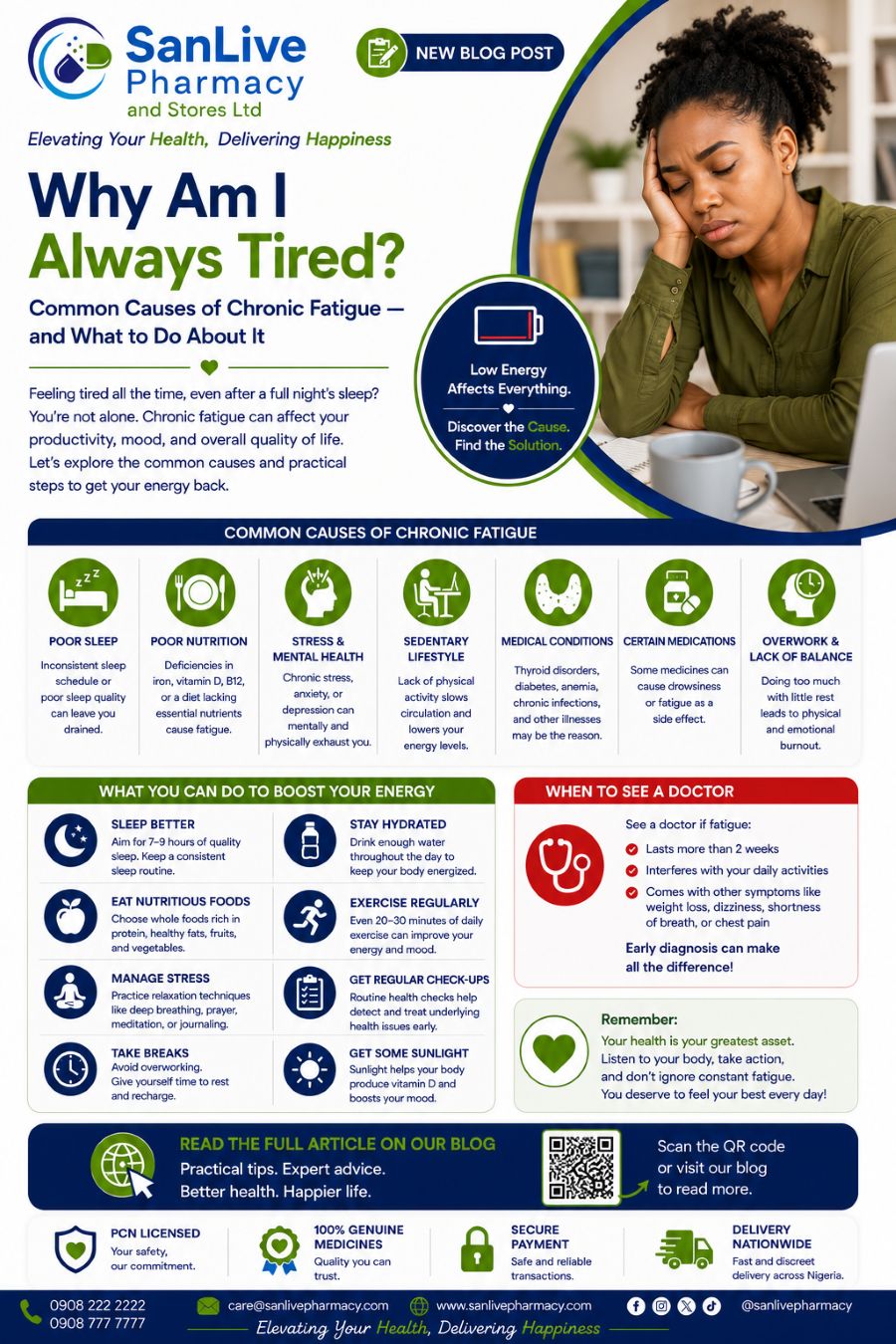
Why Am I Always Tired? Common Causes of Chronic Fatigue and What to Do About It.
You slept. You rested. You took it easy over the weekend. And yet Monday morning arrives and you feel exactly the same — heavy, drained, unmotivated, and exhausted in a way that a good night's sleep never seems to fix. You find yourself reaching for your third cup of tea or coffee before noon, struggling to concentrate through afternoon meetings, and counting down the hours until you can lie down again — only to wake up the next morning feeling no better than when you went to bed.
If this sounds familiar, you are not alone. Chronic fatigue — persistent tiredness that is not relieved by rest and that significantly impairs daily functioning — is one of the most common health complaints in Nigeria and worldwide. It is estimated that between 10 and 25 percent of adults experience clinically significant fatigue at any given time, and in Nigeria's high-stress, high-demand, often nutritionally compromised environment, the true prevalence is likely even higher.
But here is the critical point that most tired Nigerians miss: fatigue is not a diagnosis. It is a symptom. It is your body's most fundamental distress signal — a non-specific alarm that something in your physiology, psychology, or lifestyle is not functioning as it should. And like any alarm, the appropriate response is not to suppress it with caffeine and willpower, but to investigate the underlying cause and address it directly.
This comprehensive guide covers the most common — and most commonly missed — causes of chronic fatigue in the Nigerian context, and gives you the specific, evidence-based actions needed to address each one.
If you are experiencing persistent fatigue and want personalised guidance, speak with a SanLive pharmacist for free — available online, nationwide and internationally.
What Is Chronic Fatigue and How Is It Different from Normal Tiredness?
Normal tiredness is proportionate to exertion — you feel tired after a long working day, an intense workout, or a night of disrupted sleep, and you recover with rest. Chronic fatigue is qualitatively different. It is persistent and disproportionate to activity level, not adequately relieved by sleep or rest, and accompanied by a sense of physical and mental heaviness that makes even simple tasks feel overwhelming.
Clinically significant chronic fatigue is defined as persistent or relapsing fatigue lasting six months or more that significantly reduces functional capacity. However, the practical reality is that many people have been experiencing debilitating fatigue for far shorter periods and deserve investigation and support well before the six-month mark.
Chronic fatigue may be accompanied by cognitive difficulties including poor concentration and memory — sometimes called brain fog; physical symptoms including muscle weakness, joint pain, and headaches; emotional symptoms including low mood, irritability, and anxiety; and sleep disturbances including both insomnia and hypersomnia (sleeping excessively without feeling refreshed).
The Most Common Causes of Chronic Fatigue in Nigeria
Cause 1: Iron Deficiency and Iron Deficiency Anaemia — the Number One Cause of Fatigue in Nigerian Women
Iron deficiency is the most prevalent nutritional deficiency in Nigeria and one of the most common causes of chronic fatigue globally — particularly in women of reproductive age, pregnant women, adolescent girls, and vegetarians.
Iron is essential for haemoglobin production — the protein in red blood cells that carries oxygen from the lungs to every cell and tissue in the body. When iron stores are depleted, haemoglobin production falls, oxygen delivery to tissues is impaired, and the body — literally starved of the oxygen it needs for energy production — responds with pervasive, debilitating fatigue.
Iron deficiency fatigue is characteristically described as a profound physical exhaustion that affects the whole body — heavy limbs, breathlessness on minimal exertion, difficulty climbing stairs, and a constant sense of heaviness that no amount of sleep relieves.
Additional symptoms of iron deficiency and anaemia include pallor of the inner eyelids, gums, and nail beds — one of the most reliable clinical signs; cold hands and feet; brittle, spoon-shaped nails; hair thinning and hair loss; difficulty concentrating and poor memory; unusual food cravings — particularly for ice, clay, or soil (a condition called pica); sore, smooth tongue; and frequent headaches.
Why Nigerian women are disproportionately affected: Monthly menstrual blood loss depletes iron stores in women who do not adequately compensate through diet. Pregnancy and breastfeeding significantly increase iron requirements. Diets heavy in plant-based iron sources — which are less bioavailable than animal-based iron — combined with high phytate consumption from grains and legumes that further impair iron absorption create a perfect environment for iron depletion. Intestinal parasites including hookworm — still prevalent in parts of Nigeria — cause chronic low-level gastrointestinal blood loss that progressively depletes iron stores.
What to do:
Request a full blood count (FBC) and serum ferritin from your doctor or laboratory — serum ferritin measures iron stores and is a more sensitive indicator of iron depletion than haemoglobin alone. Many women have depleted iron stores (low ferritin) causing fatigue before anaemia (low haemoglobin) is detectable.
Increase dietary iron intake through haem iron sources — the most bioavailable form — including red meat, liver, chicken, fish, and eggs. Enhance plant-based iron absorption by consuming iron-rich plant foods alongside Vitamin C-containing foods — a glass of orange juice, fresh tomatoes, or guava with a bean meal dramatically improves iron absorption. Avoid consuming tea, coffee, or dairy products within one hour of iron-rich meals — tannins, caffeine, and calcium significantly impair iron absorption.
Where dietary iron is insufficient to correct deficiency — which is frequently the case with established iron deficiency anaemia — iron supplementation is required. Ferrous sulphate 200mg (containing 65mg elemental iron) two to three times daily is the standard therapeutic dose. Take on an empty stomach where tolerated for maximum absorption — if gastrointestinal side effects including nausea or constipation are significant, take with a small amount of food. Side effects include dark stools — this is normal and harmless — and constipation, which can be managed with adequate hydration and dietary fibre.
✅ Order iron supplements and Vitamin C on SanLive Pharmacy — ferrous sulphate and combination iron formulations, delivered across Nigeria and internationally within 3 to 4 days. Speak with a SanLive pharmacist for guidance on the right iron supplement for your situation.
Cause 2: Vitamin D Deficiency — the Sunshine Paradox
Vitamin D deficiency causing chronic fatigue in a tropical country with year-round abundant sunshine seems paradoxical — yet it is extraordinarily common in Nigeria. The explanation lies in behaviour rather than geography: most Nigerians who live and work in urban environments spend the majority of their day indoors, travelling in enclosed vehicles, and working in offices — with minimal meaningful sun exposure to the skin areas that synthesise Vitamin D.
Vitamin D functions as a hormone in the body — regulating gene expression, immune function, calcium metabolism, muscle function, and critically for fatigue, cellular energy production through its role in mitochondrial function. Low Vitamin D levels are consistently and independently associated with fatigue, muscle weakness, low mood, impaired immune function, and poor sleep quality in multiple large-scale studies.
Symptoms of Vitamin D deficiency beyond fatigue include bone pain and muscle weakness — particularly in the back, hips, and legs; frequent infections — Vitamin D is essential for innate immune function; depression and low mood; hair thinning; and impaired wound healing.
Risk factors for Vitamin D deficiency in Nigeria include spending the majority of the day indoors; consistently covering most of the skin with clothing; using high-factor sunscreen on the rare occasions of outdoor activity; darker skin tone, which requires significantly longer sun exposure to synthesise equivalent Vitamin D compared to lighter skin; obesity — Vitamin D is fat-soluble and is sequestered in adipose tissue, reducing its bioavailability; and malabsorption conditions affecting fat-soluble vitamin absorption.
What to do:
Request a serum 25-hydroxyvitamin D blood test to confirm deficiency — the test is available at most Nigerian private laboratories. A level below 50 nmol/L indicates deficiency; 50 to 75 nmol/L is insufficient; above 75 nmol/L is optimal for most health outcomes.
Spend 15 to 30 minutes daily in direct sunlight — ideally with arms and legs exposed, between 10am and 3pm when UVB radiation is sufficient for synthesis, though this must be balanced against skin cancer risk with prolonged exposure. For confirmed deficiency, supplementation of 2000 to 4000 IU daily is typically required to restore adequate levels — higher doses under medical supervision for severe deficiency.
✅ Order Vitamin D supplements on SanLive Pharmacy — available in 1000 IU and higher strength formulations, delivered across Nigeria and internationally within 3 to 4 days.
Cause 3: Thyroid Disorders — the Most Commonly Missed Cause of Fatigue
The thyroid gland — a butterfly-shaped organ at the base of the neck — produces hormones that regulate metabolic rate in every cell of the body. When thyroid function is insufficient (hypothyroidism), the body's metabolism slows comprehensively, producing a characteristic constellation of symptoms in which chronic, unrelenting fatigue is typically the most prominent and most distressing feature.
Hypothyroidism is significantly more common in women than men and increases in prevalence with age — but it occurs across all ages and both sexes. It is widely underdiagnosed in Nigeria, where thyroid function testing is not routinely included in standard health checks and where fatigue is frequently attributed to lifestyle or stress without investigation of underlying endocrine causes.
Symptoms of hypothyroidism beyond fatigue create a distinctive clinical picture: weight gain despite no change in diet — often the feature patients find most distressing alongside fatigue; feeling cold when others are comfortable — particularly cold hands and feet; constipation; dry, rough skin and hair; hair thinning or loss including the outer third of the eyebrows — a particularly characteristic sign; slow heart rate; depression and low mood; brain fog and poor memory; heavy, irregular periods in women; muscle aches and weakness; and a puffy, swollen face — particularly around the eyes.
Hyperthyroidism — excessive thyroid hormone production — causes a different fatigue pattern: exhaustion caused by the body running at excessively high metabolic rate, often accompanied by unexplained weight loss despite good appetite, rapid or irregular heartbeat, anxiety and tremors, excessive sweating, heat intolerance, and frequent bowel movements.
What to do:
Request thyroid function tests — TSH (thyroid stimulating hormone), free T4, and free T3 — from your doctor or laboratory. TSH is the most sensitive single test for detecting both hypothyroidism (elevated TSH) and hyperthyroidism (suppressed TSH). Thyroid antibody testing (anti-TPO and anti-thyroglobulin antibodies) is additionally useful for diagnosing autoimmune thyroid disease — the most common cause of hypothyroidism globally.
Confirmed hypothyroidism is treated with levothyroxine — a synthetic thyroid hormone replacement taken once daily that, when properly dosed and monitored, fully restores thyroid function and resolves fatigue and all associated symptoms. Hyperthyroidism treatment depends on the underlying cause and includes antithyroid medications, radioactive iodine, or surgery under specialist endocrinology guidance.
✅ Order thyroid support supplements on SanLive Pharmacy and speak with a SanLive pharmacist about thyroid health concerns and appropriate next steps.
Cause 4: Poor Sleep Quality — You Are Sleeping But Not Resting
One of the most important and most commonly overlooked distinctions in fatigue evaluation is the difference between sleep duration and sleep quality. Many people who report "sleeping eight hours" are in fact spending eight hours in bed but achieving significantly less restorative sleep — due to undiagnosed sleep disorders, poor sleep architecture, or environmental disruptions that fragment sleep without fully waking the sleeper.
The result is waking after apparently adequate sleep feeling completely unrefreshed — as though no sleep occurred at all. This pattern, experienced consistently, produces the same physiological consequences as sleep deprivation: hormonal dysregulation, impaired cognitive function, immune suppression, elevated inflammatory markers, and profound, persistent fatigue.
Common causes of poor sleep quality causing daytime fatigue include:
Sleep apnoea — the single most important and most underdiagnosed sleep disorder in Nigeria. Sleep apnoea involves repeated episodes of partial or complete airway obstruction during sleep, causing the sleeper to partially arouse repeatedly throughout the night to restore breathing — never reaching the deep, restorative stages of sleep needed for genuine rest. The sleeper typically has no memory of these arousals. Key features include loud, disruptive snoring; witnessed pauses in breathing during sleep (reported by a partner); waking with a dry mouth or headache; unrefreshing sleep regardless of duration; and profound daytime sleepiness — falling asleep during meetings, while watching television, or during other sedentary activities. Obesity is a major risk factor, but sleep apnoea also occurs in non-obese individuals with certain anatomical features. Diagnosis requires a sleep study; treatment with continuous positive airway pressure (CPAP) therapy is highly effective and produces dramatic improvements in fatigue, cognitive function, and cardiovascular health.
Restless leg syndrome — uncomfortable sensations in the legs during rest or sleep that create an irresistible urge to move, disrupting sleep onset and maintenance.
Poor sleep hygiene — irregular sleep timing, excessive screen exposure before bed, caffeine consumption after 2pm, alcohol use near bedtime, a hot or noisy sleep environment, and going to bed while stressed or mentally activated all fragment sleep architecture and reduce the proportion of restorative deep sleep achieved.
Circadian rhythm disruption — shift work, irregular schedules, and excessive artificial light exposure at night disrupt the internal clock that governs sleep-wake cycling, producing poor-quality sleep even when sleep hours are adequate.
What to do:
Implement consistent, evidence-based sleep hygiene as detailed in the self-care guide elsewhere on SanLive Pharmacy. If snoring is prominent, sleep is consistently unrefreshing despite adequate duration, or daytime sleepiness is significant, seek evaluation for sleep apnoea — this requires medical assessment and a sleep study. Speak with a SanLive pharmacist about sleep support supplements including magnesium glycinate, which has strong evidence for improving sleep quality in magnesium-deficient individuals.
✅ Order magnesium glycinate and sleep support supplements on SanLive Pharmacy — delivered across Nigeria and internationally within 3 to 4 days.
Cause 5: Depression and Anxiety — When Mental Health Drains Physical Energy
Depression and anxiety are among the most common and most consistently underdiagnosed causes of chronic fatigue in Nigeria — in a cultural context where psychological symptoms are frequently not recognised as health conditions, where the expression of mental health struggles carries significant stigma, and where physical symptoms of psychiatric illness are often the presenting complaint rather than mood disturbance itself.
The connection between mental health and physical fatigue is not metaphorical — it is biochemical. Depression causes fatigue through multiple physiological mechanisms: it activates the hypothalamic-pituitary-adrenal (HPA) axis chronically, producing elevated cortisol that disrupts sleep and energy metabolism; it impairs mitochondrial function, reducing cellular energy production; it alters neurotransmitter systems — particularly dopamine and serotonin — that regulate motivation and the experience of energy; and it profoundly disrupts sleep architecture, reducing restorative deep sleep.
Many depressed patients present to healthcare providers with fatigue, headaches, body pain, and digestive symptoms — never mentioning low mood, because in their cultural context, admitting emotional distress feels less acceptable than reporting physical symptoms.
Anxiety produces fatigue through a different mechanism: the chronic activation of the sympathetic nervous system (fight-or-flight) depletes energy reserves, impairs sleep quality through hyperarousal, and creates a state of persistent physiological tension that is profoundly exhausting to maintain.
Signs that fatigue may be depression- or anxiety-related include fatigue that is worst in the morning and improves somewhat through the day; loss of interest or pleasure in activities previously enjoyed (anhedonia); persistent low mood, sadness, or emotional flatness; excessive worry, racing thoughts, or inability to relax; sleep disturbances — either inability to sleep or sleeping excessively; changes in appetite and weight; difficulty concentrating or making decisions; persistent feelings of worthlessness, guilt, or hopelessness; and social withdrawal and isolation.
What to do:
Acknowledge the possibility that mental health may be contributing to physical fatigue — this is the first and most important step, and in the Nigerian cultural context often the hardest. Speak with a doctor about a mental health assessment. Effective treatments for depression and anxiety include psychological therapy — particularly cognitive behavioural therapy (CBT), which has the strongest evidence base; antidepressant medication where indicated; lifestyle modifications including exercise, which has demonstrated efficacy comparable to medication for mild to moderate depression; and social support and community connection.
Physical activity is one of the most powerful and most accessible interventions for both depression-related and anxiety-related fatigue — it reduces cortisol, increases endorphins and BDNF, improves sleep quality, and provides structured daily activity that counteracts the social withdrawal that perpetuates depression.
Speak with a SanLive pharmacist in a completely confidential setting if you are concerned about mental health-related fatigue — our team can provide appropriate guidance and signposting to professional support.
Cause 6: Diabetes and Blood Sugar Dysregulation — Energy Volatility
Uncontrolled or undiagnosed diabetes — and the insulin resistance that precedes it — is a significant and common cause of chronic fatigue in Nigeria, where the prevalence of type 2 diabetes is rising rapidly and the majority of cases are undiagnosed.
Fatigue in diabetes arises from multiple simultaneous mechanisms. When blood sugar is consistently elevated, glucose cannot enter cells efficiently — leaving the body's tissues energy-starved despite high blood glucose levels. The kidneys work overtime to excrete excess glucose — a process that is energetically demanding and causes significant fluid loss, leading to dehydration. Elevated blood glucose promotes chronic low-grade inflammation that is inherently exhausting. And poor-quality sleep — significantly more common in diabetic patients due to nocturia, neuropathic pain, and sleep apnoea — adds cumulative sleep deprivation to the metabolic energy deficit.
Beyond established diabetes, insulin resistance — a state where cells do not respond efficiently to insulin, causing the pancreas to produce compensatory excess insulin — produces its own fatigue pattern: energy spikes following carbohydrate-rich meals followed by pronounced crashes as insulin overcorrects, creating a cycle of energy volatility that many Nigerians experience as chronic tiredness.
Signs that blood sugar dysregulation may be causing fatigue include fatigue that is worst after meals — particularly carbohydrate-heavy meals; increased thirst and frequent urination; blurred vision; slow-healing wounds or frequent infections; tingling or numbness in the hands or feet; unexplained weight loss (in uncontrolled type 1 diabetes); and weight gain around the abdomen with increased fatigue (in type 2 diabetes and insulin resistance).
What to do:
Request fasting blood glucose, postprandial blood glucose (two hours after eating), and HbA1c testing. A fasting glucose above 7.0 mmol/L or HbA1c above 6.5 percent confirms diabetes; fasting glucose of 6.1 to 6.9 mmol/L or HbA1c of 5.7 to 6.4 percent indicates pre-diabetes. Reduce refined carbohydrate and added sugar intake, increase dietary fibre and protein, engage in regular physical activity, and manage weight. Medical management of confirmed diabetes with appropriate medication is essential. Speak with a SanLive pharmacist about diabetes management support.
✅ Order blood glucose monitoring supplies and diabetes support products on SanLive Pharmacy — delivered across Nigeria and internationally within 3 to 4 days.
Cause 7: Dehydration — the Most Overlooked Energy Thief
Mild chronic dehydration is one of the most prevalent and most treatable causes of persistent fatigue in Nigeria — where hot, humid conditions combined with inadequate water intake and widespread preference for caloric beverages over water create a population that is chronically mildly dehydrated.
Even mild dehydration — a body water deficit of just 1 to 2 percent — measurably reduces cognitive performance, physical endurance, mood, and energy levels. The mechanism is straightforward: blood becomes more viscous when dehydrated, making it harder for the heart to pump and reducing oxygen and nutrient delivery to tissues. Cellular energy production requires water as a reactant. The kidneys work harder to concentrate urine, diverting energy from other functions. And dehydration directly impairs the brain's ability to regulate mood and maintain focused attention.
The insidious aspect of chronic mild dehydration is that the thirst mechanism adapts to the dehydrated state over time — meaning many chronically dehydrated people no longer reliably feel thirsty, and many misinterpret the fatigue and cognitive cloudiness of dehydration as hunger, needing more sleep, or simply "how they are."
What to do:
Begin every morning with 400 to 500ml of water before anything else. Carry a reusable water bottle and maintain consistent intake throughout the day. Monitor urine colour — pale straw yellow indicates adequate hydration; dark yellow means drink water immediately. In Nigeria's climate, target 2.5 to 3.5 litres of total daily fluid intake. Replace caloric beverages — soft drinks, sugary teas, packaged juices — with water as the primary daily beverage.
Cause 8: Nutritional Deficiencies Beyond Iron and Vitamin D
Several additional nutritional deficiencies contribute significantly to chronic fatigue in Nigerian adults and are worth evaluating systematically.
Vitamin B12 deficiency causes fatigue, neurological symptoms including tingling in the hands and feet, brain fog, and megaloblastic anaemia — large, poorly functioning red blood cells. B12 is found exclusively in animal products — meat, fish, eggs, and dairy. Strict vegetarians and vegans are at significant risk. Metformin — widely used for diabetes — impairs B12 absorption with prolonged use, making B12 monitoring important for long-term metformin users. Intramuscular B12 injection or high-dose oral supplementation corrects confirmed deficiency effectively.
Folate (Vitamin B9) deficiency causes fatigue, megaloblastic anaemia, and in pregnancy, neural tube defects. Common in women of reproductive age eating inadequate green vegetables and legumes. Supplementation of 400 to 800mcg daily corrects deficiency and is essential in women planning pregnancy or who are pregnant.
Magnesium deficiency — as detailed in the self-care guide — impairs cellular energy production at the mitochondrial level, producing fatigue, muscle weakness, poor sleep, and anxiety. Widely deficient in Nigerians eating high-refined-carbohydrate, low-whole-food diets.
Vitamin B complex deficiencies — B1 (thiamine), B2 (riboflavin), B3 (niacin), B5 (pantothenic acid), and B6 (pyridoxine) are all essential cofactors in cellular energy production pathways. Deficiency of any produces fatigue as a prominent feature. A comprehensive B-complex supplement addresses this collectively.
CoQ10 (Coenzyme Q10) deficiency — CoQ10 is an essential component of the mitochondrial electron transport chain, the biochemical process by which cells produce ATP (cellular energy). Natural CoQ10 production declines with age and is depleted by statin medications — a significant consideration for the growing number of Nigerians on statin therapy for high cholesterol. CoQ10 supplementation at 100 to 300mg daily can significantly improve energy levels in statin users and older adults.
✅ Order B12, folate, B-complex, magnesium, and CoQ10 on SanLive Pharmacy — all NAFDAC-compliant, delivered across Nigeria and internationally within 3 to 4 days.
Cause 9: Chronic Infections — Malaria, Typhoid, and Others
In Nigeria, low-grade, undertreated, or recurrent infections are a significant and frequently underappreciated cause of chronic fatigue — particularly in individuals who experience repeated malaria episodes, have had incompletely treated typhoid fever, or have underlying HIV infection that is undiagnosed or inadequately managed.
Malaria produces fatigue both during acute episodes and — particularly with recurrent infections or inadequately treated illness — in a post-malarial fatigue pattern that can persist for weeks after parasite clearance. The destruction of red blood cells during malaria produces anaemia that compounds the fatigue of the infection itself.
Typhoid fever frequently causes a prolonged convalescence during which fatigue and weakness can persist for weeks to months after the acute febrile illness resolves.
HIV — when undiagnosed or poorly controlled — causes chronic immune activation and inflammation that produces profound, persistent fatigue as one of its most significant symptoms.
Hepatitis B and C — both endemic in Nigeria — cause chronic hepatic inflammation that drains energy and produces fatigue as a prominent symptom.
Intestinal parasites — including hookworm, giardia, and Entamoeba histolytica — cause chronic malabsorption, blood loss, and immune activation that produce persistent fatigue particularly in individuals with repeated exposure.
What to do:
If persistent fatigue is accompanied by recurrent fever, night sweats, unexplained weight loss, or gastrointestinal symptoms, request a comprehensive infection screen including malaria film and RDT, typhoid serology (Widal test and blood culture), HIV test, hepatitis B surface antigen and hepatitis C antibody, and stool microscopy for parasites.
Cause 10: Chronic Stress and Adrenal Fatigue — When the Stress Response Exhausts Itself
Chronic psychological stress — the persistent, unrelenting pressure of financial difficulty, work demands, relationship strain, health concerns, and the accumulated weight of daily Nigerian life — is one of the most significant and most underaddressed drivers of chronic fatigue.
The physiological mechanism is well understood. Acute stress activates the sympathetic nervous system and the HPA axis, producing adrenaline and cortisol that mobilise energy and sharpen alertness. This is adaptive in the short term. When stress is chronic and unrelieved, however, the HPA axis remains persistently activated — maintaining elevated cortisol that disrupts sleep architecture, impairs immune function, promotes abdominal fat accumulation, suppresses thyroid and reproductive hormone production, and progressively depletes the neurological and hormonal resources required for normal energy regulation.
The result is a characteristic fatigue pattern often described as "wired but tired" — persistent exhaustion combined with an inability to fully relax, heightened anxiety, poor sleep despite tiredness, and a sense of being perpetually depleted regardless of rest.
What to do:
Daily, intentional stress management is not optional for people experiencing chronic stress-related fatigue — it is as medically necessary as any pharmacological intervention. Evidence-based practices include regular moderate physical exercise, which is the most potent stress-reducing intervention available and simultaneously addresses fatigue directly; mindfulness meditation or prayer, which shifts the autonomic nervous system from sympathetic to parasympathetic dominance measurably; social connection and community engagement; creative and recreational activities; and professional psychological support for severe or persistent stress. Adaptogenic supplements including ashwagandha (300 to 600mg daily) and rhodiola rosea have clinical evidence for reducing cortisol, improving stress resilience, and reducing fatigue in stressed individuals.
✅ Order ashwagandha and adaptogenic supplements on SanLive Pharmacy — delivered across Nigeria and internationally within 3 to 4 days.
Cause 11: Sedentary Lifestyle — The Counterintuitive Fatigue Trap
It seems paradoxical — but physical inactivity causes fatigue. This counterintuitive relationship is one of the most important and most practically actionable insights in fatigue management.
When the body is consistently sedentary, cardiovascular fitness declines — the heart and lungs become less efficient at delivering oxygen to working muscles and organs. Muscle mass decreases — reducing the metabolic engine that generates energy at rest. Mitochondrial density in muscle cells falls — reducing cellular energy production capacity. Mood-regulating neurotransmitters including serotonin, dopamine, and endorphins are under-produced — contributing to low energy, low motivation, and depression. And sleep quality deteriorates — sedentary individuals consistently show poorer sleep architecture and less restorative slow-wave sleep than physically active individuals.
The result is a self-reinforcing cycle: inactivity causes fatigue, fatigue reduces motivation to be active, reduced activity worsens fatigue. Breaking this cycle requires a counter-intuitive but evidence-backed approach: beginning physical activity even in the presence of fatigue, at low intensity and short duration, and gradually increasing as fitness improves.
What to do:
Start with ten minutes of gentle walking daily — this is sufficient to begin reversing the deconditioning that drives sedentary fatigue. Increase duration by five minutes weekly. Add two to three sessions of gentle strength training weekly. Most people experiencing exercise-related improvements in fatigue notice changes within two to three weeks of consistent, moderate activity — the physiological improvements in cardiovascular efficiency, neurotransmitter production, and sleep quality accumulate relatively quickly.
When Fatigue Requires Urgent Medical Attention
While most chronic fatigue has identifiable, treatable causes within the categories above, certain accompanying symptoms indicate that urgent medical evaluation is necessary without delay.
Seek prompt medical attention if fatigue is accompanied by unexplained significant weight loss — more than 5 percent of body weight over six months without dietary change; persistent fever or night sweats; blood in urine, stool, or sputum; a new lump or swelling anywhere in the body; progressive breathlessness on minimal exertion or at rest; chest pain; swelling of the legs; yellowing of the eyes or skin; severe, unrelenting headache; or neurological symptoms including weakness, numbness, or vision disturbance.
These combinations can indicate serious underlying conditions including malignancy, significant organ disease, or advanced infection that require urgent specialist evaluation.
Chronic Fatigue — Causes and Actions Summary
| Cause | Key Signs | Primary Action | Support from SanLive |
|---|---|---|---|
| Iron deficiency | Pallor, breathlessness, cold extremities | FBC and ferritin test, iron supplementation | Order iron supplements |
| Vitamin D deficiency | Bone pain, muscle weakness, low mood | Vitamin D blood test, supplementation | Order Vitamin D |
| Thyroid disorder | Weight change, cold intolerance, hair loss | TSH and thyroid function test | Pharmacist consultation |
| Poor sleep quality | Unrefreshing sleep, snoring, brain fog | Sleep hygiene, sleep apnoea evaluation | Order magnesium |
| Depression/anxiety | Low mood, anhedonia, excessive worry | Mental health assessment, therapy, exercise | Pharmacist consultation |
| Diabetes | Thirst, frequent urination, blurred vision | Fasting glucose and HbA1c test | Order diabetes care products |
| Dehydration | Dark urine, headache, poor concentration | Increase water intake to 2.5–3.5 litres daily | Order electrolyte support |
| Nutritional deficiencies | Varied by deficiency | Blood testing, targeted supplementation | Order B12, B-complex, CoQ10 |
| Chronic infection | Recurrent fever, weight loss, night sweats | Comprehensive infection screen | Pharmacist consultation |
| Chronic stress | Wired but tired, poor sleep, anxiety | Daily stress management, adaptogens | Order ashwagandha |
| Sedentary lifestyle | Fatigue without exertion, poor fitness | Begin graduated daily activity | Pharmacist consultation |
Nigerians in the Diaspora — Fatigue Support Available Internationally
If you are a Nigerian living in the UK, USA, Canada, Australia, Europe, or the Middle East and are experiencing chronic fatigue, SanLive Pharmacy ships all fatigue-related supplements and support products internationally.
- Delivery time: 3 to 4 days to most international destinations
- Packaging: Plain, discreet, and unbranded
- Support: Free pharmacist consultation available for personalised fatigue assessment and supplement guidance wherever you are
Frequently Asked Questions
How do I know if my fatigue is physical or psychological? In practice, the distinction is often blurred — physical conditions cause psychological distress, and psychological conditions cause physical symptoms including fatigue. The most productive approach is comprehensive evaluation rather than trying to categorise fatigue as either physical or mental. A full blood count, iron studies, thyroid function, vitamin D, fasting glucose, and B12 represent a reasonable initial screen for physical causes. If these are normal and fatigue persists, mental health evaluation is the appropriate next step.
Can chronic fatigue be cured? When fatigue has an identifiable underlying cause — iron deficiency, hypothyroidism, vitamin D deficiency, uncontrolled diabetes, depression — addressing that cause typically produces complete or near-complete resolution of fatigue. So yes — for the majority of people experiencing chronic fatigue, the condition is entirely resolvable once the cause is identified and appropriately treated.
What is the fastest way to increase energy when you are chronically tired? The fastest evidence-based interventions depend on the cause. For dehydration-related fatigue — drink 500ml of water immediately; improvement is often felt within 30 minutes. For iron deficiency fatigue — iron supplementation produces measurable improvement in energy within two to four weeks of consistent treatment. For sleep-related fatigue — one week of consistently optimised sleep produces noticeable energy improvement. For general nutritional fatigue — a comprehensive B-complex supplement combined with magnesium often produces noticeable improvement within one to two weeks.
Should I take energy drinks or stimulants for chronic fatigue? No. Energy drinks and stimulants including high-dose caffeine products address the symptom of fatigue temporarily by stimulating the central nervous system — while entirely failing to address the underlying cause and typically worsening the problem over time through disrupted sleep, adrenal stress, and rebound fatigue when stimulant effects wear off. Addressing the underlying cause produces sustainable energy restoration; stimulants produce an energy debt that worsens the underlying problem.
Can diaspora Nigerians order fatigue support products from SanLive Pharmacy? Yes. SanLive Pharmacy ships to the UK, USA, Canada, Australia, Europe, and the Middle East with delivery in 3 to 4 days in plain, discreet packaging.
The Bottom Line
Chronic fatigue is not something you simply have to accept, push through with caffeine, or attribute to the general demands of Nigerian life. It is a symptom — a signal from your body that something needs attention. And for the vast majority of people experiencing it, that something is identifiable, addressable, and treatable.
Start by investigating the most common causes systematically. Test for iron deficiency, vitamin D deficiency, and thyroid dysfunction — the three most commonly missed and most easily corrected causes of fatigue. Optimise your sleep, hydration, and physical activity. Address chronic stress directly rather than managing its symptoms. And when you need expert guidance, trusted supplements, or professional pharmaceutical support — SanLive Pharmacy is here.
You deserve to feel well. Not just functional — genuinely, sustainably well.
- 🔵 Order Iron Supplements
- 🔵 Order Vitamin D
- 🔵 Order Vitamin B12
- 🔵 Order B-Complex Vitamins
- 🔵 Order Magnesium Glycinate
- 🔵 Order CoQ10
- 🔵 Order Ashwagandha
- 🔵 Order Omega-3 Fish Oil
- 🔵 Browse all Energy and Fatigue Support Supplements
- 🔵 Speak with a SanLive Pharmacist for Free
This article is for informational and educational purposes only and does not constitute medical advice. Chronic fatigue with concerning accompanying symptoms requires urgent medical evaluation by a qualified healthcare professional. Please consult your doctor or pharmacist for personalised guidance. SanLive Pharmacy and Stores Ltd operates in compliance with NAFDAC regulations and Pharmacists Council of Nigeria (PCN) standards.


.jpg)