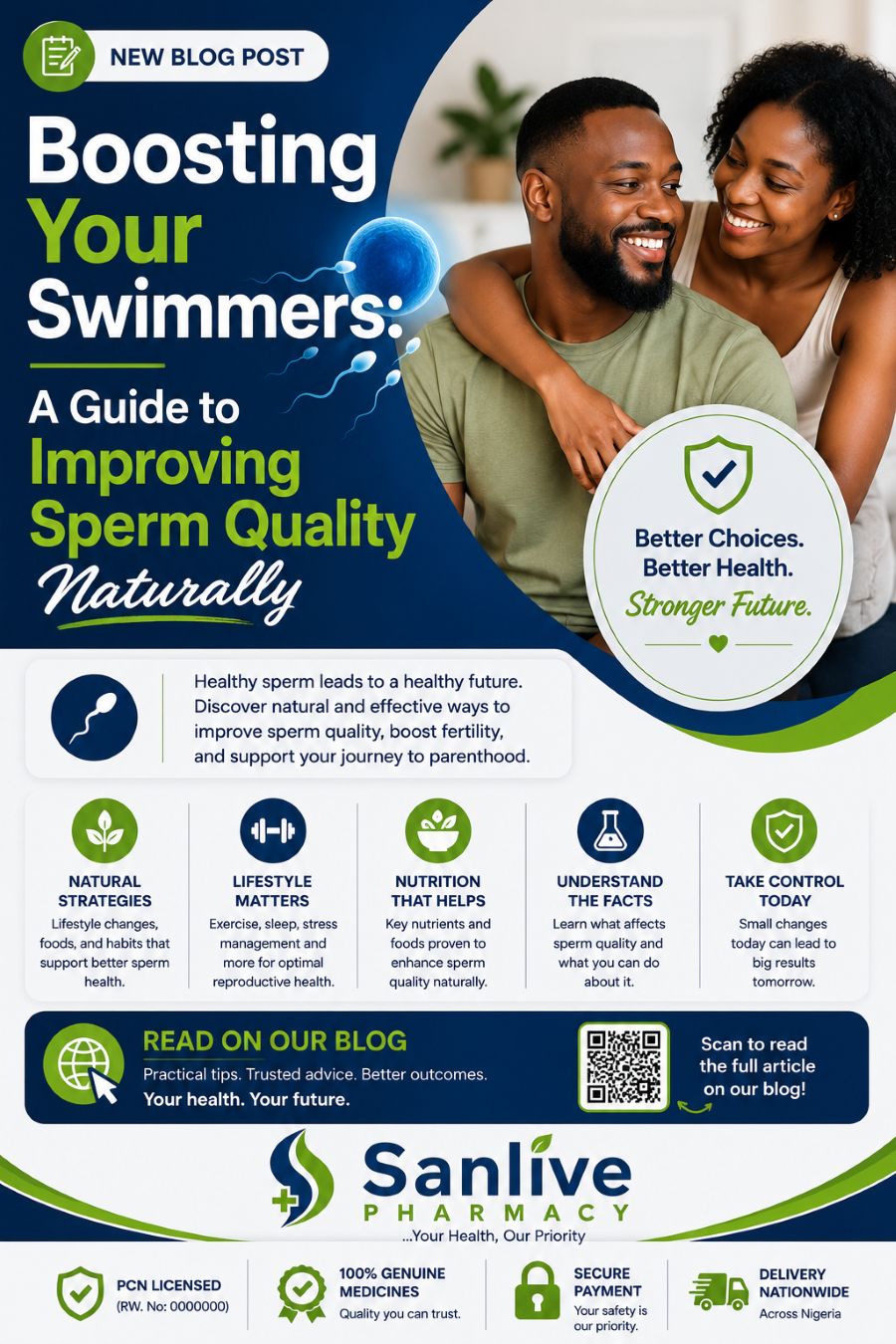
Boosting Your Swimmers: A Complete Guide to Improving Sperm Quality Naturally (2026)
If you and your partner have been trying to conceive without success, the conversation about fertility should never be one-sided. Male factor infertility accounts for approximately 40 to 50 percent of all infertility cases globally — and in Nigeria, it is significantly underdiagnosed because many men are reluctant to get tested. The good news is that sperm quality is one of the most responsive aspects of male health to lifestyle changes. This guide covers everything you need to know about improving sperm count, motility, morphology, and overall quality — naturally and with clinical support where needed.
If you want a head start, browse Sanlive Pharmacy's range of male fertility supplements and support products while you read.
What Does "Sperm Quality" Actually Mean?
When doctors talk about sperm quality, they are referring to four key measurements evaluated during a semen analysis:
1. Sperm Count (Concentration) The number of sperm cells per milliliter of semen. A normal count is 16 million sperm per milliliter or more. Below this is called oligospermia. Zero sperm is called azoospermia.
2. Sperm Motility The percentage of sperm that are actively moving. At least 42 percent of sperm should be motile (moving), with at least 30 percent showing progressive forward movement. Poor motility is called asthenospermia.
3. Sperm Morphology The shape and structure of sperm cells. At least 4 percent of sperm should have a normal shape under the Kruger strict criteria. Abnormal morphology is called teratospermia.
4. Semen Volume A normal ejaculate should be between 1.5ml and 5ml. Very low volume can indicate hormonal issues or blockages.
All four parameters matter. A man can have a high sperm count but poor motility, or good motility but severely abnormal morphology. A full semen analysis gives the complete picture.
What Causes Poor Sperm Quality in Nigerian Men?
Before improving sperm quality, it helps to understand what is working against it. The most common causes in Nigeria include:
- Varicocele — enlarged veins in the scrotum that raise testicular temperature and damage sperm production. It is the most common treatable cause of male infertility worldwide.
- Infections — untreated STIs like gonorrhea and chlamydia, as well as mumps orchitis, can permanently damage sperm production
- Heat exposure — consistently sitting for long hours, wearing tight underwear, placing laptops on the lap, or working in hot environments all raise scrotal temperature and reduce sperm quality
- Poor diet and nutritional deficiencies — low zinc, selenium, folate, and antioxidant intake directly impairs sperm production
- Smoking — damages sperm DNA and reduces count and motility significantly
- Alcohol — lowers testosterone and reduces sperm production
- Stress — chronically elevated cortisol suppresses testosterone and disrupts sperm development
- Obesity — excess body fat converts testosterone to estrogen, disrupting the hormonal balance needed for healthy sperm
- Anabolic steroids and certain medications — steroids shut down natural testosterone production entirely, causing testicular shrinkage and zero sperm count
- Mobile phone radiation — emerging research suggests keeping phones in trouser pockets may negatively affect sperm quality over time
How Long Does It Take to Improve Sperm Quality?
This is the most important thing to understand before making any changes: sperm takes approximately 74 days to fully develop (a process called spermatogenesis). This means any lifestyle change, supplement, or treatment you start today will not show up in your semen analysis for at least 2 to 3 months.
Consistency is everything. You are not improving the sperm you have right now — you are improving the sperm your body will produce over the next 3 months.
Natural Ways to Improve Sperm Quality
1. Fix Your Diet — Sperm is Built From What You Eat
Your body manufactures sperm from the raw materials you give it. A diet low in antioxidants, zinc, and healthy fats produces poor quality sperm. Here is what to focus on:
Foods that boost sperm quality:
- Eggs — rich in protein and Vitamin E, protect sperm from oxidative damage
- Dark leafy greens (ugu, waterleaf, spinach) — high in folate, which reduces abnormal sperm morphology
- Tomatoes — high in lycopene, one of the most studied nutrients for improving sperm motility and morphology
- Walnuts and other tree nuts — rich in omega-3 fatty acids that improve sperm membrane quality
- Pumpkin seeds — one of the best natural sources of zinc, which is essential for testosterone production and sperm development
- Oily fish (mackerel, sardines, tuna) — omega-3 fatty acids directly improve sperm motility
- Citrus fruits and guava — high in Vitamin C, which protects sperm DNA from oxidative damage
- Oysters — the single richest dietary source of zinc available
- Dark chocolate — contains L-arginine, an amino acid shown to increase sperm count and motility
Foods and habits to reduce or eliminate:
- Processed and fried foods high in trans fats
- Sugary drinks and sodas
- Excessive red meat
- Soy products in large quantities (phytoestrogens can lower testosterone)
- Alcohol — especially in large quantities
2. Take the Right Supplements
While a good diet is the foundation, targeted supplements can fill nutritional gaps and directly support sperm development. The most evidence-backed options include:
Zinc The single most important mineral for male fertility. Zinc is concentrated in the prostate and testes and is directly involved in testosterone production, sperm formation, and sperm motility. Nigerian men with poor diets are frequently zinc deficient.
- Recommended dose: 25mg to 45mg per day
Folic Acid Most people think of folic acid as a pregnancy supplement for women — but men need it too. Folate is critical for DNA synthesis during sperm production. Low folate is linked to abnormal sperm morphology and DNA fragmentation.
- Recommended dose: 400mcg to 800mcg per day
Vitamin C A powerful antioxidant that protects sperm cells from oxidative stress — one of the leading causes of sperm DNA damage. Studies show Vitamin C supplementation can improve sperm count, motility, and morphology in men with oxidative stress-related infertility.
- Recommended dose: 500mg to 1000mg per day
Vitamin E Works synergistically with Vitamin C to protect sperm membranes from oxidative damage. Often combined with selenium for maximum effect.
- Recommended dose: 400 IU per day
Selenium A trace mineral that is essential for the structural integrity of sperm. Selenium deficiency is linked to poor sperm motility and increased DNA fragmentation.
- Recommended dose: 100mcg to 200mcg per day
CoQ10 (Coenzyme Q10) CoQ10 is an antioxidant naturally produced by the body that powers energy production inside cells — including sperm cells. Sperm need enormous energy to swim, and CoQ10 supplementation has been shown in multiple studies to significantly improve both sperm count and motility.
- Recommended dose: 200mg to 600mg per day
L-Carnitine An amino acid found in high concentrations in the epididymis where sperm mature. L-Carnitine is essential for sperm motility — it literally fuels the sperm's ability to swim. It is one of the most studied supplements for improving motility specifically.
- Recommended dose: 1000mg to 3000mg per day
Ashwagandha (Withania somnifera) A well-researched adaptogenic herb that has been shown in clinical studies to increase testosterone levels, improve sperm count, and significantly improve sperm motility. It also reduces cortisol — making it doubly beneficial for men whose fertility is affected by stress.
- Recommended dose: 300mg to 600mg of root extract per day
Lycopene The antioxidant that gives tomatoes their red color. Multiple studies show lycopene supplementation improves sperm concentration, motility, and morphology — particularly in men with idiopathic infertility.
- Recommended dose: 4mg to 8mg per day
✅ Browse Sanlive Pharmacy's full range of male fertility supplements including zinc, CoQ10, L-Carnitine, and combination male fertility formulas — delivered across Nigeria and internationally within 3 to 4 days.
3. Keep Your Testicles Cool
Sperm production requires a temperature approximately 2 to 3 degrees Celsius lower than normal body temperature. This is why the testicles are located outside the body. Anything that raises scrotal temperature for extended periods reduces sperm production.
Practical steps:
- Switch from tight briefs to loose-fitting boxers or boxer briefs
- Avoid placing laptops directly on your lap — use a desk or lap tray
- Take breaks if your job involves prolonged sitting
- Avoid very hot baths, saunas, and steam rooms during a conception attempt
- Keep your phone in a jacket pocket or bag rather than your trouser pocket
4. Exercise — But Not Too Much
Regular moderate exercise boosts testosterone levels, reduces body fat, improves blood circulation, and reduces oxidative stress — all of which support healthy sperm production.
Best exercises for sperm quality:
- Brisk walking 30 minutes daily
- Swimming
- Weight training 3 to 4 times per week
- Cycling — with one important caveat (see below)
The cycling caution: Extended cycling compresses the perineum and can reduce blood flow to the testicles. If you are a regular cyclist, use a padded seat, wear proper cycling shorts, and take regular breaks during long rides.
Avoid overtraining: Excessive endurance exercise — marathon training, ultra-running — can temporarily lower testosterone and impair sperm production. Balance is key.
5. Quit Smoking
The evidence against smoking and sperm quality is overwhelming. Smoking:
- Reduces sperm count by up to 23 percent
- Damages sperm DNA — increasing miscarriage risk even when conception occurs
- Reduces sperm motility
- Increases the proportion of abnormally shaped sperm
The good news is that sperm quality begins to improve within 3 months of quitting completely.
6. Reduce Alcohol Consumption
Alcohol is directly toxic to the Leydig cells in the testicles that produce testosterone. Heavy drinking lowers testosterone, reduces sperm production, and impairs sperm motility. Even moderate drinking — more than 5 units per week — has been shown to affect semen quality.
If you are actively trying to conceive, the evidence supports cutting alcohol out entirely or reducing it to very occasional use during the 3-month window before conception.
7. Manage Stress Seriously
Chronic stress elevates cortisol, which directly suppresses testosterone production and disrupts the hormonal signaling required for sperm development. Many Nigerian men carry high levels of financial, work, and family stress — and it shows up in their semen analysis.
Practical stress management strategies:
- Regular physical exercise (as above)
- Adequate sleep — 7 to 9 hours per night consistently
- Mindfulness or prayer practices
- Reducing caffeine intake after midday
- Ashwagandha supplementation (as above)
- Addressing relationship stress openly with your partner
8. Achieve and Maintain a Healthy Weight
Obesity is one of the most underappreciated causes of male infertility in Nigeria. Excess body fat — particularly around the abdomen — converts testosterone into estrogen through a process called aromatization. This lowers testosterone, disrupts sperm production, and raises scrotal temperature due to fat accumulation in the groin area.
Studies show that losing even 10 to 15 percent of body weight in obese men can significantly improve sperm count, motility, and testosterone levels within 3 to 6 months.
9. Limit Exposure to Environmental Toxins
Many everyday chemicals act as endocrine disruptors — they interfere with your body's hormonal system and impair sperm production. Common sources include:
- Pesticides — found on unwashed fruits and vegetables
- Plastics — BPA in plastic containers, especially when heated (avoid heating food in plastic containers)
- Heavy metals — lead, mercury, and cadmium from occupational or environmental exposure
- Industrial chemicals — relevant for men working in manufacturing, agriculture, or chemical industries
Practical steps: Wash produce thoroughly, switch to glass or stainless steel food containers, and use protective equipment in occupational settings where chemical exposure is a risk.
When to See a Doctor
Natural improvements work best for mild to moderate sperm quality issues. You should see a doctor or fertility specialist if:
- You have been trying to conceive for 12 months or more without success
- Your semen analysis shows azoospermia (no sperm)
- You have a known varicocele or history of testicular injury or surgery
- You have had mumps as an adult
- You have a history of STIs
- Your partner has had two or more miscarriages — poor sperm DNA fragmentation may be the cause
A fertility specialist can order a full semen analysis, hormonal panel, scrotal ultrasound, and DNA fragmentation test to give you a complete picture.
Supplement Comparison Table
| Supplement | Primary Benefit | Recommended Daily Dose | Best For |
|---|---|---|---|
| Zinc | Testosterone production, sperm formation | 25–45mg | Low count, poor motility |
| Folic Acid | DNA synthesis, morphology | 400–800mcg | Abnormal morphology |
| Vitamin C | Antioxidant, DNA protection | 500–1000mg | Oxidative stress |
| Vitamin E | Sperm membrane protection | 400 IU | DNA fragmentation |
| Selenium | Structural sperm integrity | 100–200mcg | Poor motility |
| CoQ10 | Sperm energy production | 200–600mg | Low motility |
| L-Carnitine | Sperm swimming power | 1000–3000mg | Poor motility specifically |
| Ashwagandha | Testosterone, stress reduction | 300–600mg | Stress-related infertility |
| Lycopene | Morphology and concentration | 4–8mg | Idiopathic infertility |
✅ Order male fertility supplements on Sanlive Pharmacy — individual nutrients and combination formulas available, with fast delivery across Nigeria and to diaspora customers within 3 to 4 days.
Nigerians in the Diaspora — You Can Order Too
If you are a Nigerian man living in the UK, USA, Canada, Australia, Europe, or the Middle East and you want access to quality male fertility supplements and support products, Sanlive Pharmacy ships internationally.
- Delivery time: 3 to 4 days to most international destinations
- Packaging: Plain, discreet, and unbranded — no indication of contents on the outside
- Payment: Secure international payment options available
- Support: Speak with a Sanlive pharmacist before ordering if you need personalized guidance on the right supplements for your specific semen analysis results
Frequently Asked Questions
How quickly can I improve my sperm count naturally? Because sperm takes 74 days to develop, meaningful improvements in your semen analysis typically appear after 2 to 3 months of consistent lifestyle changes and supplementation. Commit to the full 3-month window before re-testing.
What is the fastest way to increase sperm count? No single intervention is instant. The fastest combined approach is: quit smoking immediately, eliminate alcohol, start zinc and CoQ10 supplementation, switch to loose underwear, and improve diet — all simultaneously. Re-test after 90 days.
Does masturbation affect sperm quality? Frequent ejaculation reduces the volume and concentration of sperm in each sample. During active conception attempts, many fertility specialists recommend ejaculating every 2 to 3 days rather than daily — this maintains sperm freshness without allowing old, less motile sperm to accumulate.
Can a man with zero sperm count (azoospermia) father a child? In some cases, yes. Obstructive azoospermia — where sperm are produced but blocked — can sometimes be treated surgically. Non-obstructive azoospermia — where the testes are not producing sperm — is more complex but may be addressed through specialist intervention. This requires referral to a urologist or fertility specialist.
Does age affect sperm quality in men? Yes, though less dramatically than in women. Sperm quality and DNA integrity begin to decline from around age 40 to 45. Older men have higher rates of sperm DNA fragmentation, which can increase miscarriage risk even when conception occurs.
Are there specific foods that kill sperm? Research points to processed meats, trans fats, high-sugar diets, excessive soy, and heavy alcohol as the biggest dietary threats to sperm quality in Nigerian men.
Can I take all these supplements at the same time? Most of the supplements listed are safe to take together. A good male fertility multiformula often combines zinc, selenium, vitamin C, vitamin E, and folic acid in one capsule. CoQ10 and L-Carnitine are often taken separately at higher doses. Speak with a Sanlive pharmacist to build the right stack for your needs.
Can diaspora Nigerians order fertility supplements from Sanlive Pharmacy? Absolutely. Sanlive Pharmacy ships to the UK, USA, Canada, Australia, Europe, and the Middle East with delivery in 3 to 4 days. All orders arrive in plain, discreet packaging with no indication of contents on the outside.
Ready to Take Action?
Improving sperm quality is one of the most impactful things a man can do for his family's future — and most of it starts with decisions you can make today.
- 🔵 Browse all male fertility supplements on Sanlive Pharmacy
- 🔵 Order Zinc supplements
- 🔵 Order CoQ10
- 🔵 Order L-Carnitine
- 🔵 Order Ashwagandha
- 🔵 Browse combination male fertility formulas
- 🔵 Speak with a Sanlive Pharmacist for Free
Always consult a licensed healthcare professional before starting any supplement regimen, especially if you have an underlying health condition or are taking medication. This content is for informational purposes only and does not replace medical advice or specialist fertility evaluation. Sanlive Pharmacy operates in compliance with NAFDAC regulations and international pharmaceutical standards.

.jpg)