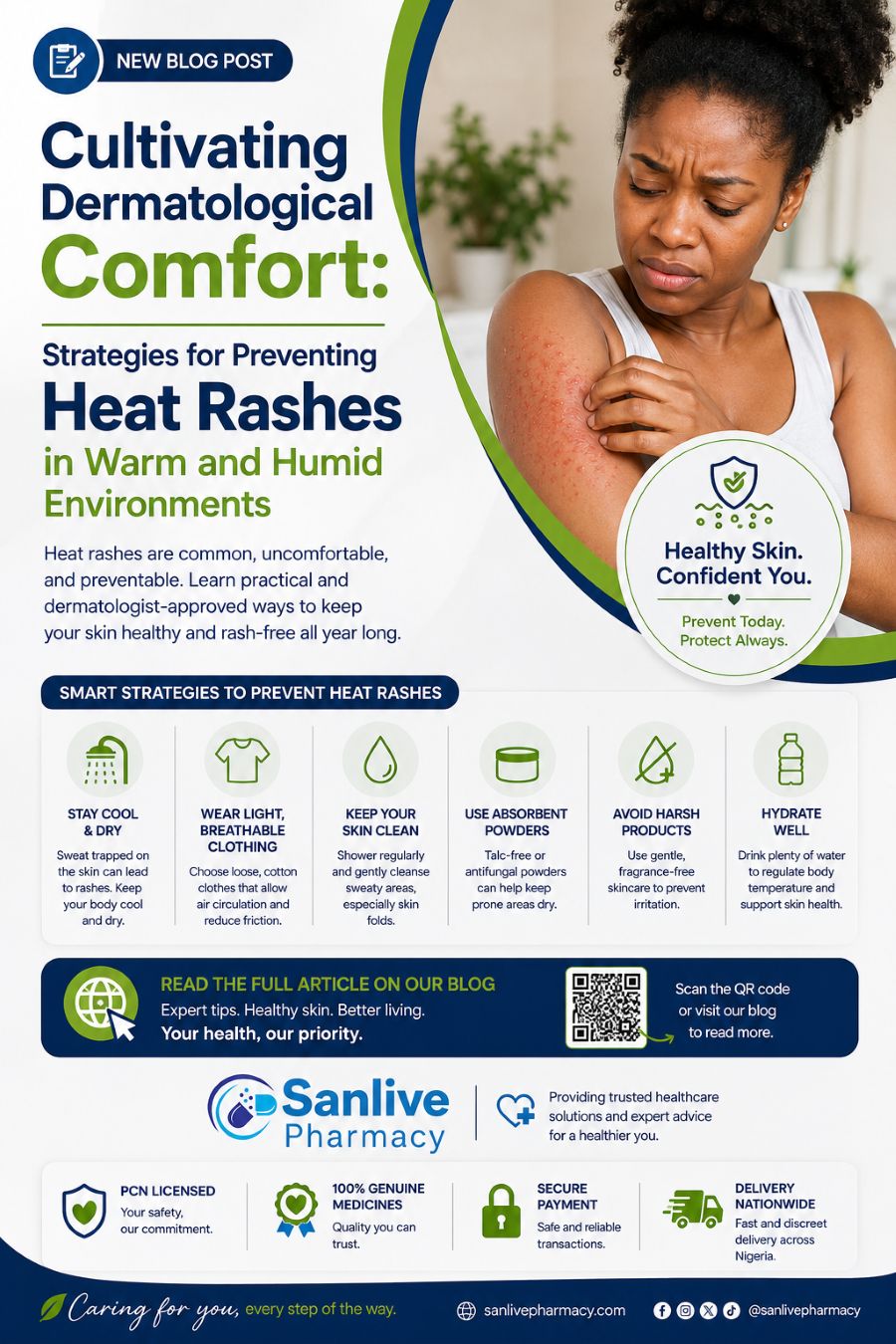
Cultivating Dermatological Comfort: Strategies for Preventing Heat Rashes in Warm and Humid Environments.
If you have ever lived through a Nigerian dry season, or navigated the suffocating humidity of the rainy months, you know exactly what it feels like when your skin begins to revolt. The prickling. The spreading redness. The maddening itch that intensifies the moment you sit still. The raised bumps that appear almost overnight across your neck, chest, back, or wherever your clothing holds the most heat. Heat rash, medically known as miliaria, is one of the most common dermatological complaints in tropical climates, and it is largely preventable with the right strategies. This guide explains what causes it, the four types you might encounter, and the comprehensive prevention approach that can keep your skin comfortable through Nigeria's hottest months.
If you're already dealing with discomfort, browse SanLive Pharmacy's skin care range for calamine lotion, zinc oxide cream, and other trusted remedies while you read.
Understanding the Skin Condition Behind the Discomfort
Heat rash, also known as prickly heat or sweat rash, occurs when sweat ducts become blocked and sweat is trapped beneath the surface of the skin rather than evaporating normally. The trapped sweat causes inflammation, irritation, and the characteristic bumps, redness, and itching associated with the condition.
How the Skin Manages Temperature in Hot Environments
The human body maintains its core temperature through sweating, a remarkably elegant cooling mechanism. When body temperature rises, millions of eccrine sweat glands distributed across the skin surface produce sweat, which travels through narrow ducts and emerges onto the skin. As sweat evaporates, it carries heat away from the body, cooling you down.
In hot, humid environments, this system faces a critical challenge. High humidity slows evaporation. When the air is already saturated with moisture, sweat cannot evaporate efficiently, so it simply sits on the skin. The body responds by producing more sweat, the skin remains persistently moist, and the conditions for sweat duct blockage are created.
Blockage occurs when dead skin cells, bacteria, sweat residue, oils, or skin products obstruct the openings of sweat ducts. When a duct is blocked, sweat backs up into the surrounding skin layers, triggering the inflammatory response that produces the visible and sensory symptoms of heat rash.
The Four Types of Heat Rash, From Mild to Severe
Not all heat rashes are the same. Miliaria is classified into four types based on how deep within the skin the blockage occurs. Understanding which type you are dealing with helps determine the appropriate response.
1. Miliaria Crystallina — The Mildest Form
The blockage occurs in the very superficial outer layer of skin. It appears as clear, fluid-filled vesicles roughly 1 to 2mm in diameter that look like tiny dewdrops and may cover large areas of the body. They are fragile and break easily.
Symptoms are minimal to none, and miliaria crystallina does not typically itch. It is most common in newborns and in adults following fever or intense, prolonged sweating, and it usually resolves spontaneously within hours to days once heat exposure and excess sweating are addressed.
2. Miliaria Rubra — The Most Common Form (Prickly Heat)
The blockage occurs deeper, in the living outer layer of skin. It appears as small, red, inflamed bumps and vesicles surrounded by redness, often in clusters, with the characteristic prickling or stinging quality that gives prickly heat its name.
Symptoms include intense prickling, stinging, and itching, particularly when sweating or when heat increases. It most commonly appears where clothing traps heat and sweat: the neck, upper chest, back, armpits, groin, waist, and skin folds. In babies, the face, neck, and nappy area are most affected. This is the most common form in adults and older children, and it is extremely prevalent in tropical climates like Nigeria's.
3. Miliaria Pustulosa — The Infected Form
The blockage occurs at the same depth as miliaria rubra, but the vesicles have become infected or inflamed, turning into pustules. It appears as small, white or yellow-headed pustules on a red base, with more pronounced discomfort and tenderness than miliaria rubra.
Importantly, these pustules are not always caused by bacterial infection; they can represent a sterile inflammatory response. However, secondary bacterial infection, most commonly with Staphylococcus aureus, can occur and may require professional assessment and antibiotic treatment.
4. Miliaria Profunda — The Deepest and Most Serious Form
The blockage occurs deep in the dermis, the structural layer of skin. It appears as flesh-coloured, firm bumps that are larger than those in miliaria rubra and do not appear red because the inflammation is too deep to show through.
Unlike the superficial forms, miliaria profunda does not typically itch. However, because the sweat ducts are blocked so deeply, the affected skin cannot sweat at all. When large areas of the body are affected, this inability to sweat can impair the body's ability to regulate temperature, creating a risk of heat exhaustion and heat stroke. This form is less common, usually developing after repeated episodes of miliaria rubra in the same areas, and it requires medical evaluation.
Who Is Most Vulnerable to Heat Rash in Nigeria?
While heat rash can affect anyone in hot, humid conditions, certain groups face elevated risk.
Newborns and infants. Babies' sweat glands are immature at birth, making them highly susceptible to blockage. They cannot remove their own clothing or communicate discomfort, and overly enthusiastic swaddling, excessive layering, and skin-to-skin carrying in hot weather are common precipitants in Nigerian infants.
Overweight and obese individuals. Excess body weight creates more skin folds where skin presses against skin, trapping heat and moisture. The groin, inner thighs, beneath the breasts, and abdominal folds are particularly vulnerable.
People who are physically active outdoors. Athletes, labourers, farmers, construction workers, and market traders generate large volumes of sweat and face high risk, particularly when wearing non-breathable clothing or equipment.
Bedridden and immobile patients. Prolonged contact with surfaces traps heat and moisture against the skin, with pressure areas such as the back, buttocks, and backs of the thighs particularly susceptible.
People new to tropical climates. Individuals relocating to Nigeria from cooler climates have sweat glands that are not yet acclimatised to high-volume sweating, increasing susceptibility during the initial weeks of adjustment.
People using occlusive skin products. Heavy creams, thick moisturisers, petroleum-based products, and certain cosmetics can occlude sweat duct openings, particularly problematic when sweat production is high.
Common Triggers and Precipitating Factors
Understanding what triggers heat rash is the foundation of preventing it.
Environmental factors include high ambient temperature, particularly during the dry season when daytime temperatures peak; high relative humidity, particularly during the rainy season when humidity can exceed 80 to 90 percent; poor indoor ventilation; and direct sun exposure during midday hours.
Clothing and fabric factors include synthetic fabrics such as polyester, nylon, and rayon that trap heat; tight-fitting clothing that reduces airflow; multiple clothing layers; synthetic underwear and bras; non-breathable footwear; and heavy traditional fabrics worn without adequate ventilation.
Skin care and product factors include heavy, petroleum-based moisturisers and body creams; thick sunscreens that occlude pores; baby oils applied before heat exposure; occlusive skin-lightening creams applied over large body areas; and cosmetic products applied to the chest, neck, or back.
Behavioural and lifestyle factors include prolonged exertion in hot weather without cooling breaks, sleeping without adequate ventilation, extended periods in vehicles without air conditioning, hot baths, excessive swaddling of infants, and non-breathable mattresses or bedding.
Medical factors include fever, certain medications that increase or reduce sweating, skin conditions that alter barrier function, and obesity.
Comprehensive Strategies for Preventing Heat Rash
Prevention is dramatically more effective, and more comfortable, than treatment. These strategies address every major precipitating factor and are tailored specifically to the Nigerian climate and lifestyle.
Strategy 1: Optimise Your Clothing Choices
Clothing is your first line of defence, and your choices here can make an extraordinary difference.
Cotton is your best ally in hot weather. It is highly breathable, absorbs moisture from the skin, and allows air circulation that promotes evaporation. Linen is even more breathable than cotton, with natural moisture-wicking properties excellent for hot, humid conditions. Bamboo fabric offers excellent moisture-wicking and antimicrobial properties and is increasingly recommended for sensitive or rash-prone skin. Moisture-wicking athletic fabrics designed specifically to pull sweat away from the skin are appropriate for exercise.
Avoid polyester, nylon, and rayon, which trap heat against the skin. Avoid tight-fitting garments across the torso, neck, and thighs, and avoid layering, particularly around the midsection. Switch to cotton undergarments entirely during hot weather.
In the Nigerian context, traditional fabrics like Ankara are often cotton-based and can be breathable, provided the weight and weave allow for adequate airflow. Loose-fitting agbada, buba, and boubou styles suit hot weather better than fitted western clothing. Choose lighter colours, since dark colours absorb more heat, and change sweat-soaked clothing promptly rather than remaining in damp garments.
Strategy 2: Keep Your Skin Cool and Dry
The fundamental goal of prevention is avoiding sustained moisture against the skin while maintaining a skin temperature that does not overwhelm the sweat duct system.
Shower or bathe twice daily during hot weather, once in the morning and once in the evening, using cool or lukewarm water rather than hot, which increases skin temperature and promotes immediate sweating after bathing. Use a mild, non-soap cleanser, since harsh soaps strip the skin's natural protective barrier. After bathing, pat skin dry gently rather than rubbing, paying particular attention to skin folds: the neck, armpits, groin, beneath the breasts, and between the toes. Allow skin to air-dry completely before dressing, since clothing on damp skin traps moisture immediately.
Between baths, use a clean, dry towel to blot sweat from the neck, chest, and back. Cool water sprays applied to the face, neck, and arms provide immediate, if temporary, relief. Change clothing as soon as it becomes sweat-soaked.
Strategy 3: Choose Skin Care Products Carefully
The products you apply can either protect against heat rash or actively precipitate it. In hot, humid weather, less is genuinely more.
Light, water-based moisturisers are appropriate if moisturisation is needed at all. Calamine lotion is a classic remedy that soothes irritation, provides a cooling sensation, and has mild antiseptic properties safe for adults, children, and infants. Zinc oxide preparations provide a breathable, protective barrier widely used in skin fold areas. Pure aloe vera gel is lightweight, non-occlusive, and deeply soothing, with cooling and anti-inflammatory properties useful both for prevention and early treatment. Light talcum powder or corn starch powder can absorb surface moisture in skin fold areas when used sparingly.
Avoid heavy petroleum jelly and petroleum-based body creams applied over large areas, since these create an occlusive film that blocks sweat evaporation in hot conditions. Avoid thick body butters such as shea butter and coconut oil in large quantities, and avoid heavy sunscreens; choose lightweight, non-comedogenic, oil-free formulations instead.
A particular caution applies to skin-lightening products. Many commonly used skin-lightening creams and lotions in Nigeria contain combinations of heavy occlusive ingredients, steroids, and other compounds that can impair skin barrier function and occlude sweat glands. Use of these products over large body areas in hot weather significantly increases heat rash risk, alongside other serious dermatological and systemic health concerns. The pharmacists at SanLive Pharmacy can advise on safe, effective alternatives.
✅ Order calamine lotion, zinc oxide cream, and aloe vera gel on SanLive Pharmacy — genuine, NAFDAC-compliant products delivered across Nigeria and internationally within 3 to 4 days.
Strategy 4: Optimise Your Living and Working Environment
Environmental temperature and airflow management is one of the most impactful, and most overlooked, preventive strategies.
At home, air conditioning maintained between 22 and 26°C dramatically reduces sweat production where it is available and affordable. Ceiling fans and standing fans maximise air movement where air conditioning is not. Cross-ventilation, achieved by opening windows on opposite sides of a room, creates effective airflow. Cotton sheets and pillowcases support breathable sleep, and reducing time spent over hot stoves with adequate kitchen ventilation helps as well. Sleeping with limbs slightly apart rather than curled together reduces skin-to-skin contact and heat trapping.
At work, advocate for adequate ventilation, take regular cooling breaks in physically demanding or hot environments, hydrate consistently, and change into dry clothing if work causes significant sweating.
Outdoors, plan activities for early morning or late afternoon rather than peak sun hours, seek shade consistently, wear a lightweight, breathable hat, and hydrate before, during, and after outdoor activity.
Strategy 5: Prevent Heat Rash in Babies and Young Children
Infants and young children need specific preventive strategies given their physiological vulnerability and their inability to communicate discomfort.
Dress babies in single layers of lightweight, loose cotton, resisting the cultural pressure to bundle babies against the cold; in Nigerian conditions, this is almost never necessary and is a significant heat rash risk factor. Cotton vests and onesies are ideal for everyday wear. Avoid synthetic fabrics, tight elastic waistbands, and anything restricting airflow around the neck, armpits, and groin. Check neck folds, armpits, groin, and behind the knees regularly for early signs of rash.
For sleeping, ensure adequate air movement with a fan directed away from the baby, use breathable cotton mattress covers rather than plastic or rubber, and avoid heavy blankets, since a single lightweight cotton sheet is typically sufficient in Nigerian conditions.
For skin care, dry all skin folds thoroughly after bathing and apply zinc oxide cream or calamine lotion to rash-prone areas as a protective measure during hot weather, while avoiding heavy baby oils, petroleum jelly, or thick creams over large skin areas.
Strategy 6: Manage Physical Activity Wisely
Exercise generates significant internal heat and dramatically increases sweat production, so managing exercise-related heat rash requires thoughtful planning rather than avoiding activity altogether.
Before exercise, choose the coolest time of day, ideally early morning, wear appropriate moisture-wicking clothing, and pre-hydrate adequately. During exercise, take regular cooling breaks in shade or air-conditioned environments, use cool water on the face, neck, and wrists, and remove sweat-soaked clothing layers when possible. After exercise, shower as soon as possible, since remaining in sweat-soaked clothing is one of the most common precipitants of exercise-related heat rash, then change into clean, dry clothing.
Strategy 7: Targeted Care for Skin Folds
Skin folds are the zones of greatest vulnerability and require specific, targeted attention. Common areas include neck folds, armpits, beneath the breasts, abdominal folds, the groin and inner thighs, behind the knees, and between the buttocks.
Cleanse these areas carefully during every bath, ensuring all surfaces within the fold are reached, then dry meticulously with a soft cotton cloth so the deepest parts of the fold are completely dry. Apply a thin layer of zinc oxide cream, calamine lotion, or lightweight corn starch powder to create a protective, moisture-absorbing barrier. Choose clothing that minimises fabric pressure against these areas. For very deep or persistent skin folds, a thin, clean cotton cloth placed within the fold can absorb moisture and reduce skin-to-skin contact.
A Practical Daily Heat Rash Prevention Routine for Nigeria
Morning: Take a cool shower with a mild cleanser and dry thoroughly, especially skin folds. Apply calamine lotion or zinc oxide cream to high-risk areas such as the neck, armpits, groin, and skin folds. Dress in loose, lightweight cotton or linen, and avoid heavy creams or body oils on rash-prone areas.
During the day: Blot sweat regularly rather than allowing it to sit on the skin. Change sweat-soaked clothing as soon as possible. Seek shade and ventilated environments, taking cooling breaks where needed. Hydrate consistently, aiming for 2 to 3 litres of water in hot conditions.
Evening: Take a cool shower to remove sweat, bacteria, and product residue accumulated during the day. Dry skin thoroughly and apply soothing aloe vera gel or calamine to any early rash signs. Dress in loose cotton sleepwear and ensure the bedroom has adequate airflow.
Weekly: Launder clothing and bedding regularly, since accumulated sweat residue in fabric can occlude pores. Review skin care products for occlusive ingredients that may be contributing to blocked pores, and check skin folds carefully for early rash development that may not yet be causing symptoms.
When Prevention Falls Short: Treating Heat Rash
Despite your best preventive efforts, heat rash can still develop. When it does, prompt and appropriate treatment limits its severity and duration.
Remove yourself from heat immediately and get to a cool, ventilated environment. Remove tight or non-breathable clothing and change into loose, lightweight cotton. Cool the affected skin with a cool, not cold, damp cloth applied gently for 15 to 20 minutes. Resist scratching, since it damages the skin surface and risks secondary infection.
For topical treatment, calamine lotion and zinc oxide cream remain the safest options for all ages, including infants. Aloe vera gel provides immediate cooling and anti-inflammatory relief. Hydrocortisone 1% cream can reduce inflammation in moderate to severe miliaria rubra but should be used for short courses only, with caution in infants and never on broken or infected skin. For oral relief, non-sedating antihistamines such as cetirizine or loratadine help control itching, while oral antibiotics should only be used if a doctor confirms secondary bacterial infection.
Avoid thick creams, petroleum jelly, vigorous scratching, hot baths, and continued heat exposure while treating an active rash.
✅ Order heat rash treatment essentials on SanLive Pharmacy — calamine lotion, zinc oxide cream, hydrocortisone cream, and antihistamines, all delivered discreetly within 3 to 4 days.
When to See a Pharmacist or Doctor
Most cases of heat rash resolve within days with appropriate cooling and skin care. Seek professional consultation when the rash covers a large area and does not improve within three to five days, when pustules develop or bumps become larger or begin weeping fluid, when signs of bacterial infection appear such as increasing redness, warmth, or pain, or when fever develops alongside the rash.
For infants, seek help if the rash is spreading or the baby appears unwell, unusually irritable, or is feeding poorly. Seek help too if the affected skin cannot sweat at all, suggesting miliaria profunda, or if symptoms of heat exhaustion such as dizziness, weakness, or rapid pulse develop alongside the rash.
Speak with a SanLive pharmacist online for a free assessment, treatment recommendations, and guidance on building a personalised skin care strategy for the Nigerian climate.
Frequently Asked Questions
What is the fastest way to cultivate relief from heat rash? Move to a cool, ventilated space immediately, apply a cool damp cloth, and follow with calamine lotion or aloe vera gel. Most mild cases improve within a few days once heat exposure is reduced and the skin stays cool and dry.
Can heat rash be fully prevented in a hot, humid climate like Nigeria's? Not entirely, but the vast majority of episodes are preventable with the right clothing, a consistent cooling routine, and careful skin care product choices, as outlined throughout this guide.
Is heat rash the same as a heat allergy? No. Heat rash is a physical blockage of sweat ducts, not an allergic reaction. True heat-triggered allergic reactions look different and involve raised, itchy welts rather than small clustered bumps.
What is the best cream for heat rash in Nigeria's climate? Calamine lotion and zinc oxide cream are the most effective and widely recommended options, since they soothe the skin without further blocking sweat ducts. Order both on SanLive Pharmacy.
Can adults get heat rash, or is it mostly a baby condition? Adults get heat rash frequently in tropical climates. Miliaria rubra, the prickly heat form, is actually the most common type in adults, not just infants.
Can diaspora Nigerians order heat rash prevention products from SanLive Pharmacy? Yes. SanLive Pharmacy ships to the UK, USA, Canada, Australia, Europe, and the Middle East with delivery in 3 to 4 days, in plain, discreet packaging.
The Bottom Line
Heat rash in Nigeria's warm, humid climate is common, but it is not inevitable. With the right clothing choices, a consistent skin care routine, and a thoughtfully managed environment, the vast majority of heat rash episodes are entirely preventable. Your skin is your body's largest organ and its primary interface with the world. In a climate as demanding as Nigeria's, giving your skin the care and attention it deserves is not vanity, it is health. Dermatological comfort is something every person deserves to experience, regardless of the temperature outside.
- 🔵 Browse all skin care products on SanLive Pharmacy
- 🔵 Order Calamine Lotion
- 🔵 Order Zinc Oxide Cream
- 🔵 Order Aloe Vera Gel
- 🔵 Speak with a SanLive Pharmacist for Free
This article is for informational and educational purposes only and does not constitute medical advice. Persistent, severe, or infected heat rashes should be evaluated by a qualified healthcare professional. Please consult your pharmacist or doctor before starting any new skin care or treatment regimen.



.jpg)