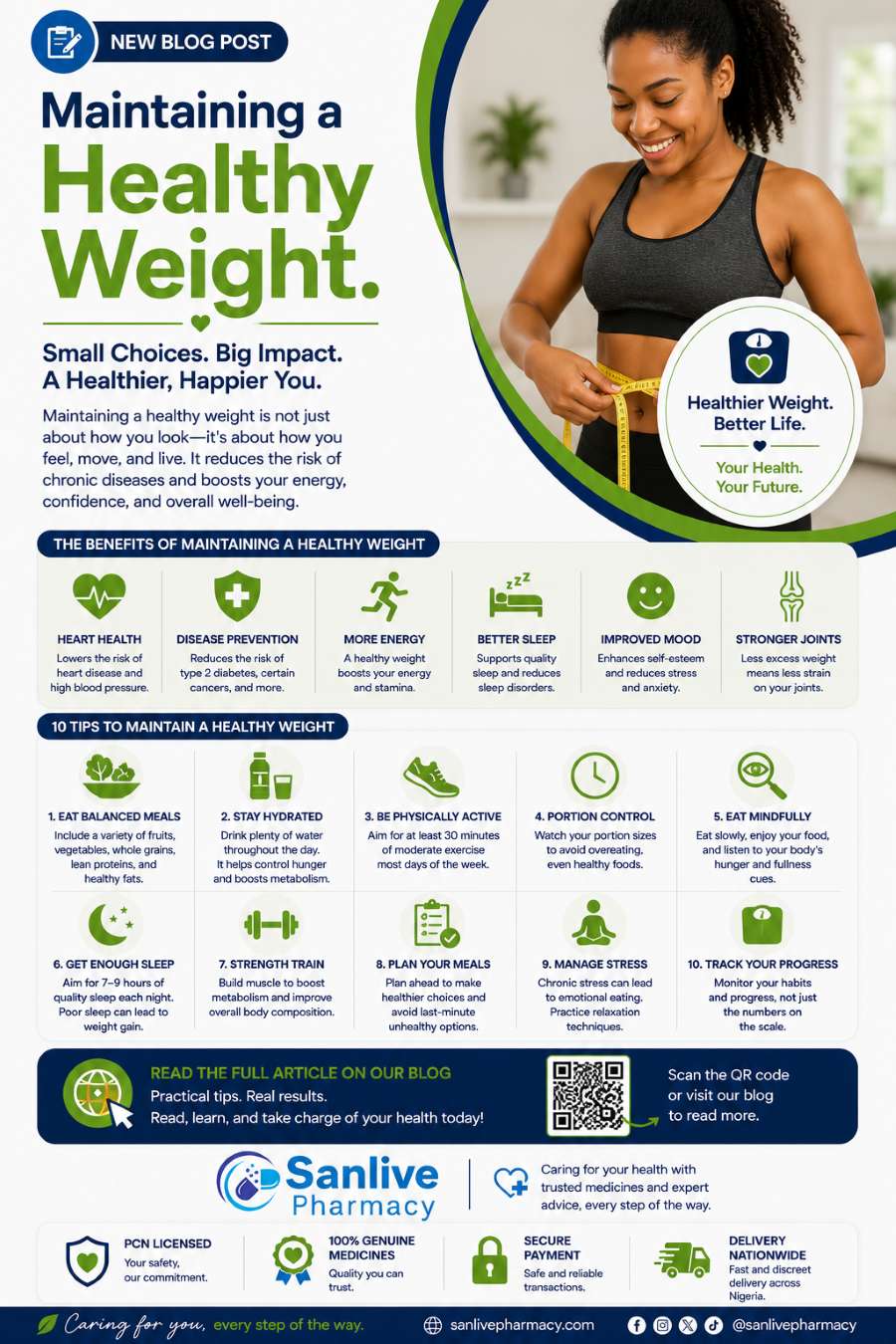
Maintaining a Healthy Weight: A Complete Evidence-Based Guide
You worked hard to lose the weight. You changed what you ate, moved your body more consistently, made sacrifices that were not always easy, and watched the numbers on the scale gradually move in the right direction. Or perhaps you have not yet lost weight but are determined to protect the healthy weight you currently have — to avoid the slow, almost imperceptible creep that catches so many people off guard over years and decades.
Either way, you are confronting one of the most genuinely challenging aspects of health and wellness: not the dramatic, motivating sprint of initial weight loss — but the quiet, unglamorous, lifelong marathon of maintaining a healthy weight. This guide covers the science, the strategies, the pitfalls, and the practical daily habits that make the difference — tailored specifically to the Nigerian context.
If you want personalised guidance on weight management supplements or medications, speak with a SanLive pharmacist for free — available online, nationwide and internationally.
What Is a Healthy Weight — and Why Does It Matter?
Before exploring how to maintain a healthy weight, it is important to understand what a healthy weight actually means — and why it matters far beyond appearance.
Body Mass Index (BMI) — A Starting Point, Not the Whole Picture
BMI is calculated by dividing weight in kilograms by height in metres squared and is the most widely used population-level tool for classifying weight status.
| BMI Range | Classification |
|---|---|
| Below 18.5 | Underweight |
| 18.5 – 24.9 | Normal/Healthy weight |
| 25.0 – 29.9 | Overweight |
| 30.0 – 34.9 | Obese (Class I) |
| 35.0 – 39.9 | Obese (Class II) |
| 40.0 and above | Severely obese (Class III) |
BMI is a useful screening tool but does not distinguish between fat mass and muscle mass, and does not account for where fat is stored — which matters just as much as how much is stored.
Waist Circumference — The More Important Measurement
Visceral fat stored deep within the abdominal cavity around internal organs is metabolically active, releasing inflammatory compounds that drive insulin resistance, cardiovascular disease, and type 2 diabetes. A person with a normal BMI but a large waist circumference may carry more health risk than a slightly heavier person whose fat is distributed in the hips and thighs.
| Increased Risk | High Risk | |
|---|---|---|
| Men | Above 94cm (37 inches) | Above 102cm (40 inches) |
| Women | Above 80cm (32 inches) | Above 88cm (35 inches) |
Measure your waist at the level of the navel after breathing out gently for a more accurate picture of your metabolic health risk than BMI alone can provide.
Why Maintaining a Healthy Weight Matters
The health consequences of excess weight are profound and wide-ranging. Metabolic consequences include type 2 diabetes, metabolic syndrome, and non-alcoholic fatty liver disease — increasingly prevalent in Nigeria as urbanisation drives dietary change. Cardiovascular consequences include hypertension, elevated LDL cholesterol, coronary artery disease, stroke, and heart failure. Musculoskeletal consequences include osteoarthritis, chronic back pain, and gout. Hormonal and reproductive consequences include PCOS, infertility in both men and women, erectile dysfunction, and hormonal imbalances. Obesity is also a recognised risk factor for multiple cancers including breast, colorectal, endometrial, kidney, and pancreatic cancers. Psychological consequences include depression, anxiety, poor body image, and significantly reduced quality of life.
Conversely, maintaining a healthy weight is one of the most powerful preventive health investments a person can make — reducing the risk of virtually every major chronic disease and supporting physical, mental, and emotional wellbeing throughout life.
The Science of Weight Maintenance — Why It Is Harder Than Weight Loss
Understanding the biology of weight maintenance is not an excuse for weight regain — it is essential knowledge for developing strategies that work with your body rather than against it.
The Energy Balance Equation
At its most fundamental level, weight is governed by energy balance. Weight maintenance occurs when energy consumed equals energy burned. Weight loss occurs when energy consumed is less than energy burned. Weight gain occurs when energy consumed exceeds energy burned.
This equation is true — but dangerously incomplete as a guide to weight management, because both sides are not fixed, independent variables. The body actively regulates both energy intake and expenditure in response to changes in body weight.
Metabolic Adaptation — the Body Fighting Back
When body weight decreases significantly, the body mounts a coordinated defence. Resting metabolic rate falls more than would be predicted by the reduction in body mass alone — a phenomenon called metabolic adaptation or adaptive thermogenesis. A person who has lost 15kg will burn fewer calories at rest than a person who was always at that same lower weight, sometimes significantly fewer.
Weight loss also triggers hormonal changes that persist long after the weight is lost. Leptin, the satiety hormone, falls with weight loss and reduces the feeling of fullness. Ghrelin, the hunger hormone, rises and increases appetite. Gut hormones signalling fullness decrease. These changes persist for at least one year and potentially indefinitely, creating a persistent biological drive toward weight regain.
The body also unconsciously reduces spontaneous physical activity — fidgeting, standing, incidental movement — further reducing daily caloric expenditure.
What This Means Practically
Weight maintenance requires permanent lifestyle changes rather than temporary behaviours, slightly lower caloric intake than someone who was always at the same weight, consistently higher physical activity levels than before weight loss, and ongoing awareness without obsession. Understanding this biology stops you from blaming yourself for struggling and helps you build systems that support success.
10 Evidence-Based Strategies for Maintaining a Healthy Weight
Strategy 1: Adopt a Sustainable Eating Pattern — Not a Diet
The word diet implies temporary restriction. Diets end. And when they end, the behaviours that drove weight gain resume — and weight follows. Sustainable weight maintenance requires an eating pattern: a way of eating you can maintain indefinitely, that you enjoy, that satisfies you, and that supports your health goals simultaneously.
Prioritise whole, minimally processed foods. The foundation of sustainable healthy eating is eating food as close to its natural state as possible. Whole grains, vegetables, fruits, legumes, lean proteins, nuts, seeds, and healthy fats provide abundant nutrition, support satiety, and naturally moderate caloric intake without obsessive calorie counting. Ultra-processed foods — specifically designed to override satiety signals and promote overconsumption — are the primary driver of the modern obesity epidemic. Reducing them is the single most impactful dietary change most Nigerians can make.
Eat adequate protein at every meal. Protein is the most satiating macronutrient — it reduces appetite, increases post-meal fullness, and preserves muscle mass during weight maintenance. Excellent protein sources in the Nigerian context include eggs, which are inexpensive and nutritionally complete; fish including tilapia, catfish, mackerel, and sardines; chicken and turkey; beans and lentils; and traditional bean-based dishes like moi moi and akara. Aim for a palm-sized portion of protein at every meal.
Load up on vegetables and fibre. Excellent high-fibre choices in Nigeria include leafy greens such as ugwu, bitter leaf, and waterleaf; okra, which has exceptional soluble fibre content; beans and legumes of all varieties; sweet potatoes and yam; unripe plantain, which has a lower glycaemic index than ripe; and brown rice over white rice.
Manage portion sizes thoughtfully. Use smaller plates, fill half your plate with vegetables before adding other foods, use your hand as a portion guide, eat from a plate rather than directly from packaging, and serve food in the kitchen rather than placing serving dishes on the dining table.
Eat mindfully and slowly. The satiety signal from food takes 15 to 20 minutes to reach the brain. Eating quickly means consuming significantly more food before the fullness signal arrives. Slow, mindful eating — chewing thoroughly, putting utensils down between bites, eating without screens — reduces caloric intake and improves meal satisfaction.
Structure your eating. Irregular eating patterns disrupt appetite regulation hormones. Eating regular, structured meals including breakfast, lunch, and dinner with planned snacks if needed supports consistent appetite regulation and reduces impulsive, unplanned eating.
Strategy 2: Make Physical Activity Non-Negotiable and Permanent
Physical activity is arguably the single strongest predictor of long-term weight maintenance. Studies of people who successfully maintain significant weight loss consistently show that high levels of physical activity are the most common shared characteristic — more so than any specific dietary approach.
Why exercise is irreplaceable for weight maintenance: It offsets metabolic adaptation by increasing caloric expenditure. It preserves muscle mass — particularly through strength training — protecting metabolic rate. It reduces visceral fat selectively. It regulates appetite hormones by improving leptin sensitivity and modulating ghrelin. It improves insulin sensitivity, reduces stress and depression, and improves sleep quality.
Find activities you genuinely enjoy. The best exercise is the exercise you will consistently do. Explore dancing, swimming, walking with friends, cycling, community football, or market aerobics until you find what you enjoy. Enjoyment is the most underrated factor in exercise adherence.
Combine aerobic exercise and strength training. Aerobic exercise including brisk walking, jogging, cycling, swimming, and dancing burns calories and reduces visceral fat — aim for at least 150 to 300 minutes per week. Strength training builds and preserves muscle mass and boosts resting metabolic rate — aim for at least two to three sessions per week.
Increase incidental physical activity. Non-exercise activity thermogenesis can account for 200 to 400 extra calories per day in active individuals. Walk or cycle for short errands, take stairs instead of lifts, stand during phone calls, do household chores vigorously, and walk children to school rather than driving. These incidental movements accumulate into significant daily caloric expenditure without requiring dedicated time or equipment.
Strategy 3: Monitor Yourself Consistently — But Without Obsession
Self-monitoring is one of the most consistently evidence-backed strategies for long-term weight maintenance. It provides early feedback on small weight gains before they become large ones, allowing prompt course correction.
Regular weighing. Research supports daily or weekly weigh-ins as associated with better weight maintenance outcomes. Weigh at the same time each day — first thing in the morning, after toileting, before eating. Daily fluctuations of 1 to 2kg are entirely normal and reflect changes in hydration, food volume, and hormonal fluctuations — not actual fat gain. Trend over time is what matters.
Set a personal action weight. Many experts recommend setting a specific number — typically 2 to 3kg above your maintenance target — at which you commit to reviewing food intake, increasing activity, and identifying what behavioural patterns may have shifted. This proactive approach prevents gradual, unnoticed regain.
Food journaling. Keeping a food diary, even intermittently, increases awareness of eating patterns, identifies caloric blind spots, and supports accountability. Research shows that people who track their food intake even a few days per week maintain their weight more successfully than non-trackers.
Measuring waist circumference monthly provides information about abdominal fat specifically — often a more sensitive early warning signal than scale weight alone.
Strategy 4: Master the Psychology of Eating
Weight maintenance is as much a psychological challenge as it is a physical one — yet it is the most neglected component of most weight management programmes.
Identify and address emotional eating. Emotional eating — turning to food for comfort, stress relief, boredom, or reward — is one of the primary drivers of weight regain. Signs include eating in response to stress or anxiety rather than physical hunger, craving specific comfort foods when emotionally triggered, eating past fullness when emotionally activated, and feeling guilt or shame after eating episodes.
Strategies include identifying your emotional triggers by keeping a journal; creating a non-food coping toolkit of five to ten activities that improve your mood without food, such as walking, calling a friend, prayer, or journaling; practising a genuine hunger check before eating to distinguish physical hunger from emotional hunger; and working with a therapist if emotional eating is deeply entrenched, since cognitive behavioural therapy has strong evidence for this pattern.
Manage the food environment. Willpower is a finite and unreliable resource. The most effective long-term strategy is changing the food environment to make healthy choices easy and unhealthy choices inconvenient. Do not keep ultra-processed snacks and biscuits in your home. Keep healthy snacks visible and ready to eat. Prepare meals in advance. Be intentional about social eating situations.
Strategy 5: Prioritise Sleep as a Weight Management Tool
Poor sleep is not just a consequence of an unhealthy lifestyle — it is an active driver of weight gain and one of the most significant barriers to successful weight maintenance.
Sleep deprivation raises ghrelin and lowers leptin, creating a hormonal storm for increased appetite and overeating. Studies show that a single night of poor sleep increases appetite for calorie-dense foods the following day by up to 24 percent. Sleep deprivation also raises cortisol, which promotes abdominal fat storage, and impairs prefrontal cortex function — the brain region responsible for impulse control and resisting temptation.
Sleep optimisation strategies: Target seven to nine hours of quality sleep every night. Maintain consistent sleep and wake times including weekends. Create a cool, dark, and quiet bedroom environment. Avoid screens for at least one hour before bed, caffeine after 2pm, and alcohol within three hours of bedtime. If you snore, wake unrefreshed, or experience significant daytime sleepiness, seek evaluation for sleep apnoea, which has profound metabolic and weight consequences.
Sleep is not a luxury. It is a cardiovascular and metabolic intervention.
Strategy 6: Manage Stress Before It Manages Your Weight
Chronic psychological stress is one of the most powerful yet least acknowledged drivers of weight gain and regain.
Chronic stress maintains elevated cortisol, which promotes fat storage specifically in the visceral abdominal region — the most metabolically harmful fat depot. Cortisol directly increases cravings for calorie-dense, high-fat, high-sugar comfort foods and promotes muscle protein breakdown — reducing muscle mass and consequently lowering resting metabolic rate over time. Chronic stress also impairs sleep quality, adding the sleep-related weight consequences on top of direct metabolic effects.
Effective stress management strategies with cardiovascular evidence include regular physical exercise, which is the most evidence-backed stress reducer available; daily mindfulness or meditation, which even at 10 minutes reduces cortisol measurably; prayer and spiritual practice, which is both culturally resonant and genuinely effective for many Nigerians; quality social connection, which is one of the most powerful buffers against chronic stress; time in nature; creative and recreational activities; and professional counselling for chronic stress that is not responding to self-management.
Strategy 7: Stay Adequately Hydrated
Water is the most underrated weight management tool available — free, universally accessible, and remarkably effective.
Thirst is frequently misinterpreted as hunger, leading to unnecessary caloric intake. Drinking 500ml of water approximately 30 minutes before each main meal has been shown in clinical trials to significantly reduce caloric intake and support better weight maintenance outcomes. Replacing caloric beverages — soft drinks, fruit juices, sweetened teas — with water is one of the most calorie-efficient changes you can make. The average Nigerian who drinks two soft drinks daily consumes approximately 300 extra calories from beverages alone — enough to drive meaningful weight gain over time with no corresponding increase in food satisfaction.
Hydration strategies: Start every morning with a large glass of water before any other food or drink. Drink a glass approximately 30 minutes before each meal. Carry a reusable water bottle. Add natural flavour with slices of lemon, lime, cucumber, or mint. Monitor urine colour — pale straw yellow indicates good hydration; dark yellow indicates you need more water. Target at least 2 to 3 litres daily in Nigeria's hot climate.
Strategy 8: Understand and Work With Your Metabolism
Metabolism is not fixed. It is dynamic, responsive, and significantly influenced by your behaviours.
Muscle mass is the most controllable metabolic factor. Muscle tissue burns approximately three times more calories at rest than fat tissue. Strength training is essential for weight maintenance — it protects and builds the metabolic engine that burns calories around the clock.
Age reduces resting metabolic rate by approximately 2 to 3 percent per decade after age 30, primarily due to muscle loss. Resistance training directly counteracts age-related metabolic decline.
Thyroid function is the master regulator of metabolic rate. If you are struggling to maintain a healthy weight despite consistent and appropriate diet and exercise, thyroid function testing is warranted.
Hormonal factors including insulin resistance, oestrogen decline during menopause, testosterone decline in men, and chronically elevated cortisol all promote fat gain and metabolic dysfunction.
Strategies to support a healthy metabolism include prioritising strength training, eating adequate protein — which has the highest thermic effect of any macronutrient — avoiding severe calorie restriction that accelerates metabolic adaptation and muscle loss, staying active throughout the day through NEAT, getting adequate sleep, managing thyroid health, and managing stress to control cortisol.
✅ Browse metabolic support supplements on SanLive Pharmacy including berberine, vitamin D, magnesium, and more — delivered across Nigeria and internationally within 3 to 4 days.
Strategy 9: Build a Social Environment That Supports Your Goals
The social environment is one of the most powerful and most underappreciated determinants of long-term weight management success. Research has found that a person's risk of obesity increases by 57 percent if a close friend becomes obese — even if that friend lives far away.
Communicate your goals clearly. The people who care about you cannot support goals they do not know about. Sharing your weight management goals with your partner, family, and close friends allows them to provide meaningful support.
Find an accountability partner or community. Having at least one person who shares your health goals and checks in regularly significantly improves long-term adherence — whether a friend, a workplace colleague, an online community, or a formal support group.
Navigate food-centred social situations strategically. Nigerian social life revolves significantly around food — celebrations, family gatherings, church events, workplace parties. These are joyful occasions to be embraced, not avoided. Eat a small protein-rich snack before attending to reduce arriving hungry. Choose smaller portions of festive foods and focus on the social connection. Drink water throughout events to manage appetite. Allow yourself to enjoy culturally important foods without guilt — the goal is flexible, consistent healthy habits, not rigid restriction at every occasion.
Reduce exposure to unhealthy food environments by choosing markets and supermarkets that stock fresh whole foods, establishing household food rules about ultra-processed products, and bringing packed lunches to work rather than relying on whatever food happens to be available.
Strategy 10: Develop a Long-Term Mindset — Progress Over Perfection
The all-or-nothing thinking that characterises most diets is fundamentally incompatible with lifelong weight management.
Abandon the perfection trap. A single meal, day, or even week of less-than-ideal eating has virtually no meaningful impact on long-term weight. The cumulative effect of consistently healthy choices over months and years determines your weight trajectory — not any individual moment.
Reframe setbacks as information. Weight fluctuations, stressful periods, holiday weight gains, and lapses in exercise habits are inevitable features of real life — not evidence of failure. The capacity to return to healthy habits quickly after disruption is the single most important predictor of long-term maintenance success.
Focus on health behaviours, not just the scale. Tracking how many times you exercised this week, how many servings of vegetables you ate yesterday, and how your energy levels feel provides a more stable and motivating picture of progress than a number on the scale alone.
Build identity, not just habits. The most durable weight management comes from people who internalise a healthy lifestyle as part of their identity — "I am someone who moves my body every day" — rather than "I am on a diet." Identity-based habits are far more resistant to disruption than externally motivated behaviours.
Special Considerations for Weight Maintenance in Nigeria
The Nigerian Dietary Context
Traditional Nigerian diets built around whole grains, legumes, leafy greens, root vegetables, and fermented foods are inherently nutritious and weight-supportive. The challenge comes with rapid urbanisation, the proliferation of ultra-processed foods, increasing consumption of refined carbohydrates, and the adoption of sedentary urban lifestyles.
Practical Nigerian dietary strategies:
Embrace the nutritional power of traditional foods — oats and local whole grains, beans and legumes including moi moi and akara, leafy greens including ugwu and bitter leaf, unripe plantain, palm fruit and palm oil in moderate quantities, fermented foods like ogi and dawadawa, and affordable local fish including catfish and tilapia.
Manage swallow portion sizes by reducing eba, fufu, amala, or pounded yam by 25 to 30 percent while increasing the soup and protein content of the meal — maintaining satisfaction while significantly reducing caloric and glycaemic load.
Reduce liquid calories from bottled soft drinks, sweetened zobo, packaged fruit juices, and alcoholic beverages — replacing them with water, unsweetened zobo, freshly made fruit-infused water, and local herbal teas.
Hormonal Considerations for Nigerian Women
Menopause and perimenopause — typically occurring between ages 45 and 55 — is associated with a shift in fat distribution to the abdomen, reduction in resting metabolic rate, and increased appetite. Strategies include increased protein intake, prioritised strength training, rigorous sleep management, and — where appropriate — discussion with a gynaecologist regarding hormone replacement therapy.
PCOS — covered in our dedicated PCOS article — requires specific dietary strategies targeting glycaemic management alongside appropriate medical management. Inositol supplementation, low-GI dietary patterns, and regular strength training are particularly important.
Hypothyroidism — extremely common in Nigerian women and frequently underdiagnosed — causes weight gain and makes maintenance exceptionally difficult without treatment. Any woman struggling with weight management despite appropriate diet and exercise should have thyroid function tested.
Medications and Supplements for Weight Management
When Medication May Be Appropriate
For individuals with clinically significant obesity who have not achieved adequate results with lifestyle modification alone, anti-obesity medications may be considered as adjuncts to — never replacements for — lifestyle change.
Orlistat (Xenical, Alli) inhibits the enzyme responsible for digesting dietary fat, reducing fat absorption by approximately 30 percent. Available as prescription (120mg three times daily with meals) and lower-dose over-the-counter versions. It produces modest additional weight loss of 2 to 4kg above lifestyle intervention alone and reduces absorption of fat-soluble vitamins, so supplementation is recommended.
GLP-1 receptor agonists (semaglutide/Ozempic, liraglutide/Saxenda) represent the most significant advance in obesity pharmacotherapy in decades, dramatically reducing hunger and producing substantial weight loss of 15 to 20 percent of body weight in clinical trials. Administered by weekly or daily injection and increasingly available in Nigeria through specialist physicians. Must be used under medical supervision.
✅ Speak with a SanLive pharmacist about weight management medication options appropriate for your health profile and goals.
Evidence-Based Supplements for Weight Management
No supplement is a weight loss solution. However, certain supplements provide meaningful support for the metabolic, hormonal, and nutritional aspects of weight management when used alongside consistent lifestyle habits.
Green tea extract (EGCG) modestly increases metabolic rate and fat oxidation, with multiple meta-analyses confirming a small but consistent effect on weight and waist circumference.
Glucomannan is a soluble fibre that expands in the stomach before meals, creating fullness and reducing caloric intake. Multiple randomised controlled trials support its modest weight management benefit.
Berberine improves insulin sensitivity, reduces blood sugar, and has modest weight management benefits — particularly for individuals with insulin resistance or metabolic syndrome.
Protein supplements support the higher protein targets important for muscle preservation, particularly in older adults where dietary protein intake may be insufficient.
Vitamin D deficiency is strongly associated with obesity and metabolic dysfunction. Given the extraordinary prevalence of deficiency in Nigeria, supplementation is widely appropriate.
Magnesium supports glucose metabolism and insulin sensitivity — particularly relevant for individuals eating high-processed-food diets.
✅ Browse all weight management supplements on SanLive Pharmacy including glucomannan, berberine, green tea extract, protein supplements, and vitamin D — delivered across Nigeria and internationally within 3 to 4 days.
A Practical Weekly Weight Maintenance Plan
Daily non-negotiables: Drink at least 2 litres of water starting with a large glass upon waking. Eat protein at every meal. Fill half your plate with vegetables or fibre-rich foods. Move for at least 30 minutes — structured or incidental. Sleep seven to nine hours. Check in with your hunger and emotional state before eating.
Weekly structure: Three to four sessions of moderate aerobic activity (30 to 60 minutes). Two to three sessions of strength training (30 to 45 minutes). One weekly weigh-in — same day, same time, same conditions. One meal prep session preparing proteins, cut vegetables, and cooked grains for the week. One weekly review of what went well, what was challenging, and what to adjust.
Monthly: Measure waist circumference. Review food journal trends. Assess energy levels, sleep quality, and mood — sensitive indicators of whether your lifestyle is supporting or undermining your health.
Nigerians in the Diaspora — You Can Order Too
If you are a Nigerian living in the UK, USA, Canada, Australia, Europe, or the Middle East and you want access to weight management supplements and medications you trust, SanLive Pharmacy ships internationally.
- Delivery time: 3 to 4 days to most international destinations
- Packaging: Plain, discreet, and unbranded with no indication of contents
- Support: Speak with a SanLive pharmacist before ordering for personalised guidance based on your health goals
Frequently Asked Questions
How long does it take to see results from lifestyle changes for weight maintenance? Most people notice meaningful improvements in energy, appetite regulation, and mood within 4 to 6 weeks of consistent dietary and lifestyle changes. Scale weight trends become clearer over 8 to 12 weeks. The most significant metabolic improvements typically accumulate over 3 to 6 months of consistent effort.
Does metabolism slow permanently after weight loss? Metabolic rate does decrease after significant weight loss — a phenomenon called metabolic adaptation — and this can persist long-term. However, it is not permanent and not fixed. Building muscle mass through strength training, eating adequate protein, managing sleep and stress, and staying consistently active all help restore and maintain metabolic rate over time.
What is the best diet for maintaining weight in Nigeria? There is no single best diet — the best eating pattern is one you can maintain indefinitely, that satisfies you, and that is built primarily around whole, minimally processed Nigerian foods including beans, leafy greens, local fish, unripe plantain, eggs, and whole grains.
Can supplements help with weight maintenance? Yes, as complements to lifestyle habits — not replacements. Glucomannan, berberine, green tea extract, and protein supplements all have clinical evidence supporting their role in weight management. Browse evidence-based options on SanLive Pharmacy.
Is Orlistat available in Nigeria? Yes. Orlistat is available in Nigeria through licensed pharmacies. Speak with a SanLive pharmacist to determine whether it is appropriate for your situation.
Can diaspora Nigerians order weight management products from SanLive Pharmacy? Yes. SanLive Pharmacy ships to the UK, USA, Canada, Australia, Europe, and the Middle East with delivery in 3 to 4 days in plain, discreet packaging.
The Bottom Line
Maintaining a healthy weight is one of the most powerful investments you can make in your long-term health, vitality, and quality of life. It is not achieved through a temporary diet, a dramatic cleanse, or an unsustainable exercise regime. It is built through consistent, flexible, enjoyable healthy habits that become so integrated into your daily life that they no longer feel like effort — they feel like who you are.
The journey is not linear. There will be disruptions, social occasions that test your choices, stressful periods when old habits beckon, and plateaus that test your patience. None of these moments define your success. What defines your success is the consistent, compassionate return to your healthy habits — every single day, imperfectly and beautifully, for the long term.
- 🔵 Browse all weight management supplements on SanLive Pharmacy
- 🔵 Order Glucomannan
- 🔵 Order Berberine
- 🔵 Order Green Tea Extract
- 🔵 Order Vitamin D
- 🔵 Order Magnesium
- 🔵 Speak with a SanLive Pharmacist for Free
This article is for informational and educational purposes only and does not constitute medical advice. Significant weight management concerns, suspected hormonal conditions, or medical weight management needs should be evaluated by a qualified healthcare professional. Please consult your doctor or pharmacist before starting any new supplement or weight management medication. SanLive Pharmacy operates in compliance with NAFDAC regulations and international pharmaceutical standards.



.jpg)