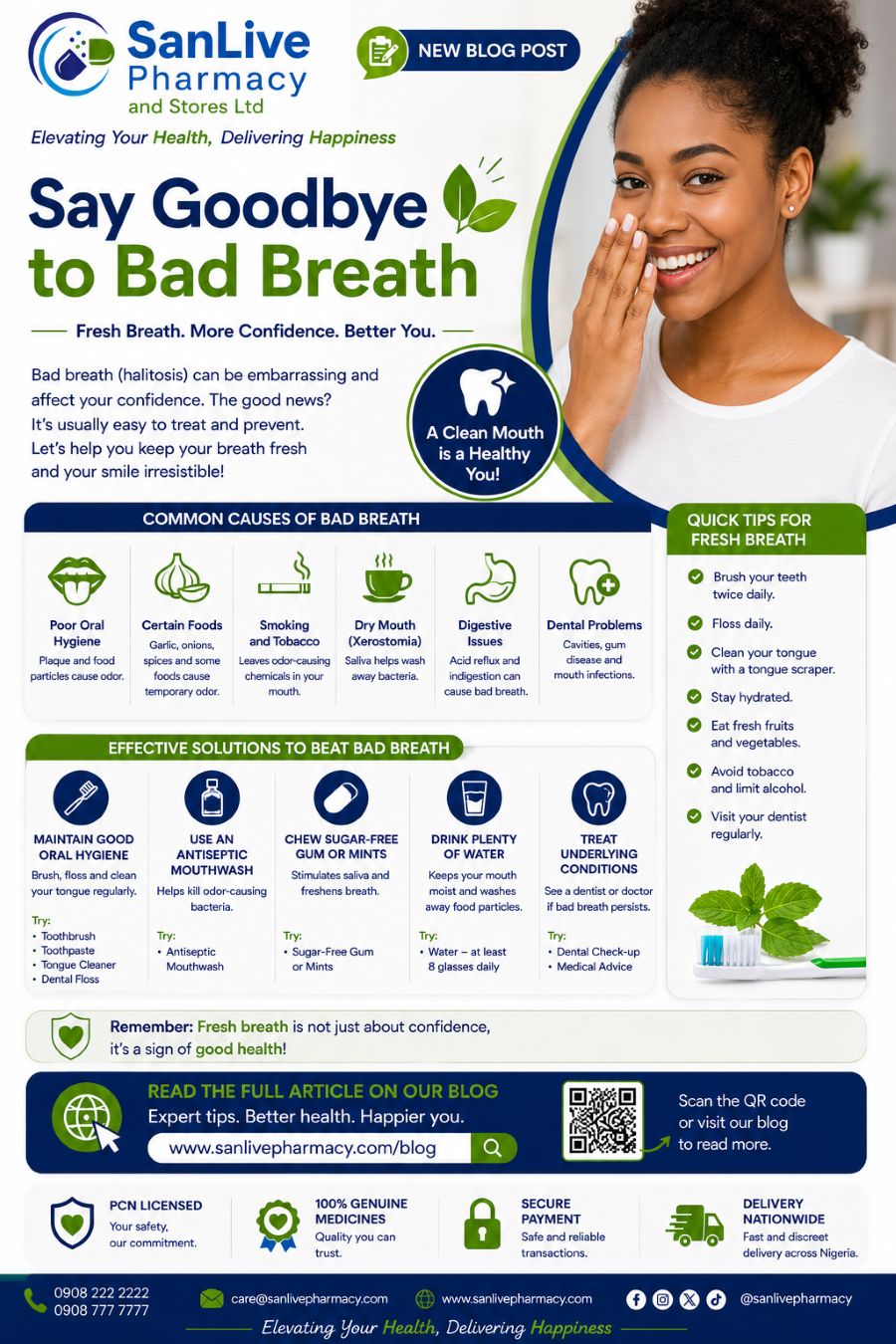
Say Goodbye to Bad Breath: 17 Causes and Effective Remedies (2026)
Bad breath — medically known as halitosis — is one of the most common, most embarrassing, and most socially impactful health concerns affecting people across Nigeria and the world. It affects an estimated 25 to 30 percent of the global population to a clinically significant degree, and in a country like Nigeria where close social interaction, communal eating, and face-to-face communication are deeply woven into daily life, persistent bad breath can seriously undermine confidence, relationships, professional interactions, and overall quality of life.
Yet despite how common it is, bad breath remains one of the most poorly understood and most inadequately addressed health concerns. Most people reach for a mint, a mouthwash, or a chewing gum — masking the problem temporarily while the underlying cause continues unchecked. Many are not even aware they have a problem, since the olfactory system adapts to persistent odours over time, making self-detection unreliable.
The truth about bad breath is this: it is almost always a symptom — not a standalone condition. Identifying and addressing the underlying cause produces lasting resolution. Masking the smell does not.
This comprehensive guide covers all 17 most clinically significant causes of bad breath and the most effective, evidence-based remedies for each — giving you the knowledge to genuinely solve the problem rather than temporarily hide it.
If you need oral health products, digestive support, or free pharmacist guidance on managing bad breath, speak with a SanLive pharmacist today — confidential, professional, and available online nationwide and internationally.
What Actually Causes Bad Breath? Understanding the Science
The primary biochemical cause of bad breath is the production of volatile sulphur compounds (VSCs) — particularly hydrogen sulphide, methyl mercaptan, and dimethyl sulphide — by anaerobic bacteria in the mouth, gut, and respiratory tract. These compounds have characteristically unpleasant, sulphurous odours and are produced when bacteria break down proteins from food debris, dead cells, mucus, and blood.
Understanding this mechanism explains why most bad breath originates in the mouth — where anaerobic bacterial populations are largest — and why conditions that increase protein availability for bacterial breakdown, reduce saliva flow, or create oxygen-depleted environments consistently worsen bad breath.
17 Causes of Bad Breath and Their Effective Remedies
Cause 1: Poor Oral Hygiene — the Most Common Cause
Poor oral hygiene is the single most common cause of bad breath and the foundation upon which virtually all other oral causes build. When teeth are not brushed and flossed adequately, food debris accumulates between teeth, along the gumline, and on the tongue. Anaerobic bacteria colonise these food remnants, breaking down proteins and producing the volatile sulphur compounds responsible for bad breath.
Plaque — the soft, sticky film of bacteria that continuously forms on teeth — is the primary vehicle for this bacterial activity. When plaque is not removed regularly through brushing and flossing, it mineralises into tartar (calculus), creating rough surfaces that trap even more food and bacteria.
Effective remedies:
Brush your teeth at minimum twice daily — morning and before bed — using fluoride toothpaste. Use a soft-bristled toothbrush and brush for a full two minutes each session, reaching all surfaces of every tooth. Floss at least once daily to remove food debris and plaque from between teeth where brushing cannot reach. Replace your toothbrush every three months or immediately after any illness. Use an antimicrobial mouthwash after brushing to reduce bacterial load — look for formulations containing chlorhexidine, cetylpyridinium chloride, or essential oils with demonstrated antibacterial activity.
✅ Order toothbrushes, fluoride toothpaste, dental floss, and antimicrobial mouthwash on SanLive Pharmacy — delivered across Nigeria and internationally within 3 to 4 days.
Cause 2: Tongue Coating — the Most Overlooked Oral Cause
Research consistently shows that the dorsal surface of the tongue — particularly the posterior third — is the single largest reservoir of odour-producing bacteria in the mouth, and tongue coating is the most significant intraoral cause of bad breath in people who brush their teeth regularly.
The tongue's rough, papillated surface creates an ideal microenvironment for anaerobic bacteria — thousands of microscopic niches where food debris, dead epithelial cells, post-nasal drip, and mucus accumulate in an oxygen-poor environment perfect for VSC production.
Many people who brush and floss conscientiously still have persistent bad breath because they are not addressing tongue coating.
Effective remedies:
Use a dedicated tongue scraper — a simple, inexpensive tool that physically removes the coating from the tongue surface far more effectively than a toothbrush. Start at the back of the tongue and scrape forward in one motion, rinsing the scraper between strokes. Repeat four to five times. Tongue scraping has strong clinical evidence for reducing VSC production and bad breath intensity. Alternatively, brush the tongue surface gently with your toothbrush after brushing your teeth — less effective than a dedicated scraper but better than nothing.
✅ Order tongue scrapers on SanLive Pharmacy — one of the most cost-effective bad breath solutions available, delivered across Nigeria and internationally.
Cause 3: Dry Mouth (Xerostomia) — When Saliva Fails
Saliva is the mouth's natural self-cleaning system. It continuously washes food debris and bacteria from tooth surfaces, dilutes and buffers acid produced by bacteria, contains antibacterial proteins including lysozyme and lactoferrin that control bacterial populations, and maintains the pH balance that inhibits pathogenic bacterial growth.
When saliva flow is reduced — a condition called xerostomia or dry mouth — bacterial populations multiply unchecked, food debris accumulates, and bad breath worsens significantly.
Common causes of dry mouth in Nigeria include inadequate water intake in hot weather; mouth breathing during sleep or due to nasal congestion; medications including antihistamines, antidepressants, antihypertensives, and diuretics; smoking; excessive alcohol consumption; anxiety and stress; and certain medical conditions including Sjögren's syndrome and uncontrolled diabetes.
Effective remedies:
Stay consistently well hydrated — aim for at least 2 to 3 litres of water daily in Nigeria's climate. Sip water throughout the day rather than drinking large amounts infrequently. Chew sugar-free gum or suck sugar-free mints to stimulate saliva production. Use a saliva substitute or oral moisturising gel — available from SanLive Pharmacy — for persistent dry mouth. Address the underlying cause where possible, including reviewing medications that cause dry mouth with your pharmacist. Breathe through your nose rather than your mouth where possible.
✅ Order saliva substitutes and dry mouth products on SanLive Pharmacy — delivered across Nigeria and internationally within 3 to 4 days. Speak with a SanLive pharmacist if medication-induced dry mouth is affecting your quality of life.
Cause 4: Gum Disease (Periodontal Disease) — a Medical Cause Requiring Professional Attention
Gum disease — ranging from mild gingivitis to severe periodontitis — is a significant and frequently underdiagnosed cause of persistent bad breath. In periodontitis, bacteria colonise the spaces between teeth and gums (periodontal pockets), creating deep, oxygen-depleted environments where anaerobic bacteria thrive and produce large quantities of VSCs. The characteristic odour of periodontal disease has been described as distinctly fetid — different in quality from the milder bad breath of simple poor oral hygiene.
Signs of gum disease include red, swollen, or tender gums; gums that bleed during brushing or flossing; gums that have pulled away from the teeth; persistent bad breath despite good oral hygiene; loose teeth; and painful chewing.
Effective remedies:
Gum disease requires professional dental treatment — it cannot be resolved through home oral hygiene alone once established. See a dentist for professional scaling and root planing to remove tartar and bacteria from below the gumline. Use a chlorhexidine mouthwash as directed by your dentist to reduce bacterial load. Improve home oral hygiene including interdental cleaning with floss or interdental brushes. Quit smoking — smoking is one of the strongest risk factors for periodontitis and significantly impairs gum healing.
Cause 5: Dental Cavities and Tooth Decay
Dental cavities — holes in tooth enamel caused by acid-producing bacteria — create food traps where debris accumulates and bacteria proliferate, producing characteristic unpleasant odours. Advanced decay, dental abscesses, and infected teeth produce particularly pronounced bad breath due to the combination of bacterial putrefaction and pus production.
Effective remedies:
Dental cavities require professional dental treatment — fillings, root canal treatment for infected teeth, or extraction where the tooth is unsalvageable. No amount of oral hygiene can resolve an active cavity. Prevent future cavities through consistent fluoride toothpaste use, dietary sugar reduction, and regular dental check-ups.
Cause 6: Food — Specific Dietary Triggers
Certain foods are well-established bad breath triggers — and understanding which ones and why allows you to manage their impact.
Garlic and onions are the most notorious dietary causes of bad breath. Their sulphur-containing compounds are absorbed from the gut into the bloodstream, transported to the lungs, and exhaled in breath — meaning no amount of brushing eliminates garlic or onion breath until the compounds are fully metabolised, which can take 24 to 72 hours.
Strongly spiced foods including those containing cumin, fenugreek, and certain pepper varieties have similar systemic absorption characteristics.
High-protein diets — particularly those involving large amounts of meat, fish, eggs, and dairy — increase the availability of protein for bacterial breakdown in the mouth and gut, increasing VSC production.
Coffee and alcohol both reduce saliva flow and contribute to dry mouth — worsening bacterial activity and bad breath.
Effective remedies:
Be strategic about timing when consuming strong-smelling foods — avoid garlic and raw onion before close social or professional interactions. Eat parsley or fresh mint after garlic-containing meals — both contain chlorophyll and aromatic compounds that temporarily mask garlic odour and may modestly reduce VSC production. Stay well hydrated. Chew sugar-free gum to stimulate saliva flow after odorous meals. Accept that food-related bad breath from systemically absorbed compounds cannot be fully eliminated until metabolism is complete.
Cause 7: Fasting and Skipping Meals — Hunger Breath
When you fast or skip meals, saliva production decreases and the mouth becomes drier and more acidic — creating ideal conditions for bacterial VSC production. Additionally, fasting triggers the breakdown of fat stores for energy, producing ketone bodies that are exhaled through the lungs and have a distinctive, sweet-acetone odour often described as fruity or chemical.
This is why morning breath after overnight fasting is universal — the combination of reduced saliva flow, oral bacterial activity throughout the night, and the onset of ketone production produces reliably unpleasant morning breath.
Effective remedies:
Eat regular meals and avoid prolonged fasting where possible. Drink water consistently throughout fasting periods. Brush teeth and use a tongue scraper immediately after waking. Chew sugar-free gum during fasting periods to stimulate saliva.
Cause 8: Tobacco and Smoking
Smoking and tobacco use produce bad breath through multiple simultaneous mechanisms: the direct odour of tobacco smoke and its residues in the mouth, throat, and lungs; reduction of saliva flow causing dry mouth; direct damage to gum tissue increasing susceptibility to periodontal disease; and impairment of the oral immune environment that normally controls bacterial populations.
Smokers have consistently higher rates of periodontal disease, dental decay, dry mouth, and oral bacterial overgrowth — all major causes of bad breath. The combination produces a characteristic "smoker's breath" that is distinctive, persistent, and resistant to masking.
Effective remedies:
Quitting smoking is the only definitive solution. No oral hygiene regimen can fully compensate for the systemic impact of smoking on oral health. Improved oral hygiene including twice-daily brushing, tongue scraping, and mouthwash use reduces but does not eliminate smoking-related bad breath. Chlorhexidine mouthwash provides additional antibacterial benefit.
Cause 9: Alcohol Consumption
Alcohol is a potent cause of bad breath through two primary mechanisms. First, alcohol itself has a distinctive odour that is exhaled directly from the lungs as it is metabolised — a process that continues for hours after the last drink. Second, alcohol significantly reduces saliva production — a diuretic effect that creates dry mouth conditions ideal for bacterial proliferation and VSC production.
Effective remedies:
Reduce or eliminate alcohol consumption. Stay well hydrated with water alongside and after alcohol consumption. Brush and use a tongue scraper before social interactions following alcohol consumption. Chew sugar-free gum to stimulate saliva.
Cause 10: Tonsil Stones (Tonsilloliths)
Tonsil stones — calcified deposits that form in the crypts (pits) of the tonsils — are a significant and frequently undiagnosed cause of persistent bad breath, particularly in people with good oral hygiene who cannot identify a clear oral cause for their halitosis.
Tonsil stones form when food debris, dead cells, mucus, and bacteria accumulate in tonsillar crypts and calcify over time. They are colonised by the same anaerobic bacteria responsible for mouth-based bad breath and produce large quantities of VSCs. They appear as small, white or yellowish lumps visible in the back of the throat and may cause a sensation of something being stuck in the throat.
Effective remedies:
Small tonsil stones can often be dislodged by gargling vigorously with warm salt water, using a water flosser directed at the tonsillar crypts, or gentle manual removal with a cotton swab or clean finger — though care must be taken not to trigger gagging or trauma to the tonsil tissue. Larger or recurrent tonsil stones require evaluation by an ear, nose, and throat (ENT) specialist. In cases of severe, recurrent tonsilloliths causing persistent bad breath and discomfort, tonsillectomy may be recommended.
Cause 11: Post-Nasal Drip and Sinusitis
The nasal passages, sinuses, and throat are intimately connected to the oral cavity. When the sinuses are inflamed — due to sinusitis, allergic rhinitis, or upper respiratory infections — excess mucus drains down the back of the throat (post-nasal drip), coating the tongue and providing a protein-rich substrate for anaerobic bacterial activity and VSC production.
Sinus infections produce their own characteristic odour — the infected mucus itself contains bacterial byproducts with a distinctly unpleasant smell that contributes directly to bad breath.
Effective remedies:
Treat underlying sinusitis with appropriate nasal decongestants, saline nasal irrigation, and antibiotic therapy if bacterial infection is confirmed by a doctor. Manage allergic rhinitis with antihistamines and nasal corticosteroid sprays. Stay well hydrated to keep mucus thin and mobile. Use a tongue scraper to remove post-nasal mucus deposits from the tongue surface. Nasal saline rinses used morning and evening reduce mucus accumulation and improve nasal hygiene significantly.
✅ Order antihistamines, nasal decongestants, and saline nasal spray on SanLive Pharmacy — delivered across Nigeria and internationally within 3 to 4 days.
Cause 12: Acid Reflux and GERD
Gastro-oesophageal reflux disease (GERD) — the chronic upward flow of stomach acid and partially digested food into the oesophagus and throat — is a significant and frequently undiagnosed cause of bad breath. The combination of stomach acid, digestive enzymes, and partially digested food produces odours that are carried upward into the oral cavity and exhaled.
In some patients, micro-aspiration of reflux contents into the respiratory tract produces a persistent sour or faecal odour in breath that does not respond to any oral hygiene intervention because the source is gastric, not oral.
Effective remedies:
Treat GERD with appropriate medical management — proton pump inhibitors (omeprazole, pantoprazole, lansoprazole) or H2 blockers (ranitidine, famotidine) as prescribed by a doctor. Lifestyle modifications include eating smaller, more frequent meals; avoiding eating within three hours of bedtime; elevating the head of the bed; avoiding trigger foods including fatty foods, chocolate, coffee, alcohol, and citrus; and maintaining a healthy weight, since obesity significantly worsens GERD.
✅ Order omeprazole and antacids on SanLive Pharmacy — delivered across Nigeria and internationally within 3 to 4 days. Speak with a SanLive pharmacist if you suspect GERD is contributing to your bad breath.
Cause 13: Diabetes and Diabetic Ketoacidosis
Uncontrolled diabetes produces a characteristic sweet, fruity, or acetone-like breath odour caused by the accumulation of ketone bodies in the blood — a result of the body breaking down fat for energy when insulin is insufficient or ineffective.
In diabetic ketoacidosis (DKA) — a serious, life-threatening complication of uncontrolled type 1 diabetes or severely uncontrolled type 2 diabetes — ketone production reaches dangerously high levels, producing a very pronounced acetone breath odour that is one of the clinical signs of this emergency.
Effective remedies:
Control blood sugar through medication adherence, dietary management, regular monitoring, and consistent physical activity. Any sudden onset of sweet, fruity, or acetone-like breath in a person with diabetes warrants urgent blood sugar testing and, if DKA is suspected, immediate emergency medical care.
Cause 14: Kidney Disease
Advanced kidney disease — chronic kidney disease (CKD) at stages 4 and 5 — causes bad breath through the accumulation of urea and other metabolic waste products in the blood that would normally be filtered and excreted by healthy kidneys. When kidney function is severely impaired, these compounds reach the lungs and are exhaled, producing a characteristic ammonia-like or "fishy" odour often described as urinaemic fetor.
This type of bad breath is a marker of serious underlying disease and requires urgent medical evaluation rather than oral hygiene intervention.
Effective remedies:
Kidney disease-related bad breath requires medical management of the underlying condition — optimising kidney function, dietary protein restriction, dialysis where indicated, and specialist nephrology care. Speak with a SanLive pharmacist if you notice a persistent ammonia-like breath odour alongside other symptoms such as fatigue, swelling, and reduced urination.
Cause 15: Liver Disease
Severe liver disease — including cirrhosis and acute liver failure — produces a characteristic breath odour known as fetor hepaticus: a sweet, musty, or faecal odour caused by the accumulation of dimethyl sulphide and other volatile compounds that a healthy liver would normally metabolise and eliminate.
Like kidney disease-related bad breath, fetor hepaticus is a marker of serious systemic illness requiring urgent medical evaluation.
Effective remedies:
Medical management of the underlying liver condition is the only effective approach. Oral hygiene measures provide minimal benefit when the source is systemic rather than oral.
Cause 16: Respiratory Tract Infections
Respiratory tract infections — including bronchitis, pneumonia, lung abscess, and tuberculosis — can produce bad breath through the direct exhalation of bacterial metabolic products from infected lung tissue. A lung abscess in particular produces a characteristically putrid, distinctly unpleasant breath odour caused by the anaerobic bacteria that colonise the abscess cavity.
Tuberculosis, which remains significantly prevalent in Nigeria, can also contribute to bad breath through chronic pulmonary infection.
Effective remedies:
Appropriate antimicrobial treatment of the underlying respiratory infection as directed by a doctor. Lung abscess requires specialist respiratory medical management. TB treatment follows the standard DOTS protocol under medical supervision.
Cause 17: Medications — Pharmaceutical Causes of Bad Breath
Multiple commonly prescribed medications cause or worsen bad breath through their effects on saliva production, oral bacterial populations, or systemic metabolism.
Medications commonly associated with bad breath include antihistamines — reduce saliva flow causing dry mouth; antidepressants (SSRIs, tricyclics) — reduce saliva flow; antihypertensives including beta-blockers, ACE inhibitors, and diuretics — reduce saliva flow or alter metabolic processes; nitrates used for heart conditions — produce characteristic breath odour; metronidazole (Flagyl) — produces a metallic taste and breath odour during treatment; and chemotherapy agents — cause mucositis, dry mouth, and altered oral bacterial populations.
Effective remedies:
If you suspect a medication is causing bad breath, speak with a SanLive pharmacist before discontinuing or adjusting any prescribed medication. In many cases, switching to an alternative in the same class produces better oral tolerability. Where the medication cannot be changed, managing dry mouth through adequate hydration, saliva stimulation, and saliva substitute products minimises the bad breath impact.
Comprehensive Bad Breath Remedies — Beyond the Causes
The Most Effective Evidence-Based Remedies
Chlorhexidine mouthwash is the most clinically studied and most effective antibacterial mouthwash for bad breath. It reduces bacterial load significantly, disrupts biofilm formation, and produces measurable reductions in VSC production and bad breath intensity. It is available as 0.12% and 0.2% formulations. Note that long-term daily use can cause temporary tooth staining and altered taste perception — use for defined treatment courses rather than indefinitely.
Cetylpyridinium chloride (CPC) mouthwash is a good alternative for long-term daily use — effective antibacterial activity without the staining associated with chlorhexidine.
Zinc-containing mouthwashes and toothpastes — zinc ions react with and neutralise VSCs directly, reducing bad breath odour at source rather than just masking it. Look for mouthwashes containing zinc chloride or zinc acetate.
Tongue scraping — as detailed above — is one of the single most effective mechanical bad breath interventions available, reducing tongue coating and VSC production consistently across multiple clinical studies.
Probiotics for oral health — emerging research supports the use of specific probiotic strains, particularly Streptococcus salivarius K12 and M18, for reducing bad breath. These beneficial bacteria compete with and suppress odour-producing anaerobic species. Available as oral probiotic lozenges or chewing gum formulations.
Adequate hydration — maintaining saliva flow through consistent water intake throughout the day is one of the most impactful and most underused bad breath interventions.
Sugar-free gum containing xylitol — stimulates saliva flow, reduces oral acidity, and xylitol specifically inhibits the growth of Streptococcus mutans (a primary cavity-causing bacterium). Chewing for 20 minutes after meals provides meaningful benefits.
Green tea — contains catechin antioxidants with demonstrated antibacterial activity against oral pathogens and VSC-reducing properties. Drinking unsweetened green tea regularly supports oral bacterial control.
Raw vegetables and apples — mechanically cleanse tooth surfaces and stimulate saliva flow. Including crunchy raw vegetables at the end of meals provides natural oral cleaning benefit.
Bad Breath Remedies Quick Reference
| Cause | Primary Remedy | Additional Support |
|---|---|---|
| Poor oral hygiene | Brush twice daily, floss daily | Antimicrobial mouthwash |
| Tongue coating | Daily tongue scraping | Chlorhexidine mouthwash |
| Dry mouth | Hydration, saliva stimulation | Saliva substitute products |
| Gum disease | Professional dental treatment | Chlorhexidine mouthwash |
| Dental cavities | Dental treatment | Fluoride toothpaste |
| Food triggers | Timing, parsley, hydration | Sugar-free gum |
| Fasting/hunger | Regular meals, hydration | Morning brushing and scraping |
| Smoking | Quit smoking | Improved oral hygiene |
| Alcohol | Reduce intake, hydrate | Tongue scraping, gum |
| Tonsil stones | Salt water gargling, water flosser | ENT evaluation if persistent |
| Post-nasal drip | Treat underlying cause | Saline nasal rinse |
| Acid reflux (GERD) | PPI or H2 blocker therapy | Dietary modification |
| Diabetes | Blood sugar control | Urgent care if DKA suspected |
| Kidney disease | Medical management | Specialist nephrology care |
| Liver disease | Medical management | Specialist hepatology care |
| Respiratory infection | Antimicrobial treatment | Medical evaluation |
| Medications | Review with pharmacist | Dry mouth management |
When to See a Doctor or Pharmacist About Bad Breath
Most bad breath responds to improved oral hygiene and identification of dietary or lifestyle triggers. However, professional evaluation is warranted when bad breath persists despite rigorous oral hygiene and lifestyle modification; when bad breath has an unusual character — ammonia-like, fruity or acetone-like, distinctly faecal, or musty — suggesting a systemic cause; when bad breath is accompanied by other symptoms such as tooth pain, bleeding gums, difficulty swallowing, chronic nasal congestion, heartburn, fatigue, or swelling; when the onset of bad breath is sudden and unexplained; or when bad breath is causing significant social, professional, or psychological distress.
✅ Speak with a SanLive pharmacist as a confidential first step — our team can help identify the likely cause of your bad breath, recommend the most appropriate products and interventions, and guide you toward professional dental or medical care where needed.
Nigerians in the Diaspora — You Can Order Too
If you are a Nigerian living in the UK, USA, Canada, Australia, Europe, or the Middle East and need access to oral health products, digestive support, nasal health products, or free pharmacist guidance on managing bad breath, SanLive Pharmacy ships internationally.
- Delivery time: 3 to 4 days to most international destinations
- Packaging: Plain, discreet, and unbranded
- Support: Speak with a SanLive pharmacist for personalised guidance
Frequently Asked Questions
Why do I have bad breath even though I brush my teeth twice a day? The most common reason is tongue coating — the posterior tongue is the largest reservoir of odour-producing bacteria in the mouth and is not addressed by tooth brushing alone. Add daily tongue scraping to your routine and monitor for improvement. Dry mouth, gum disease, tonsil stones, and post-nasal drip are other frequent causes in people with good toothbrushing habits.
How can I tell if I have bad breath? Self-detection is unreliable because the olfactory system adapts to persistent odours. A reliable self-test is to lick the back of your wrist, allow it to dry for ten seconds, and smell the dried saliva. Alternatively, ask a trusted person to honestly assess your breath. A dentist or pharmacist can conduct a professional halitosis assessment.
Does mouthwash cure bad breath? Mouthwash reduces bacterial load and temporarily masks odour but does not address most underlying causes. It is a useful adjunct to comprehensive oral hygiene — not a standalone solution. Zinc-containing and chlorhexidine mouthwashes have the strongest clinical evidence for genuine VSC reduction rather than mere masking.
Is bad breath a sign of a serious illness? In most cases, bad breath has an oral or lifestyle cause rather than a serious systemic one. However, ammonia-like breath (kidney disease), sweet fruity or acetone breath (uncontrolled diabetes), musty or faecal breath (liver disease), or bad breath associated with blood in sputum (respiratory infection) warrant urgent medical evaluation.
What is the fastest remedy for bad breath? For immediate improvement before a social situation: brush teeth and tongue, use a zinc-containing or chlorhexidine mouthwash, use a tongue scraper, drink a large glass of water, and chew sugar-free xylitol gum. These steps together provide the fastest clinically meaningful reduction in bad breath intensity.
Can diaspora Nigerians order oral health products from SanLive Pharmacy? Yes. SanLive Pharmacy ships to the UK, USA, Canada, Australia, Europe, and the Middle East with delivery in 3 to 4 days in plain, discreet packaging.
The Bottom Line
Bad breath is not a mystery — it is a symptom with identifiable causes and effective solutions. Whether the cause is poor oral hygiene, tongue coating, dry mouth, gum disease, dietary triggers, acid reflux, or a systemic condition, understanding the specific mechanism allows targeted, effective intervention that produces lasting improvement rather than temporary masking.
Invest in a tongue scraper. Optimise your oral hygiene routine. Stay consistently hydrated. Address the underlying cause rather than masking the symptom. And when you need professional guidance, expert products, or the right treatment support — SanLive Pharmacy is here.
- 🔵 Browse all oral health products on SanLive Pharmacy
- 🔵 Order Tongue Scrapers
- 🔵 Order Chlorhexidine Mouthwash
- 🔵 Order Zinc-Containing Oral Care Products
- 🔵 Order Omeprazole for Acid Reflux
- 🔵 Order Antihistamines and Nasal Decongestants
- 🔵 Order Saliva Substitute and Dry Mouth Products
- 🔵 Speak with a SanLive Pharmacist for Free
This article is for informational and educational purposes only and does not constitute medical advice. Persistent bad breath with unusual odour characteristics or associated systemic symptoms should be evaluated by a qualified healthcare professional. SanLive Pharmacy and Stores Ltd operates in compliance with NAFDAC regulations and Pharmacists Council of Nigeria (PCN) standards.


.jpg)