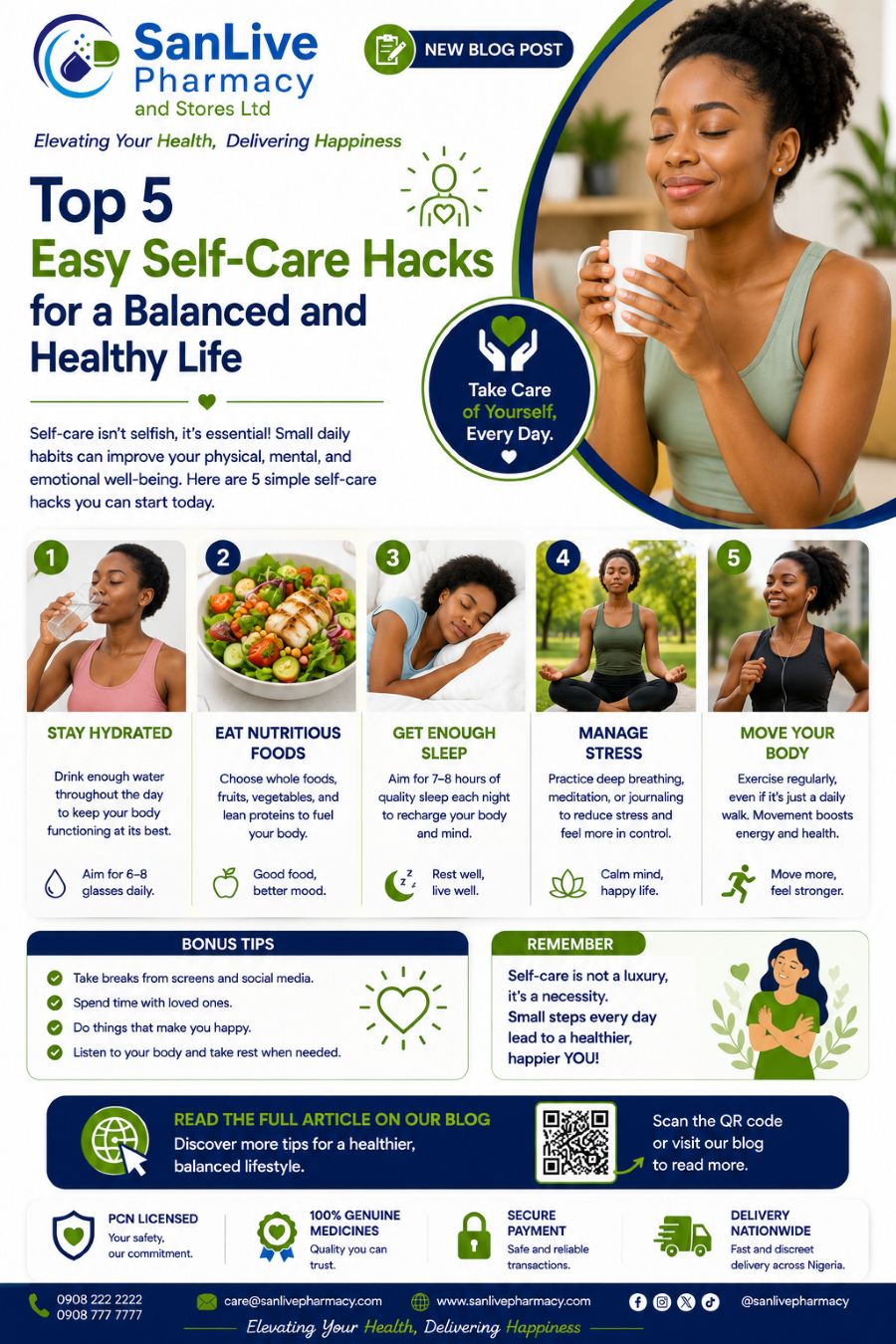
Top 5 Easy Self-Care Hacks for a Balanced and Healthy Life
Self-care has become one of the most talked-about concepts in health and wellness — and also one of the most misunderstood. For many people, it conjures images of expensive spa treatments, elaborate skincare routines, or luxury wellness retreats that feel entirely out of reach in the context of real Nigerian life, where financial pressures, long working hours, family responsibilities, traffic, heat, and the general demands of daily existence leave little time and energy for anything beyond survival.
But genuine self-care — the kind that actually makes a measurable difference to your health, energy, mood, and longevity — is not expensive, complicated, or time-consuming. It does not require a gym membership, a nutritionist, or a wellness coach. It requires something simpler and far more accessible: consistent, intentional attention to the basic pillars of human health that most people chronically neglect.
The five self-care hacks in this guide are not trends or fads. They are grounded in decades of clinical evidence, applicable to the Nigerian lifestyle and context, and achievable by virtually anyone — regardless of income, location, or schedule. Each one is simple to understand, easy to start, and profoundly impactful when practised consistently.
If you want personalised guidance on building a self-care routine that supports your specific health goals, speak with a SanLive pharmacist for free — available online, nationwide and internationally.
Why Self-Care Is Not Selfish — It Is Medical
Before diving into the five hacks, it is worth addressing the cultural context that makes self-care feel uncomfortable or indulgent for many Nigerians — particularly women, who are frequently expected to prioritise the needs of family, community, and work above their own wellbeing.
Self-care is not selfishness. It is not laziness. It is not a luxury. It is the maintenance of the physical and psychological infrastructure that allows you to function, contribute, care for others, and pursue your goals. A car that is never serviced eventually breaks down — and no amount of willpower or determination compensates for a body and mind that have been systematically neglected.
The World Health Organization defines self-care as "the ability of individuals, families and communities to promote health, prevent disease, maintain health, and cope with illness and disability with or without the support of a healthcare provider." By that definition, self-care is not optional — it is a fundamental health practice.
Investing in your own health is also the most rational long-term financial decision most Nigerians can make. The cumulative cost of preventable chronic disease — diabetes, hypertension, cardiovascular disease, depression — in medical bills, lost productivity, reduced quality of life, and premature death dwarfs the cost of the simple, consistent habits that prevent them.
Hack 1: Hydrate Intentionally — Water Is Your Most Powerful Daily Medicine
Why This Is the Most Impactful Single Daily Habit
Water makes up approximately 60 percent of the human body. Every physiological process — from nutrient transport and cellular metabolism to temperature regulation, joint lubrication, hormone production, cognitive function, and waste elimination — requires adequate hydration. When you are consistently mildly dehydrated — a state that is extraordinarily common among Nigerians given the climate, physical demands, and widespread preference for caloric beverages over water — every one of these processes is impaired.
The effects of chronic mild dehydration are subtle but pervasive and cumulatively significant. They include persistent fatigue and low energy that many people attribute to overwork or poor diet; difficulty concentrating and reduced cognitive performance; persistent headaches — dehydration is one of the most common and most treatable causes of headache; constipation and digestive discomfort; dry, dull skin with reduced elasticity; poor kidney function and increased risk of kidney stones; worsening of existing health conditions including hypertension, diabetes, and kidney disease; and increased appetite — thirst is frequently misinterpreted as hunger, driving unnecessary caloric intake.
What Intentional Hydration Actually Means
Most people are aware that they should drink more water. Very few actually do it consistently — because awareness without a system does not produce behaviour change. Intentional hydration means building specific, habitual water intake triggers into your daily routine rather than relying on thirst as the only cue.
Thirst is a late indicator of dehydration — by the time you feel thirsty, you are already mildly dehydrated. Relying on thirst alone means operating in a state of chronic mild dehydration the majority of the time.
The intentional hydration system:
Start every single morning with a large glass of water — 400 to 500ml — before any food, coffee, tea, or other beverage. This single habit immediately begins correcting the dehydration accumulated during overnight sleep and sets the tone for the entire day's hydration pattern. Drink a glass of water approximately 30 minutes before each main meal — this supports digestion, reduces the tendency to overeat, and contributes meaningfully to daily totals. Carry a reusable water bottle with you at all times — visibility and accessibility are the most powerful behavioural drivers of increased water intake. Set hourly reminders on your phone to drink water until the habit is automatic. Monitor your urine colour as the simplest, most reliable indicator of hydration status — pale straw yellow means adequately hydrated; dark yellow means drink more water immediately.
How Much Water Do You Actually Need?
The widely cited advice to drink eight glasses of water daily is a reasonable starting point but oversimplified. Individual water needs vary significantly based on body size, physical activity level, ambient temperature, health status, and diet. In Nigeria's hot, humid climate — where sweating during daily activity is the norm rather than the exception — most adults need between 2.5 and 3.5 litres of total water daily, with more needed during exercise, fever, diarrhoea, or pregnancy.
What counts toward your daily water intake: Plain water is the best source. Water-rich fruits and vegetables — watermelon, cucumber, oranges, tomatoes — contribute meaningfully. Herbal teas, zobo (unsweetened), and kunu contribute. Coffee and regular tea contribute to total fluid but their mild diuretic effect means they should not be relied upon as primary hydration sources. Soft drinks, packaged fruit juices, and sweetened beverages should be minimised — their sugar content adds empty calories and some actively worsen hydration by increasing urinary output.
The Self-Care Dimension of Hydration
Intentional hydration is perhaps the easiest and most impactful of all self-care practices because it costs essentially nothing, requires no special equipment beyond a water bottle, can be practised anywhere at any time, and produces noticeable improvements in energy, skin appearance, cognitive clarity, and digestive health within days of consistent practice — reinforcing the habit through tangible feedback.
✅ Browse hydration support and electrolyte products on SanLive Pharmacy — for those who need additional electrolyte support during intense heat, illness, or physical exertion, delivered across Nigeria and internationally within 3 to 4 days.
Hack 2: Prioritise Sleep — the Free, Powerful Health Intervention Most Nigerians Are Ignoring
Why Sleep Is Not a Luxury — It Is Biological Maintenance
Sleep is not passive rest. It is one of the most metabolically active and physiologically critical states the human body enters. During sleep — particularly during deep slow-wave sleep and REM sleep — the body performs processes that cannot happen adequately during waking hours: the brain clears metabolic waste products accumulated during the day; memories are consolidated and learning is processed; growth hormone is released for tissue repair and muscle rebuilding; immune system activity peaks, producing the cytokines and antibodies that fight infection; hormones including cortisol, insulin, leptin, ghrelin, and testosterone are regulated and balanced; cardiovascular stress is reduced through lower heart rate and blood pressure; and cellular DNA repair mechanisms are most active.
When sleep is consistently insufficient or poor in quality — a state that describes the majority of working Nigerian adults — every one of these processes is compromised. The consequences accumulate invisibly over days, weeks, and months before becoming apparent as health problems.
What Chronic Sleep Deprivation Does to Your Body
The health consequences of consistently sleeping fewer than seven hours per night are well-documented and severe. They include significantly elevated risk of type 2 diabetes — sleep deprivation impairs insulin sensitivity and glucose metabolism in measurable ways; elevated blood pressure and increased cardiovascular risk — poor sleep raises cortisol and activates the sympathetic nervous system, raising blood pressure persistently; impaired immune function — sleep-deprived individuals are significantly more susceptible to infection and respond less well to vaccines; weight gain — sleep deprivation raises ghrelin (hunger hormone) and lowers leptin (satiety hormone), increasing appetite for calorie-dense foods by up to 24 percent the following day; significantly impaired cognitive function — reaction time, decision-making, memory, and creative thinking all decline measurably with sleep restriction; elevated rates of depression and anxiety — the relationship between sleep and mental health is bidirectional and powerful; reduced testosterone and libido — a single week of sleeping fewer than five hours per night reduces testosterone in young men by 10 to 15 percent; and accelerated skin ageing — sleep is when cellular repair, collagen production, and skin barrier restoration are most active.
The 7 Evidence-Based Sleep Optimisation Hacks
Maintain a consistent sleep and wake time every day — including weekends. This is the single most impactful sleep habit. Your circadian rhythm — the internal biological clock that governs sleep-wake cycles — is powerfully regulated by consistent timing. Irregular sleep schedules disrupt circadian rhythm and impair sleep quality even when total sleep hours are adequate.
Create a dark, cool, quiet sleeping environment. Darkness is essential for melatonin production — the hormone that signals the brain to initiate sleep. Even small amounts of light from screens, streetlights, or standby indicators suppress melatonin significantly. In Nigeria's heat, sleeping in the coolest environment available — with a fan if air conditioning is not accessible — supports the core body temperature drop that initiates and maintains sleep.
Implement a consistent wind-down routine for the 30 to 60 minutes before bed. Your brain needs a transition period between the stimulation of daily activity and the calm required for sleep initiation. Dim lighting, reduced screen exposure, and calm activities — reading, prayer, gentle stretching, journaling — during this period significantly improve sleep onset time and sleep quality.
Eliminate or severely reduce screen exposure in the hour before bed. The blue light emitted by smartphones, tablets, and televisions suppresses melatonin production with particular potency, tricking the brain into thinking it is daytime and delaying sleep onset. If screens must be used before bed, use blue light filtering settings.
Avoid caffeine after 2pm. Caffeine has a half-life of approximately five to six hours — meaning half the caffeine from a 3pm coffee is still in your system at 8pm and is significantly impairing your ability to fall into deep sleep even if you feel tired.
Avoid heavy meals within two hours of bedtime. Digestion is metabolically demanding and generates heat — both of which work against the physiological conditions needed for quality sleep. If eating late is unavoidable, choose light, easily digestible foods.
Address sleep disorders. If you snore loudly, wake unrefreshed regardless of hours slept, experience significant daytime sleepiness, or wake repeatedly throughout the night — seek evaluation for sleep apnoea, a highly prevalent and significantly undertreated condition that profoundly impairs sleep quality and is independently associated with hypertension, diabetes, and cardiovascular disease.
✅ Browse sleep support supplements on SanLive Pharmacy including magnesium glycinate — one of the most evidence-backed nutritional sleep supports — delivered across Nigeria and internationally within 3 to 4 days. Speak with a SanLive pharmacist for personalised sleep support guidance.
Hack 3: Move Your Body Every Day — Exercise Is Medicine
Why Daily Movement Is Non-Negotiable for Health
The human body was designed for sustained physical activity. For the vast majority of human history, significant daily movement was not optional — it was a requirement of survival. The transition to sedentary modern lifestyles — desk jobs, car commutes, television evenings, and delivery services that eliminate the need to walk anywhere — has created a profound mismatch between how our bodies are designed to function and how they are actually used.
The health consequences of physical inactivity are dramatic and well-documented. Sedentary behaviour is independently associated with elevated cardiovascular disease risk regardless of other lifestyle factors; type 2 diabetes; obesity and metabolic syndrome; certain cancers including breast and colorectal; depression and anxiety; osteoporosis and musculoskeletal deterioration; cognitive decline and increased dementia risk; and premature death — physical inactivity is estimated to be responsible for approximately 9 percent of premature deaths globally.
Regular physical activity, by contrast, is the closest thing medicine has to a genuine panacea. It improves virtually every measurable health marker across virtually every disease category — and it is free.
What Exercise Actually Does in the Body
Regular physical activity reduces blood pressure by improving vascular elasticity and reducing arterial stiffness; improves insulin sensitivity and blood sugar regulation; reduces LDL cholesterol and raises HDL cholesterol; reduces visceral abdominal fat — the most metabolically dangerous fat depot; builds and preserves muscle mass — the metabolic engine that burns calories at rest; releases endorphins, serotonin, and dopamine — the brain's natural mood-regulating and pleasure chemicals; reduces cortisol — the primary stress hormone; improves sleep quality through increased adenosine accumulation and core body temperature cycling; strengthens the immune system; reduces systemic inflammation; and supports brain health through increased BDNF (brain-derived neurotrophic factor) — a protein that promotes neural growth and plasticity.
The Self-Care Movement Hack — Making Daily Exercise Non-Negotiable Without Willpower
The most common reason people do not exercise is not laziness — it is the false belief that exercise must be intense, time-consuming, or gym-based to be beneficial. This belief prevents millions of Nigerians from accessing one of the most powerful health interventions available to them.
The evidence is clear: moderate-intensity physical activity — brisk walking, cycling, swimming, dancing, active household chores — produces enormous health benefits when practised consistently. Thirty minutes of brisk walking every day is sufficient to significantly reduce the risk of type 2 diabetes, cardiovascular disease, and depression — even without any other lifestyle changes.
Building the daily movement habit in the Nigerian context:
Choose an activity you genuinely enjoy — because enjoyment is the most reliable predictor of long-term exercise adherence. Walk to destinations that are within reasonable walking distance rather than always taking transport. Use stairs consistently rather than lifts. Build activity into social life — walk with a friend, join a community aerobics class, participate in a church or mosque sports group. Exercise in the morning when possible — morning exercisers show consistently higher rates of long-term adherence than those who plan to exercise "later."
Start with what is achievable — ten minutes daily is infinitely better than zero. Increase duration and intensity gradually as fitness improves. The goal is a permanent lifestyle habit, not a temporary fitness challenge.
Combine aerobic activity with strength training. Aerobic exercise two to three times weekly combined with bodyweight strength training — push-ups, squats, lunges, planks — two to three times weekly provides the most complete health and longevity benefits. You need no equipment, no gym, and no special clothing to begin.
Hack 4: Nourish Your Mind — Mental Health Is Physical Health
The Inseparable Connection Between Mental and Physical Wellbeing
Mental health and physical health are not separate domains — they are aspects of the same biological system. The brain is a physical organ, and its function is as dependent on adequate nutrition, sleep, physical activity, stress management, and social connection as any other organ in the body. Conversely, chronic mental health challenges — depression, anxiety, chronic stress — produce measurable, clinically significant physical consequences including elevated cortisol and inflammatory markers, impaired immune function, cardiovascular changes, hormonal disruption, and accelerated cellular ageing.
In Nigeria, mental health remains profoundly stigmatised and widely misunderstood — with significant proportions of the population attributing psychological distress to spiritual causes, moral weakness, or character failings rather than recognising them as health conditions with biological mechanisms and effective treatments. The consequence of this stigma is that the vast majority of Nigerians experiencing depression, anxiety, and other mental health conditions do so without diagnosis, without treatment, and without the language or permission to acknowledge that they are suffering.
Self-care for mental health is not about eliminating all stress — some stress is a normal and even beneficial part of human experience. It is about building the psychological resilience, social resources, and daily practices that prevent stress from accumulating into the chronic state that damages health.
Evidence-Based Mental Health Self-Care Practices
Practise daily intentional stress management. Even ten minutes of deliberate stress reduction daily — mindfulness meditation, deep breathing exercises, prayer, journaling, or simply sitting quietly without screens — measurably reduces cortisol levels and shifts the nervous system from sympathetic (fight-or-flight) to parasympathetic (rest-and-digest) dominance. This is not a soft wellness trend — it is a physiological intervention with documented effects on blood pressure, immune function, and hormonal balance.
Prioritise quality social connection. Human beings are fundamentally social animals, and the quality of social relationships is one of the strongest predictors of both mental and physical health — as powerful in its effects as smoking, physical activity, and diet. The Harvard Study of Adult Development — the longest-running study of human wellbeing ever conducted — identified the quality of close relationships as the single strongest predictor of health and happiness in later life. Invest time and intentionality in your most important relationships. Be present with the people you love. Prioritise face-to-face connection over social media interaction.
Limit social media consumption. Multiple large-scale studies link heavy social media use to increased rates of depression, anxiety, loneliness, body image dissatisfaction, and sleep disruption — particularly in young adults. Social media is designed by the world's most sophisticated behavioural engineers to maximise time-on-platform rather than user wellbeing. Deliberate, time-limited social media use — rather than passive, habitual scrolling — is associated with significantly better mental health outcomes.
Engage in activities that produce genuine enjoyment and meaning. Research on psychological wellbeing consistently identifies the importance of activities that create states of flow — deep, absorbing engagement that produces satisfaction independent of external rewards. Music, sport, creative arts, reading, gardening, cooking, faith practice, and community service all produce these states. Deliberately scheduling time for activities that bring genuine enjoyment — not just relaxation — is one of the most evidence-backed mental health self-care practices available.
Seek professional help when needed — without shame. Just as you would see a doctor for persistent physical pain, consulting a mental health professional for persistent psychological distress is appropriate, effective, and entirely reasonable. Depression and anxiety are medical conditions with effective treatments — counselling, therapy, and medication where indicated. The decision to seek help is a sign of self-awareness and courage, not weakness.
✅ Speak with a SanLive pharmacist if you have concerns about mental health-related medication, supplementation for stress and mood support, or guidance on when professional mental health referral is appropriate.
Hack 5: Build a Personalised Supplement and Preventive Health Routine
Why Nutrition Alone Is Often Insufficient
In an ideal world, a balanced, varied, whole-food diet would provide all the nutrients required for optimal health. In the real world — particularly in the Nigerian context of busy schedules, inconsistent food supply, heavy reliance on refined staple carbohydrates, and the nutrient-depleting effects of environmental stress, chronic illness, and medication use — dietary intake frequently falls short of the levels needed for optimal physiological function.
This is not a failure of personal discipline. It is a realistic assessment of the gap between theoretical nutritional requirements and practical dietary reality. Targeted, evidence-based supplementation bridges this gap — supporting the specific physiological functions where deficiency is most common and most consequential.
The Core Evidence-Based Supplements for General Wellbeing
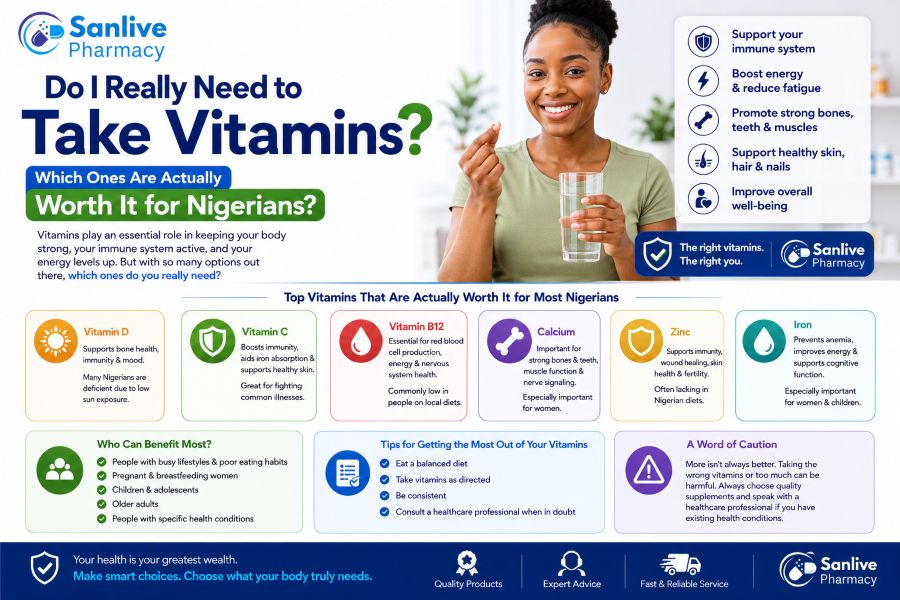
Vitamin D — the most widely deficient nutrient in Nigeria despite abundant sunlight. It seems paradoxical, but Vitamin D deficiency is extraordinarily common in Nigeria — driven by spending the majority of the day indoors, using high-factor sunscreen on the rare occasions of outdoor activity, darker skin tones requiring longer sun exposure to synthesise equivalent Vitamin D, and the general trend toward indoor sedentary lifestyles driven by urbanisation. Vitamin D deficiency is associated with impaired immune function, increased susceptibility to infection, bone loss, depression and mood disorders, reduced testosterone, impaired insulin sensitivity, and poor cardiovascular health. Daily supplementation of 1000 to 2000 IU is appropriate for most Nigerian adults, with higher doses under medical guidance for confirmed deficiency.
Magnesium — the mineral most depleted by modern Nigerian lifestyles. Magnesium is involved in over 300 enzymatic reactions in the human body — including energy production, protein synthesis, blood sugar regulation, nerve function, muscle contraction, blood pressure regulation, and sleep induction. Deficiency is extraordinarily prevalent, driven by high consumption of refined and processed foods (which strip magnesium during processing), stress (which depletes magnesium through increased urinary excretion), alcohol consumption, and certain medications including diuretics and proton pump inhibitors. Magnesium deficiency presents as muscle cramps, poor sleep, anxiety and irritability, constipation, fatigue, and poor stress resilience. Magnesium glycinate or magnesium citrate at 200 to 400mg daily is well-tolerated and broadly beneficial.
Omega-3 fatty acids (EPA and DHA) — the most impactful cardiovascular and brain supplement available. Most Nigerians are significantly under-consuming omega-3 fatty acids — the essential fats found primarily in oily fish, walnuts, and flaxseeds. Omega-3s reduce systemic inflammation, lower triglycerides, improve HDL cholesterol, reduce blood pressure, support brain health and cognitive function, reduce depression and anxiety, support joint health, and improve skin barrier function. 2 to 3g of EPA and DHA combined daily from a high-quality fish oil or algae-based supplement (for those who do not eat fish) provides meaningful and wide-ranging health benefits.
Vitamin C — the antioxidant backbone of immune function and skin health. Vitamin C is essential for immune cell function, collagen synthesis — critical for skin, joint, and wound healing — antioxidant protection, iron absorption from plant sources, and cortisol metabolism. While fresh fruits and vegetables provide Vitamin C, consistent adequate intake is not guaranteed in the Nigerian dietary context. 500 to 1000mg daily is safe, well-tolerated, and broadly beneficial — particularly during periods of increased stress, illness, or intense physical activity.
Zinc — essential for immunity, reproductive health, and wound healing. Zinc is one of the most nutritionally critical minerals for Nigerians and one of the most commonly deficient — particularly in those with diets heavy in refined carbohydrates and low in animal proteins, red meat, shellfish, and nuts. Zinc deficiency impairs immune function, reduces testosterone and fertility in men and women, impairs wound healing, causes hair loss, worsens acne, and reduces taste and smell sensitivity. 15 to 30mg of zinc daily supports immune function, reproductive health, and skin health in deficient individuals.
Probiotics — supporting the gut microbiome that controls immunity and mood. Emerging research has dramatically expanded our understanding of the gut microbiome — the vast community of bacteria, fungi, and other microorganisms living in the human digestive tract — and its influence on health far beyond digestion. The gut microbiome influences immune function, mental health through the gut-brain axis, metabolic health, inflammatory status, and even cardiovascular risk. Regular antibiotic use, high-sugar and low-fibre diets, stress, and illness all disrupt the gut microbiome. A daily probiotic containing multiple Lactobacillus and Bifidobacterium strains supports microbiome diversity and the diverse health functions it governs.
Preventive Health Checks — Self-Care Beyond Supplementation
The most impactful self-care is proactive rather than reactive — identifying and addressing health risks before they develop into established disease.
Essential preventive health checks for Nigerian adults include: Annual blood pressure measurement — hypertension affects 30 to 45 percent of Nigerian adults and the majority are undiagnosed; annual fasting blood glucose and HbA1c — diabetes prevalence is rising rapidly in Nigeria and early detection dramatically improves outcomes; lipid profile every two years from age 35 — cholesterol abnormalities are highly prevalent and asymptomatic; annual BMI and waist circumference assessment; kidney function tests every one to two years particularly for those with hypertension, diabetes, or regular NSAID use; liver function tests annually for those with significant alcohol use or taking multiple long-term medications; thyroid function testing every two to three years particularly for women over 35; cervical cancer screening for women — Pap smear every three years from age 21; breast examination and mammography for women over 40; prostate-specific antigen (PSA) testing for men over 50 or over 40 with a family history of prostate cancer; and eye examination every two years.
The self-care principle: You cannot manage what you do not measure. Regular health checks create the baseline data against which changes are tracked, allow early intervention before damage becomes irreversible, and provide the specific information needed to tailor lifestyle and supplementation strategies to your individual health profile.
✅ Browse all vitamins, minerals, and supplements on SanLive Pharmacy — vitamin D, magnesium, omega-3, vitamin C, zinc, probiotics, and more, all NAFDAC-compliant and delivered across Nigeria and internationally within 3 to 4 days.
✅ Speak with a SanLive pharmacist to build a personalised supplement protocol based on your specific health profile, medications, and lifestyle.
The 5 Self-Care Hacks — Summary Table
| Hack | Core Practice | Key Benefit | Where to Start |
|---|---|---|---|
| 1. Hydrate intentionally | 2.5–3.5 litres daily, morning glass first | Energy, cognition, skin, kidney health | Start tomorrow morning with 500ml water on waking |
| 2. Prioritise sleep | 7–9 hours, consistent timing, optimised environment | Hormones, immunity, mood, metabolism | Set a fixed bedtime tonight and keep it |
| 3. Move daily | 30 minutes moderate activity daily | Cardiovascular, metabolic, mental health | A 30-minute brisk walk today |
| 4. Nourish your mind | Stress management, social connection, enjoyable activities | Mental health, cortisol control, longevity | 10 minutes of mindfulness or prayer today |
| 5. Supplement and screen | Targeted supplements, regular health checks | Fill nutritional gaps, early disease detection | Order core supplements from SanLive |
Nigerians in the Diaspora — Your Self-Care Matters Too
If you are a Nigerian living in the UK, USA, Canada, Australia, Europe, or the Middle East, the self-care challenges you face are real and specific — the stress of adaptation, the disruption of familiar routines, the dietary changes that affect your nutritional status, and the distance from the community and family connections that buffer mental health.
SanLive Pharmacy ships all supplements, vitamins, and health products internationally — bringing trusted, NAFDAC-compliant products directly to your door wherever you are in the world.
- Delivery time: 3 to 4 days to most international destinations
- Packaging: Plain, discreet, and unbranded
- Support: Free pharmacist consultation available before and after every order — for personalised self-care guidance wherever you are
Frequently Asked Questions
Where do I start if I have been neglecting my health for years? Start with one hack — just one. The research on behaviour change consistently shows that attempting to change multiple habits simultaneously dramatically reduces success rates for all of them. Choose the hack that feels most achievable and most relevant to how you are currently feeling — most people find either hydration or sleep the most impactful and easiest starting point. Build one habit until it is automatic, then add the next. A SanLive pharmacist can help you prioritise based on your specific health situation.
How long before I notice improvements from these self-care habits? Hydration improvements in energy and cognitive clarity often become noticeable within 24 to 48 hours of consistent practice. Sleep improvements typically become apparent within one to two weeks of consistent sleep scheduling. Exercise benefits — improved mood, energy, and sleep quality — begin within one to two weeks and compound significantly over months. Supplement benefits vary by nutrient and deficiency level — magnesium sleep improvements often appear within one to two weeks; vitamin D immune improvements develop over one to three months.
Do I need to see a doctor before starting supplements? For most general wellness supplements at standard doses — vitamin D, magnesium, omega-3, vitamin C, zinc, and probiotics — a doctor's visit is not required for otherwise healthy adults. However, if you are pregnant, breastfeeding, managing a chronic condition, or taking prescription medications, speak with a SanLive pharmacist before starting any new supplement to check for interactions and confirm appropriate doses.
Is self-care only for women? Absolutely not. Men are significantly more likely than women to neglect preventive health practices, delay seeking medical attention, underinvest in sleep, ignore mental health symptoms, and resist lifestyle modification advice — contributing to higher rates of premature cardiovascular disease, advanced-stage cancer diagnosis, and suicide in men globally and in Nigeria specifically. Self-care is not gendered. It is human.
Can diaspora Nigerians order supplements from SanLive Pharmacy? Yes. SanLive Pharmacy ships to the UK, USA, Canada, Australia, Europe, and the Middle East with delivery in 3 to 4 days in plain, discreet packaging.
The Bottom Line
Self-care is not a wellness trend. It is not a social media aesthetic. It is the daily practice of maintaining the physical and psychological infrastructure that allows you to live fully, function optimally, and thrive across every dimension of your life.
The five hacks in this guide — intentional hydration, quality sleep, daily movement, mental health nourishment, and targeted supplementation with proactive health screening — are not glamorous. They are not complicated. They do not require significant financial investment. But practised consistently, they produce health outcomes that no medication, medical procedure, or wellness product can replicate.
Your health is the foundation of everything else you want to do, be, and achieve. Invest in it daily. Protect it proactively. And when you need expert support, trusted products, and genuine pharmaceutical guidance — SanLive Pharmacy is here.
- 🔵 Browse all vitamins and supplements on SanLive Pharmacy
- 🔵 Order Vitamin D
- 🔵 Order Magnesium Glycinate
- 🔵 Order Omega-3 Fish Oil
- 🔵 Order Vitamin C
- 🔵 Order Zinc
- 🔵 Order Probiotics
- 🔵 Browse Sleep Support Products
- 🔵 Speak with a SanLive Pharmacist for Free
This article is for informational and educational purposes only and does not constitute medical advice. Always consult a qualified healthcare professional or pharmacist before making significant changes to your health routine or starting new supplements, particularly if you have existing health conditions or are taking prescription medications. SanLive Pharmacy and Stores Ltd operates in compliance with NAFDAC regulations and Pharmacists Council of Nigeria (PCN) standards.

.jpg)