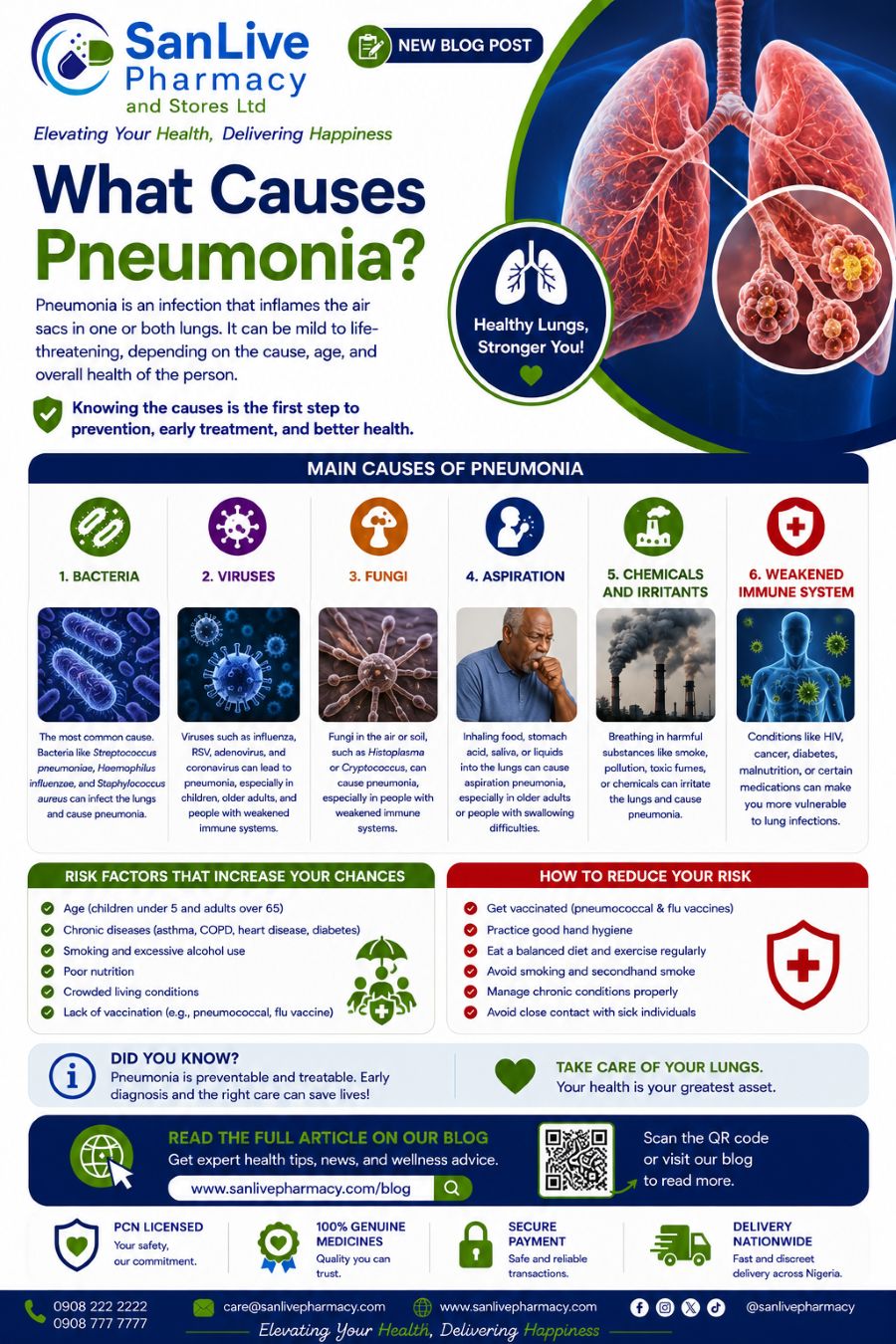
What Causes Pneumonia? A Complete Guide to Symptoms, Treatment, and Prevention for Nigerians
Pneumonia kills more children under five than any other infectious disease in the world. In Nigeria — where it accounts for a staggering proportion of under-five mortality, where healthcare access is inconsistent, and where the conditions that promote pneumonia transmission are widespread — it is not a distant medical concern. It is a daily reality for families across the country, from crowded urban settings in Lagos and Kano to rural communities in Borno and Kebbi.
Yet despite its prevalence and its lethality, pneumonia remains poorly understood by many Nigerians. It is frequently mistaken for severe malaria, dismissed as "chest cold," treated too late with ineffective remedies, or managed without the professional guidance that distinguishes a recoverable illness from a fatal one.
Understanding what pneumonia is, what causes it, how to recognise it early, when to seek emergency care, and how to prevent it — for yourself, your children, and your family — is knowledge that saves lives. This comprehensive guide provides exactly that.
If you have concerns about respiratory illness, need medication guidance, or want to speak with a professional before making a health decision, speak with a SanLive pharmacist for free — confidential, professional, and available online nationwide and internationally.
What Is Pneumonia?
Pneumonia is an acute infection of the lung parenchyma — the functional tissue of the lung where gas exchange occurs. When the lungs are healthy, tiny air sacs called alveoli fill with air during each breath, allowing oxygen to pass into the bloodstream and carbon dioxide to be expelled. In pneumonia, these air sacs become inflamed and fill with fluid, pus, or cellular debris — impairing gas exchange and producing the characteristic symptoms of breathing difficulty, cough, fever, and chest pain.
Pneumonia is not a single disease but a syndrome — a clinical presentation produced by a wide variety of infectious agents including bacteria, viruses, fungi, and parasites, each with different epidemiological patterns, clinical characteristics, and treatment requirements.
The severity of pneumonia ranges from mild illness manageable at home through moderate community-acquired pneumonia requiring oral antibiotic treatment to severe, life-threatening pneumonia requiring intensive hospital care with oxygen therapy, intravenous antibiotics, and in some cases mechanical ventilation.
What Are the Main Causes of Pneumonia?
Pneumonia is caused by infectious agents that reach the lungs through inhalation of airborne particles, aspiration of organisms from the upper respiratory tract or stomach, or — less commonly — spread through the bloodstream from infection elsewhere in the body.
Understanding the specific cause of pneumonia matters because different causes require fundamentally different treatments — antibiotics work for bacterial pneumonia but are completely ineffective against viral or fungal causes.
Cause 1: Bacterial Pneumonia — the Most Common Cause in Adults
Bacterial pneumonia is the most common cause of clinically significant pneumonia in Nigerian adults and older children, and the cause most likely to produce severe, rapidly progressive illness requiring urgent medical attention.
Streptococcus pneumoniae (Pneumococcus) is the single most important bacterial cause of community-acquired pneumonia globally and in Nigeria. It produces the classic lobar pneumonia picture — rapid onset high fever with rigors; a single, shaking chill at onset (classic and distinctive); productive cough with rust-coloured or blood-tinged sputum; pleuritic chest pain — sharp pain worsening with breathing and coughing; breathlessness; and consolidation of one or more lobes of the lung visible on chest X-ray. Streptococcus pneumoniae pneumonia can progress to bacteraemia (bacteria in the bloodstream), meningitis, and death with alarming speed in vulnerable individuals. It is vaccine-preventable — the pneumococcal vaccine is one of the most important and most underutilised vaccines in Nigeria.
Klebsiella pneumoniae — particularly associated with alcoholism, diabetes, and other immunocompromising conditions. Produces severe pneumonia with characteristically thick, dark "currant jelly" sputum. High mortality even with appropriate treatment. Increasing antimicrobial resistance is a significant concern.
Staphylococcus aureus — an important cause of secondary bacterial pneumonia following influenza infection, and a cause of severe community-acquired pneumonia in both children and adults. Methicillin-resistant Staphylococcus aureus (MRSA) is an increasing concern in hospital settings.
Haemophilus influenzae — particularly significant in children and adults with underlying lung conditions including COPD and bronchiectasis. Type b (Hib) causes severe disease in unvaccinated children — largely prevented by the Hib vaccine included in Nigeria's national immunisation schedule.
Mycoplasma pneumoniae — causes atypical pneumonia, characterised by a more gradual onset than typical bacterial pneumonia; a prominent dry, non-productive cough; relatively mild systemic features despite significant lung involvement; and a characteristic pattern on chest X-ray that looks worse than the patient's clinical condition suggests. Most common in young adults and school-aged children. Does not respond to penicillin-class antibiotics — requires macrolide or tetracycline treatment.
Chlamydophila pneumoniae — another cause of atypical pneumonia with a similar clinical picture to Mycoplasma. Treated with macrolides or tetracyclines.
Legionella pneumophila — causes Legionnaire's disease, a severe atypical pneumonia associated with contaminated water sources including air conditioning cooling towers, hospital water systems, and decorative fountains. Characterised by high fever, confusion, diarrhoea, and hyponatraemia (low sodium) alongside respiratory features. Requires specific antibiotic treatment with macrolides or fluoroquinolones.
Cause 2: Viral Pneumonia — Increasingly Important and Often Underestimated
Viral pneumonia is more common than previously recognised and is particularly important in children, elderly patients, and immunocompromised individuals. Viral causes of pneumonia frequently set the stage for secondary bacterial superinfection — a pattern in which the initial viral illness damages the respiratory epithelium and impairs local immune defences, creating ideal conditions for bacterial pneumonia to develop as a secondary complication.
Influenza virus (Types A and B) is the most important cause of viral pneumonia in adults worldwide. Influenza pneumonia can be severe and rapidly progressive — particularly in pregnant women, elderly patients, those with obesity, and those with underlying cardiorespiratory disease. The post-influenza period (days four to seven of influenza illness) is when secondary bacterial pneumonia — particularly with Streptococcus pneumoniae and Staphylococcus aureus — most commonly develops, producing an apparent deterioration after initial improvement.
Annual influenza vaccination is the most effective preventive measure and is recommended for all adults — particularly those in high-risk groups.
Respiratory Syncytial Virus (RSV) is the most important cause of severe lower respiratory tract infection in infants and young children in Nigeria. RSV bronchiolitis and pneumonia cause enormous morbidity and significant mortality in Nigerian infants under 12 months — particularly those who are premature, have underlying heart or lung disease, or are malnourished. In adults, RSV causes milder illness but can be severe in elderly and immunocompromised patients.
SARS-CoV-2 (COVID-19) — the pandemic pathogen that produced unprecedented global health disruption — causes a distinctive viral pneumonia pattern in a proportion of infected individuals, characterised by bilateral ground-glass opacity on CT scan, progressive hypoxia (low blood oxygen), and in severe cases, acute respiratory distress syndrome (ARDS). While the acute pandemic phase has passed, COVID-19 remains in circulation and continues to cause pneumonia — particularly in unvaccinated and immunocompromised individuals.
Measles virus — a critically important cause of pneumonia in Nigerian children, where measles vaccine coverage remains suboptimal in certain states and measles outbreaks continue to occur. Measles pneumonia is one of the most common causes of measles-related mortality in children. Measles vaccination through the national immunisation programme is one of the most impactful preventive interventions available.
Adenovirus — causes pneumonia particularly in children, military recruits in crowded settings, and immunocompromised individuals.
Parainfluenza viruses — important causes of croup in children and pneumonia in immunocompromised adults.
Cause 3: Fungal Pneumonia — Critical in Immunocompromised Patients
Fungal pneumonia is uncommon in immunocompetent (normal immune function) individuals but is a major cause of severe, often fatal pneumonia in patients with compromised immune systems — a population that is substantial in Nigeria given the high burden of HIV and the increasing use of immunosuppressive medications.
Pneumocystis jirovecii pneumonia (PCP) — formerly known as Pneumocystis carinii pneumonia — is one of the most important AIDS-defining illnesses and a leading cause of death in HIV-positive individuals with severely impaired immune function (CD4 count below 200 cells/μL). PCP presents with a characteristic triad of progressive breathlessness, dry cough, and fever developing over days to weeks. Chest X-ray shows bilateral perihilar infiltrates. Treatment with high-dose co-trimoxazole (trimethoprim-sulfamethoxazole) is standard. Prophylactic co-trimoxazole in HIV-positive patients with CD4 below 200 significantly reduces PCP incidence and is a critical component of HIV care.
Cryptococcus neoformans — causes meningitis most commonly in HIV patients but can also produce pulmonary infection. Found in soil contaminated with pigeon droppings — relevant in Nigerian urban environments.
Histoplasma capsulatum and Aspergillus species — cause pulmonary infections in immunocompromised individuals and those with structural lung disease. Aspergillus can produce invasive pulmonary aspergillosis in severely immunocompromised patients with very high mortality.
Cause 4: Aspiration Pneumonia — an Underrecognised and Common Cause
Aspiration pneumonia occurs when oral secretions, food, liquid, or gastric contents are inhaled into the lungs — introducing the bacterial flora of the mouth and stomach into a sterile lung environment, producing inflammation and infection.
Aspiration pneumonia is particularly common in several groups highly relevant to the Nigerian healthcare context: stroke patients with impaired swallowing reflex; unconscious or severely obtunded patients — including those with severe malaria, head injury, or alcohol intoxication; patients with gastro-oesophageal reflux disease; elderly patients with impaired cough reflex and swallowing difficulties; patients with neurological conditions affecting swallowing; and patients who receive tube feeding.
The characteristic feature of aspiration pneumonia is its distribution — typically affecting the posterior lower lung segments in bedridden patients, or the right lower lobe in patients who aspirate while upright, because the right mainstem bronchus is more vertically oriented than the left.
Treatment covers both aerobic and anaerobic bacteria — the anaerobic component is critical and differentiates aspiration pneumonia treatment from standard community-acquired pneumonia regimens.
Cause 5: Tuberculosis — the Great Masquerader
Tuberculosis (TB) — caused by Mycobacterium tuberculosis — deserves specific consideration in the Nigerian context because Nigeria has one of the highest TB burdens in the world, ranking among the top ten high-burden countries globally. TB pneumonia is one of the most important causes of chronic or subacute pulmonary infection in Nigeria and is frequently confused with or delayed in diagnosis relative to other causes of pneumonia.
TB typically produces a more gradual clinical course than bacterial pneumonia — cough lasting weeks to months rather than days; prominent constitutional symptoms including weight loss, night sweats, and fatigue; haemoptysis (coughing blood) in more advanced disease; and chest X-ray changes typically affecting the upper lobes with cavitation in advanced disease.
Every Nigerian patient presenting with cough lasting more than two weeks — particularly with constitutional symptoms, haemoptysis, or known exposure to TB — should have TB evaluation including sputum for acid-fast bacilli (AFB) microscopy and GeneXpert molecular testing.
TB requires prolonged treatment with specific combination antibiotic regimens — standard first-line TB treatment involves four drugs (rifampicin, isoniazid, pyrazinamide, and ethambutol) for two months followed by two drugs (rifampicin and isoniazid) for four months — a six-month total treatment course that must be completed in full. Treatment through the DOTS (directly observed treatment, short-course) programme is the standard of care and is available through government health facilities.
Cause 6: COVID-19 and Emerging Respiratory Pathogens
The COVID-19 pandemic demonstrated with devastating clarity how rapidly a novel respiratory pathogen can emerge, spread globally, and overwhelm health systems. SARS-CoV-2 pneumonia — characterised by bilateral lung involvement, progressive hypoxia, and a distinctive inflammatory response — caused enormous mortality globally and in Nigeria, where underreporting and limited testing meant the true burden was never fully captured.
As of 2026, COVID-19 remains in global circulation as an endemic respiratory pathogen — continuing to cause pneumonia, particularly in unvaccinated, elderly, and immunocompromised individuals. Vaccination against COVID-19 remains relevant and recommended for high-risk groups.
The COVID-19 experience also reinforced the importance of global and national respiratory surveillance systems for detecting and responding to novel respiratory pathogens — a lesson that remains highly relevant for public health preparedness in Nigeria.
Who Is Most at Risk of Pneumonia in Nigeria?
While pneumonia can affect anyone, certain groups face dramatically elevated risk of acquiring pneumonia and of experiencing severe or fatal outcomes.
Children under five are the highest-risk group globally and in Nigeria. Immature immune systems, smaller airways that are more easily obstructed, frequent exposure to respiratory pathogens in childcare and household settings, and the compounding effects of malnutrition — which profoundly impairs immune function — make Nigerian children under five extraordinarily vulnerable to severe pneumonia. Malnutrition is the single most important modifiable risk factor for pneumonia morbidity and mortality in Nigerian children.
Adults over 65 face elevated pneumonia risk due to declining immune function, impaired mucociliary clearance (the mechanism that sweeps pathogens out of the airways), reduced cough strength, and frequent coexistence of chronic conditions that impair defence against respiratory infection.
HIV-positive individuals face dramatically elevated pneumonia risk across the entire CD4 count range — from opportunistic infections including PCP at low CD4 counts to increased susceptibility to standard community-acquired pathogens including Streptococcus pneumoniae at all CD4 levels. Antiretroviral therapy and appropriate prophylaxis significantly reduce pneumonia risk in HIV-positive individuals.
Diabetic patients — Nigeria's growing diabetic population faces elevated pneumonia risk through multiple mechanisms: impaired neutrophil and macrophage function, reduced mucociliary clearance, increased glucose availability in respiratory secretions that promotes bacterial growth, and autonomic neuropathy that impairs cough reflex in advanced disease.
Smokers — smoking is one of the strongest independent risk factors for pneumococcal pneumonia. Tobacco smoke paralyses the cilia that line the airways and sweep pathogens toward the throat for expulsion — dramatically increasing lung vulnerability to bacterial colonisation and infection.
Patients with underlying lung disease — chronic obstructive pulmonary disease (COPD), asthma, bronchiectasis, and previous pulmonary TB causing lung damage all impair airway defence mechanisms and increase pneumonia susceptibility.
Malnourished individuals — malnutrition profoundly impairs every component of immune defence — innate and adaptive, humoral and cellular — dramatically increasing both susceptibility to pneumonia and mortality when it occurs.
Individuals in overcrowded settings — including prisons, internally displaced persons (IDP) camps, refugees, military barracks, and crowded urban households — face elevated exposure to respiratory pathogens and limited ability to implement infection control measures.
Recognising Pneumonia — Symptoms to Know
Early recognition of pneumonia — particularly in children — is one of the most important determinants of outcome. The earlier appropriate treatment is initiated, the better the prognosis.
Classic Symptoms of Pneumonia in Adults
Cough — initially dry, progressing to productive cough with sputum that may be yellow, green, rust-coloured, or blood-tinged depending on the causative organism. Fever — often high-grade, above 38.5°C, sometimes preceded by a single shaking rigor (characteristic of pneumococcal pneumonia). Pleuritic chest pain — sharp, localised chest pain that worsens with deep breathing and coughing, indicating involvement of the pleura (lining of the lung). Breathlessness — ranging from mild breathlessness on exertion to severe rest dyspnoea indicating significant lung involvement. Sweats and rigors. Fatigue and general malaise. Loss of appetite. Confusion and altered consciousness in severe cases — particularly in elderly patients, where confusion may be the presenting feature even before respiratory symptoms are prominent.
Recognising Pneumonia in Children — the WHO Danger Signs
Pneumonia in children presents differently from adults — and recognising danger signs that indicate severe pneumonia requiring immediate hospital care can be life-saving.
Fast breathing — the most reliable early sign of pneumonia in children. The WHO defines fast breathing as a respiratory rate above 60 breaths per minute in children under 2 months; above 50 per minute in children 2 to 12 months; and above 40 per minute in children 1 to 5 years. Count your child's breathing for a full minute when they are calm and not crying.
Chest wall in-drawing — the chest wall drawing in with each breath (the opposite of the normal outward chest movement during inhalation), indicating increased work of breathing and severe pneumonia.
Noisy breathing (stridor or grunting) — stridor is a high-pitched sound during breathing indicating upper airway obstruction; grunting is a low-pitched noise at the end of expiration indicating severe respiratory distress.
Inability to feed in infants — a very unwell infant who refuses to feed is a medical emergency.
Central cyanosis — blue discolouration of the lips and tongue indicating critically low blood oxygen. A medical emergency requiring immediate hospital care.
Convulsions, reduced consciousness, or extreme lethargy — danger signs indicating severe systemic illness.
Any child with fast breathing, chest wall in-drawing, or WHO danger signs requires immediate hospital evaluation without delay.
How Is Pneumonia Diagnosed?
Pneumonia diagnosis combines clinical assessment with investigations — the extent of investigation depending on the severity of illness and the clinical setting.
Clinical examination — a doctor listening to the lungs with a stethoscope will hear characteristic sounds including bronchial breathing (harsh breath sounds heard over consolidated lung), crackles (crackling sounds produced by fluid in air sacs), and reduced air entry. Dullness to percussion over consolidated areas is another classic sign.
Chest X-ray — the cornerstone investigation for pneumonia diagnosis, showing the characteristic pattern of consolidation, infiltrates, or infiltrative changes that confirm the diagnosis and provide information about distribution and severity.
Full blood count — elevated white cell count with neutrophilia in bacterial pneumonia; lymphocytosis in viral pneumonia; leucopenia in severe disease indicating overwhelming sepsis.
C-reactive protein (CRP) and procalcitonin — inflammatory markers that help distinguish bacterial from viral pneumonia and guide antibiotic prescribing decisions.
Blood cultures — taken before antibiotic initiation in hospitalised patients to identify the causative organism and determine antibiotic sensitivities.
Sputum culture and sensitivity — identifies the causative organism in productive pneumonia and guides antibiotic selection.
Oxygen saturation — measured by pulse oximetry; oxygen saturation below 94 percent (or below 90 percent in some guidelines for low-income settings) indicates the need for oxygen therapy.
Urine antigen tests — for Streptococcus pneumoniae and Legionella pneumophila; rapid, non-invasive, and clinically useful for establishing the specific diagnosis.
Sputum AFB microscopy and GeneXpert — for suspected tuberculosis in patients with cough lasting more than two weeks or constitutional symptoms.
HIV test — in all hospitalised patients with pneumonia in high-prevalence settings including Nigeria; HIV status critically influences differential diagnosis and management.
Treatment of Pneumonia — the Right Approach
Antibiotic Treatment — Only for Bacterial Pneumonia
This is the most critical prescribing principle in pneumonia management: antibiotics are effective only for bacterial pneumonia. They are completely ineffective — and potentially harmful through disruption of the microbiome and promotion of resistance — for viral pneumonia.
The widespread practice of prescribing antibiotics for every respiratory illness in Nigeria — including clearly viral upper respiratory tract infections — is one of the most significant drivers of antimicrobial resistance in the country. Pneumonia antibiotic prescribing should be guided by clinical assessment of likely causative organism, severity of illness, local resistance patterns, and microbiological results where available.
Standard antibiotic regimens for community-acquired pneumonia in Nigeria:
Mild community-acquired pneumonia managed outpatient: Amoxicillin 500mg three times daily for five to seven days — covers Streptococcus pneumoniae and other common bacterial causes. For suspected atypical pneumonia (Mycoplasma or Chlamydophila): azithromycin 500mg once daily for five days or doxycycline 100mg twice daily for seven days. For comprehensive dual coverage of typical and atypical organisms: amoxicillin plus azithromycin or doxycycline.
Moderate community-acquired pneumonia requiring hospitalisation: Co-amoxiclav (amoxicillin-clavulanate) intravenous plus azithromycin; or a respiratory fluoroquinolone (levofloxacin or moxifloxacin) as monotherapy.
Severe community-acquired pneumonia in ICU: Broad-spectrum beta-lactam (ceftriaxone or co-amoxiclav) plus azithromycin or fluoroquinolone.
Aspiration pneumonia: Co-amoxiclav (covers anaerobes) or metronidazole added to cover anaerobic component.
PCP in HIV patients: High-dose co-trimoxazole (trimethoprim-sulfamethoxazole) for 21 days plus prednisolone in severe cases.
Supportive Care — Essential Alongside Antibiotics
Antibiotics treat the infection. Supportive care addresses the physiological consequences of that infection and is equally important for recovery.
Oxygen therapy — for patients with oxygen saturation below 94 percent. In severe pneumonia, supplemental oxygen is a potentially life-saving intervention. Oxygen concentrators are the most practical technology for oxygen delivery in Nigerian hospital settings.
Adequate hydration — pneumonia causes fever-related fluid loss and often reduces oral intake. Adequate hydration supports mucociliary clearance and systemic recovery. Oral fluids where tolerated; intravenous fluids in severe illness.
Antipyretics — paracetamol for fever management and symptom relief. Avoid ibuprofen in children with respiratory illness — some evidence associates NSAID use with worse pneumonia outcomes.
Rest — physical rest during the acute illness allows the immune system to direct maximum resources toward infection clearance.
Nutritional support — particularly important in malnourished children and adults; adequate nutrition is essential for immune function and recovery.
Antiviral Treatment — for Specific Viral Causes
Influenza pneumonia in high-risk patients — oseltamivir (Tamiflu) 75mg twice daily for five days initiated within 48 hours of symptom onset significantly reduces duration and severity of influenza and may reduce pneumonia complications. Most effective when started early. COVID-19 antivirals — where available and indicated for high-risk patients.
When to Seek Emergency Medical Care — Do Not Delay
Most mild to moderate pneumonia can be initiated at home with oral antibiotics under pharmacist or medical guidance. However, the following features indicate that immediate hospital care is required and should not be delayed under any circumstances.
In adults: respiratory rate above 30 breaths per minute; oxygen saturation below 94 percent; systolic blood pressure below 90 mmHg or diastolic below 60 mmHg; new confusion or altered consciousness; inability to maintain oral intake; bilateral or multilobar pneumonia on chest X-ray; age over 65 with any two of the above features; or any patient not improving within 48 to 72 hours of appropriate oral antibiotic treatment.
In children: any WHO danger sign including fast breathing for age, chest wall in-drawing, grunting, inability to feed, central cyanosis, or reduced consciousness — these require immediate emergency hospital evaluation without delay.
Preventing Pneumonia — The Complete Prevention Strategy
Vaccination — the Most Powerful Pneumonia Prevention Tool
Pneumococcal vaccine is the most impactful vaccine for pneumonia prevention in both children and adults. The pneumococcal conjugate vaccine (PCV13 or PCV15) is included in Nigeria's national childhood immunisation schedule and dramatically reduces invasive pneumococcal disease including pneumonia in vaccinated children. Adults over 65, adults with chronic conditions including diabetes, heart disease, and lung disease, and all immunocompromised adults should receive pneumococcal vaccination. The pneumococcal polysaccharide vaccine (PPSV23) provides broader serotype coverage for adult vaccination.
Influenza vaccine — annual influenza vaccination significantly reduces influenza-related pneumonia and secondary bacterial pneumonia complication. Recommended for all adults — particularly pregnant women, elderly patients, healthcare workers, and those with chronic conditions.
Hib vaccine (Haemophilus influenzae type b) — included in Nigeria's national immunisation schedule; prevents Hib pneumonia and meningitis in children.
Measles vaccine — included in Nigeria's national immunisation schedule; prevents measles pneumonia, one of the most common causes of measles-related child mortality.
COVID-19 vaccine — reduces severe COVID-19 pneumonia, particularly in high-risk groups.
Nutritional Optimisation — Particularly Critical for Children
Malnutrition is the single most important modifiable risk factor for pneumonia severity and mortality in Nigerian children. Adequate protein and calorie intake, breastfeeding for at least six months (which confers significant respiratory infection protection through maternal antibody transfer), vitamin A supplementation (which reduces respiratory infection risk and severity in deficient children), and zinc supplementation (which reduces pneumonia incidence and severity in deficient children) are all critically important pneumonia prevention interventions in the nutritional domain.
Exclusive breastfeeding for the first six months of life is one of the most powerful pneumonia prevention strategies available — breast milk provides both nutritional adequacy and specific immune factors including secretory IgA that protect the respiratory and gastrointestinal tracts against infection.
Environmental Measures
Reduce indoor air pollution — one of the most significantly underappreciated pneumonia risk factors in Nigeria. Cooking with biomass fuels (wood, charcoal, agricultural waste) on open fires or in poorly ventilated kitchens exposes household members — particularly women and children — to particulate matter and toxic combustion products that impair respiratory defence mechanisms and dramatically increase pneumonia risk. Improved cookstoves, ventilated kitchens, and transition to cleaner cooking fuels where possible significantly reduce this risk.
Avoid tobacco smoke exposure — both active smoking and secondhand smoke exposure impair mucociliary clearance and increase pneumonia susceptibility. Children in households where adults smoke are at significantly elevated pneumonia risk.
Reduce overcrowding — where possible, reducing household density reduces close-contact respiratory pathogen transmission.
Improve ventilation — adequate airflow in living and sleeping areas dilutes respiratory pathogens and reduces transmission.
Hand Hygiene and Infection Control
Regular handwashing with soap and water reduces respiratory infection transmission as well as gastrointestinal infection. Many respiratory pathogens — including influenza and RSV — are transmitted via hand contact with contaminated surfaces followed by touching the face. Hand hygiene is therefore a meaningful pneumonia prevention measure as well as a gastrointestinal infection preventive.
HIV Testing and Treatment
In a high-prevalence HIV setting like Nigeria, ensuring HIV testing, early diagnosis, and prompt initiation of antiretroviral therapy in HIV-positive individuals is one of the most impactful pneumonia prevention strategies available — dramatically reducing the risk of PCP and other opportunistic infections and reducing the elevated risk of standard community-acquired pneumonia associated with HIV.
Pneumonia in Children — a Special Focus for Nigerian Parents
Given that pneumonia kills more Nigerian children than any other infectious disease, a focused summary for parents is essential.
Know the breathing rates for age — count breaths for a full minute when the child is calm. Fast breathing for age is the most important early warning sign.
Breastfeed exclusively for the first six months — this is one of the most powerful protective interventions you can provide your infant.
Ensure all vaccines are up to date — including PCV (pneumococcal), Hib, measles, and influenza. The national immunisation schedule is free at government health facilities.
Ensure adequate nutrition — malnutrition dramatically increases pneumonia risk and severity. Consult a health worker about appropriate feeding practices for your child's age.
Reduce cooking smoke exposure — do not cook indoors with biomass fuels without adequate ventilation, and keep children away from cooking smoke.
Act quickly when you notice danger signs — do not wait to see if fast breathing or chest in-drawing improves. Go to the nearest health facility immediately.
Do not give antibiotics without prescription — antibiotic misuse for viral respiratory illness drives resistance without providing any benefit. Seek professional guidance before any antibiotic use.
✅ Order children's vitamins, zinc supplements, and immune support products on SanLive Pharmacy — delivered across Nigeria and internationally within 3 to 4 days. Speak with a SanLive pharmacist for guidance on supporting your child's respiratory health.
Pneumonia Management — Quick Reference
| Severity | Key Features | Management | Setting |
|---|---|---|---|
| Mild | Cough, fever, no breathlessness, O2 sat above 94% | Oral antibiotics, rest, hydration | Home with pharmacist/medical guidance |
| Moderate | Breathlessness, fast breathing, O2 sat 90–94% | Oral or IV antibiotics, possible oxygen | Hospital assessment — may manage outpatient |
| Severe | Very fast breathing, O2 sat below 90%, confusion, low BP | IV antibiotics, oxygen, close monitoring | Hospital admission urgently required |
| Critical | Respiratory failure, shock, multiorgan involvement | ICU care, possible ventilation | Emergency ICU admission |
| Children with danger signs | Fast breathing for age, chest in-drawing, cyanosis | Emergency hospital evaluation | Immediate — do not delay |
Nigerians in the Diaspora — Respiratory Health Support Available
If you are a Nigerian living in the UK, USA, Canada, Australia, Europe, or the Middle East and have concerns about respiratory illness, pneumonia risk, or immune health support, SanLive Pharmacy ships all relevant supplements and support products internationally.
- Delivery time: 3 to 4 days to most international destinations
- Packaging: Plain, discreet, and unbranded
- Support: Free pharmacist consultation available for personalised respiratory health and immune support guidance wherever you are
Frequently Asked Questions
How do I know if I have pneumonia or just a bad cold? A common cold produces upper respiratory symptoms — runny nose, sore throat, mild cough — with minimal or no fever and no significant breathlessness. Pneumonia produces lower respiratory symptoms — productive cough, significant fever, breathlessness, and often chest pain — with the person typically feeling substantially more unwell than with a cold. Fast breathing is the most important distinguishing feature in children. If you are significantly breathless, have high fever, or chest pain with coughing — seek medical evaluation rather than managing at home.
Can I treat pneumonia at home without seeing a doctor? Mild pneumonia in otherwise healthy adults may be appropriate for home management with appropriate antibiotic treatment — but this should be guided by pharmacist or medical assessment, not self-diagnosis. Children with any danger signs, adults with breathlessness, elderly patients, pregnant women, and immunocompromised individuals should always be evaluated by a healthcare professional. Speak with a SanLive pharmacist if you are unsure whether home management is appropriate for your situation.
How long does pneumonia take to recover? Most healthy adults with appropriately treated community-acquired pneumonia begin feeling better within three to five days of starting antibiotics, with resolution of fever typically within two to three days. Full recovery — including return of energy and complete resolution of cough — may take two to six weeks depending on severity. Chest X-ray changes resolve more slowly than clinical symptoms, sometimes taking four to eight weeks in uncomplicated cases.
Is pneumonia contagious? Many of the organisms that cause pneumonia are transmissible from person to person through respiratory droplets and aerosols — but pneumonia itself is not as straightforwardly contagious as, say, measles or influenza. Exposure to the causative organism does not inevitably produce pneumonia in the exposed person — the outcome depends on the quantity of exposure, the virulence of the organism, and the immune status of the exposed individual.
Can pneumonia be prevented with supplements? No supplement prevents pneumonia directly, but nutritional adequacy significantly supports immune function that resists and recovers from respiratory infection. Vitamin D, zinc, vitamin C, and omega-3 fatty acids all support immune function and reduce susceptibility to respiratory infections in deficient individuals. Order immune support supplements on SanLive Pharmacy.
Can diaspora Nigerians order respiratory health and immune support products from SanLive Pharmacy? Yes. SanLive Pharmacy ships to the UK, USA, Canada, Australia, Europe, and the Middle East with delivery in 3 to 4 days in plain, discreet packaging.
The Bottom Line
Pneumonia is common, serious, and in vulnerable populations — particularly young Nigerian children — potentially fatal. But it is also largely preventable through vaccination, nutritional optimisation, breastfeeding, environmental improvements, and hygiene; recognisable through awareness of its characteristic symptoms and danger signs; and treatable with appropriate antibiotic and supportive therapy when initiated promptly and correctly.
The key actions that save lives in pneumonia are early recognition, immediate escalation to emergency care when danger signs are present, appropriate antibiotic treatment guided by professional assessment, and investment in the preventive measures — particularly vaccines and nutrition — that reduce the incidence and severity of pneumonia in the first place.
Know the signs. Act quickly. Vaccinate your children. And when you need expert guidance, trusted medications, or professional pharmaceutical support — SanLive Pharmacy is here.
- 🔵 Browse all respiratory health products on SanLive Pharmacy
- 🔵 Order Antibiotics with Pharmacist Guidance
- 🔵 Order Vitamin D for Immune Support
- 🔵 Order Zinc Supplements
- 🔵 Order Vitamin C
- 🔵 Order Omega-3 Fish Oil
- 🔵 Order Children's Vitamins and Immune Support
- 🔵 Order Paracetamol for Fever Management
- 🔵 Speak with a SanLive Pharmacist for Free
This article is for informational and educational purposes only and does not constitute medical advice. Suspected pneumonia — particularly in children, elderly patients, pregnant women, and immunocompromised individuals — requires urgent professional medical evaluation. Never attempt to self-diagnose or self-treat pneumonia in vulnerable groups. If you are concerned about your or your child's breathing, seek medical attention immediately. SanLive Pharmacy and Stores Ltd operates in compliance with NAFDAC regulations and Pharmacists Council of Nigeria (PCN) standards.


.jpg)