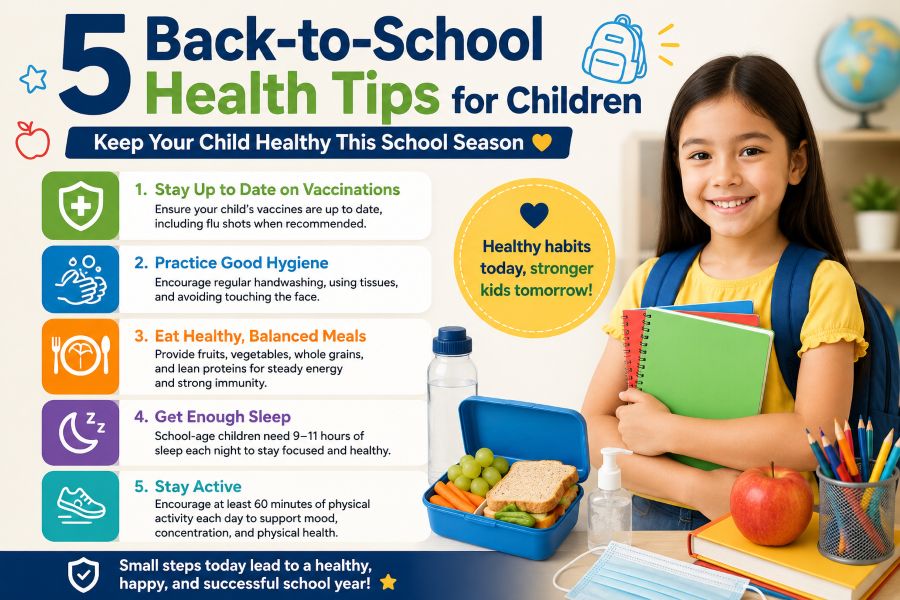
5 Back-to-School Health Tips for Children — Keep Your Child Healthy This School Season
By Sanlive Pharmacy | Reviewed by a PCN-Licensed Pharmacist | Updated: September 2025
Every new school term in Nigeria brings the same pattern: crowded classrooms, shared stationery, canteen queues, and within weeks, the first wave of colds, stomach upsets, and malaria cases starts pulling children out of class. For many Lagos parents, this is simply accepted as "school sickness season." It doesn't have to be.
Malaria, pneumonia, and diarrhoea are among the leading causes of illness and mortality in Nigerian children under five, and school environments create the perfect conditions for several of these to spread. Worm infestations — caused by roundworms, hookworms, and whipworms — are also common in Nigerian children due to poor sanitation and hygiene, and can lead to anything from mild abdominal discomfort to malnutrition and anaemia.
The good news is that most of these conditions are either preventable or caught early enough to manage at home with the right preparation. This guide covers the five highest-impact steps Nigerian parents can take before and during the school term — with practical, affordable actions for each one.
Why School Season Is a Peak Time for Childhood Illness in Nigeria
When children return to school after the holiday, they bring together germs from dozens of different households. Shared desks, pencils, drinking cups, and canteen food create efficient transmission routes for bacteria and viruses. Classrooms with poor ventilation accelerate respiratory spread.
In Nigeria specifically, the timing adds another layer: the school resumption period overlaps with the rainy season, which peaks between April and October — exactly when mosquito breeding conditions are optimal and waterborne diseases like typhoid surge. During the rainy season, flies that carry typhoid bacteria are more active and can easily land on uncovered meals, while increased moisture creates conditions for respiratory infections to spread more readily.
Understanding why children get sick at school resumption is the first step to preventing it.
Tip 1: Update Your Child's Vaccinations Before Resumption
This is the single most impactful action on this list.
Vaccines do not just protect your individual child — they prevent illnesses from spreading to classmates, teachers, and younger siblings at home who may be too young to be vaccinated themselves.
Nigeria's immunisation programme has contributed significantly to reducing childhood diseases, including the achievement of polio-free status, and children's vaccines now cover hepatitis, mumps, chickenpox, measles, yellow fever, and more. However, many families fall behind on booster doses during school holidays, especially between terms.
Before your child returns to school, verify the following:
- Measles vaccine (two doses: at 9 months and 15 months) — measles spreads rapidly in school settings through respiratory droplets
- Meningitis vaccine — meningitis is particularly common in the northern parts of Nigeria and schools in vulnerable regions require this protection
- Hepatitis B (three-dose series) — shared surfaces and close contact make schools a transmission environment
- Chickenpox (varicella) — highly contagious in classroom settings; one unvaccinated child can trigger a class-wide outbreak
- Typhoid vaccine — particularly relevant for school-age children buying food from canteens or street vendors
If you are unsure which vaccines your child has already received, bring their immunisation card to any PHC or visit your nearest pharmacy. Our pharmacists at Sanlive Pharmacy can help you identify gaps and advise on where to access any outstanding vaccines.
Important note: Vaccines are not just for toddlers. School-age children between 5 and 15 need booster doses and age-specific vaccines too — many parents stop tracking after the early childhood schedule is complete.
Tip 2: Build a Consistent Sleep Routine at Least One Week Before Resumption
Most Nigerian families experience the same holiday pattern: children stay up until midnight watching TV or using devices, wake up at 9am, and repeat. When school resumes and alarms go off at 5:30am, the result is a chronically sleep-deprived child whose immune system is already compromised before the first day.
Sleep is not a luxury. It is an active immune function.
Children aged 6 to 12 need 9 to 12 hours of sleep per night; teenagers aged 13 to 18 need 8 to 10 hours. Children who consistently sleep less than the recommended amount show measurably higher rates of respiratory infections, slower wound healing, and reduced vaccine effectiveness.
How to reset the sleep schedule before resumption:
Start shifting bedtime and wake-up times 10 to 15 minutes earlier every day beginning one week before school starts. This gradual adjustment avoids the shock of abrupt schedule changes and reduces first-week fatigue.
Practical steps that work in a typical Lagos home:
- Set a firm "screens off" rule one hour before bedtime — phones, tablets, and television all delay sleep onset in children
- Keep the bedroom as cool as possible (fan or AC) — heat disrupts sleep quality significantly in Lagos
- Create a short, consistent pre-bed routine: bath, light snack if needed, quiet time or a brief read
- Wake children at the target school-day time during the holiday week before resumption — this is the most effective single step
A well-rested child is more focused at school and significantly more resistant to catching the infections circulating in their classroom.
Tip 3: Teach Hand Hygiene — the Most Effective Anti-Germ Habit You Can Give Your Child
Frequent handwashing with soap and water remains one of the best defences against colds, flu, and other infections — children should wash before eating, after using the bathroom, and as soon as they return home from school.
This sounds obvious. It is also almost universally underdone. Children rush through handwashing in under five seconds, use water without soap, or skip it entirely when adults are not watching.
What to teach your child specifically:
- When: Before eating, after using the toilet, after touching shared surfaces (desks, doorknobs, shared pens), after sport or PE, and immediately on arriving home
- How: Soap + water + at least 20 seconds of scrubbing (front, back, between fingers, under nails) — the 20-second rule is the clinically established minimum
- Coughing and sneezing: Into the elbow or upper arm, never into the hand, which then touches every shared surface in the classroom
For school bags: Pack a small hand sanitiser (at least 60% alcohol) for moments when soap and water are not available — during a long bus ride, on a school trip, or at break time at a school with inadequate washing facilities.
Schools that have functioning handwashing stations with soap see measurably lower rates of respiratory and gastrointestinal illness across the entire school year. If your child's school does not have adequate facilities, a small personal sanitiser is a practical alternative.
A word on conjunctivitis ("Apollo"): Eye infections spread explosively in Nigerian classrooms. Teach your child never to touch their eyes with unwashed hands, never to share towels or face cloths, and to tell a teacher immediately if their eyes start to itch or redden. Early treatment with appropriate eye drops — available at Sanlive Pharmacy — prevents the spread to the entire class.
Tip 4: Pack Nutritious, Immune-Supporting Meals — What Your Child Eats Determines How Well They Fight Infection
The immune system runs on nutrients. A child eating indomie noodles and packaged snacks every day goes to school with a nutritional deficit that makes every passing virus easier to catch.
A balanced diet with plenty of fruits, vegetables, whole grains, and lean protein gives the immune system the nutrients it needs to function properly.
For Nigerian parents, this does not mean expensive or complicated meals. It means intentional choices using foods already in most Lagos kitchens.
Key nutrients and their Nigerian food sources:
| Nutrient | Why It Matters | Affordable Sources |
|---|---|---|
| Vitamin C | Boosts white blood cell production | Oranges, tomatoes, green peppers, garden egg |
| Zinc | Reduces duration of infections | Beans, groundnuts, eggs, whole grains |
| Iron | Prevents anaemia that weakens immunity | Ugwu (pumpkin leaf), beans, red meat (small portions) |
| Vitamin A | Maintains respiratory and gut barriers against infection | Carrots, sweet potato, yellow maize, liver |
| Protein | Required for antibody production | Eggs, fish, beans, moin-moin, akara |
Practical meal planning for the school week:
- Breakfast matters most: A protein-rich breakfast (eggs with vegetables, oats with groundnut or banana, or moin-moin) improves concentration and immune readiness more than any supplement. Children who skip breakfast are more susceptible to late-morning fatigue and infection.
- Reduce sugar in lunchboxes: Sugary snacks, fruit juices, and biscuits suppress immune function for hours after consumption. Replace with water, zobo (unsweetened), or freshly cut fruit.
- Control canteen food: If your child buys food at school, give them specific guidance on what to avoid — raw vegetables not washed in front of them, food that has been sitting uncovered, water from unknown sources.
- Add immune-supporting extras: A small handful of groundnuts, an orange, or a portion of beans in the lunchbox adds micronutrients that processed snacks cannot provide.
Should you give your child a vitamin supplement?
For most Nigerian children eating a reasonably varied diet, a good-quality children's multivitamin provides useful nutritional insurance, particularly for Vitamin D (which is involved in immune regulation) and Vitamin C. Children who are picky eaters or who rely heavily on processed school foods benefit most. Browse our children's vitamins and supplements range at Sanlive Pharmacy for pharmacist-recommended options, with delivery available across all 36 states.
Tip 5: Deworm and Protect Against Malaria at Every New Term
These two steps are specific to Nigeria and West Africa and are often missing from generic "back-to-school health" advice — yet they are among the most important preventive actions a Nigerian parent can take.
Deworming
Intestinal worms — including roundworms, hookworms, and whipworms — are common in Nigerian children due to poor sanitation and hygiene, and can lead to malnutrition, anaemia, and bowel complications in heavy infestations.
The World Health Organisation and Nigeria's Federal Ministry of Health both recommend deworming children every six months — making the start of each new school term a natural and memorable schedule anchor.
Deworming with albendazole or mebendazole is safe, inexpensive, and takes a single dose for most children. It is available over the counter at Sanlive Pharmacy without a prescription for children aged two and above.
Signs your child may have a worm infestation:
- Persistent stomach pain or bloating
- Itching around the anus, especially at night
- Poor appetite despite normal activity
- Unexplained weight loss or failure to gain weight
- Passing visible worms in stool (in heavier infestations)
Many children with worm infestations show none of these signs. Treating preventively every term is more reliable than waiting for symptoms.
Malaria Prevention
Nigeria accounts for 27% of global malaria cases and 32% of malaria deaths, with the majority among children under five. School-age children remain significantly at risk, particularly in the rainy season months of September through November when mosquito populations peak — exactly when the new school term begins.
Practical malaria prevention for school-age children:
- Insecticide-treated bed nets (ITNs): A properly used treated net is the single most cost-effective malaria prevention tool available. Ensure the net is intact, properly tucked, and re-treated or replaced according to the manufacturer's schedule.
- Mosquito repellent: Apply DEET-based or picaridin repellent to exposed skin in the evenings and early mornings, when Anopheles mosquitoes are most active.
- Eliminate breeding sites at home: Empty standing water from buckets, blocked gutters, plant pots, and any containers around the compound weekly. Mosquito larvae mature in as little as 7 days in stagnant water.
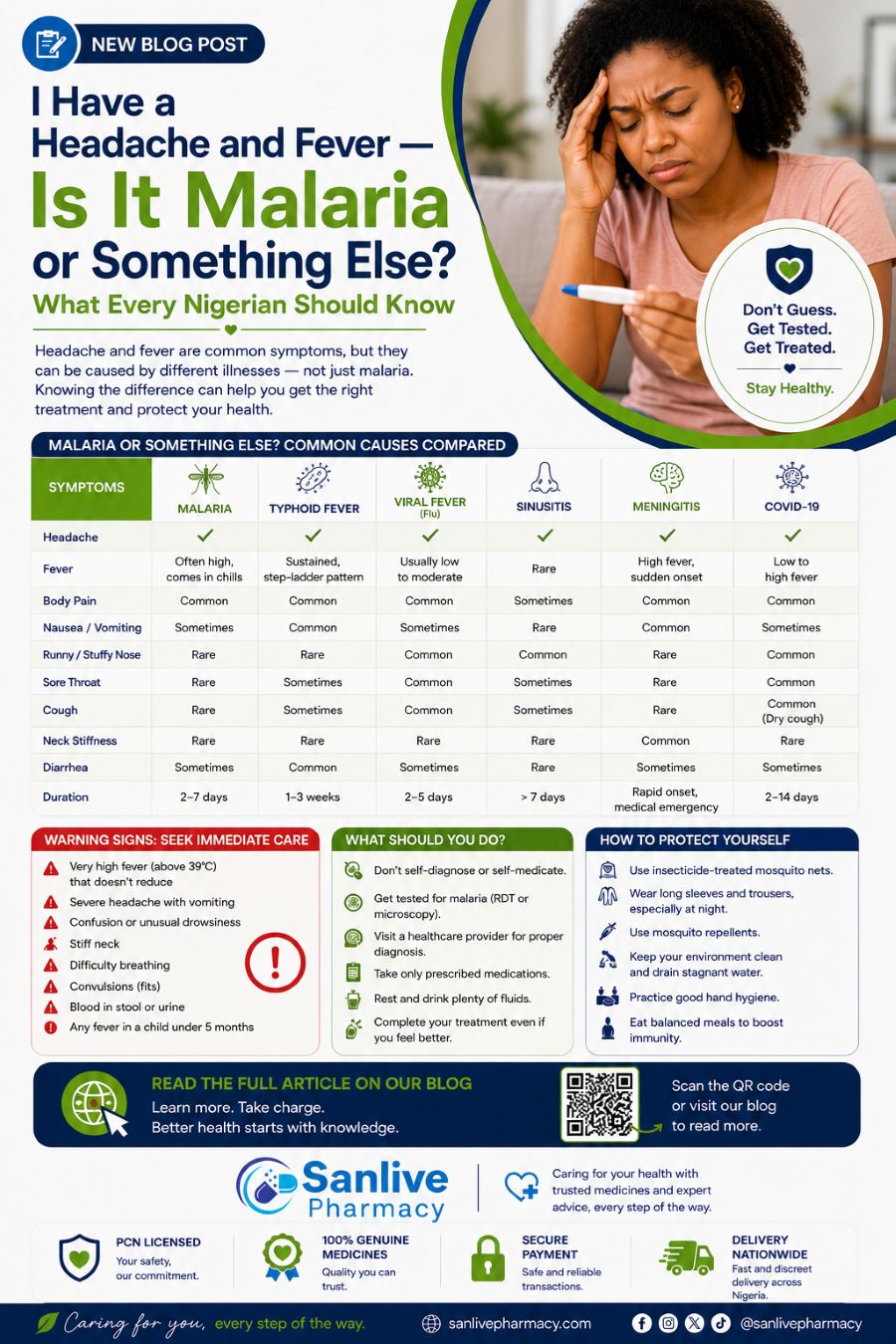
- Know the early signs: Malaria in children can progress rapidly. A child with fever above 38°C, chills, headache, vomiting, or loss of appetite during the school term should be tested immediately. Rapid Diagnostic Tests (RDTs) are available at Sanlive Pharmacy for home testing — order yours here with nationwide delivery.
- Act within 24 hours: Delayed treatment of malaria in children is one of the leading causes of preventable child deaths in Nigeria. If a rapid test is positive or malaria is suspected clinically, start treatment the same day. Our pharmacists can advise on appropriate first-line treatment options based on your child's age and weight.
Back-to-School Health Checklist for Nigerian Parents
Use this before every school resumption:
- Immunisation card reviewed — all vaccines up to date
- Deworming dose given (albendazole or mebendazole)
- Malaria net inspected and in place
- Sleep schedule shifted to school bedtime at least 5 days before resumption
- Hand sanitiser packed in school bag
- School-week meal plan prepared (protein breakfast, reduced sugar snacks)
- Mosquito repellent stocked at home
- Basic medicines stocked: thermometer, paracetamol (age-appropriate dose), oral rehydration salts, malaria RDT
- Child reminded of hand hygiene rules and "no eye-touching" rule
- School nurse or health contact number saved
People Also Ask: Back-to-School Child Health Questions Answered
What illnesses do children most commonly get when school resumes in Nigeria? The most common school-season illnesses in Nigerian children are malaria (particularly in the September–November rainy season), upper respiratory tract infections (colds and cough), typhoid fever from contaminated food or water, conjunctivitis ("Apollo"), diarrhoeal disease, and worm infestations. All five of the tips in this article are designed to address at least one of these conditions.
How often should I deworm my child in Nigeria? The WHO and Federal Ministry of Health recommend deworming every six months for children in endemic areas — and most of Nigeria qualifies. The easiest schedule to remember is once at the start of the first school term (September) and once at the start of the second term (January). A single dose of albendazole (400mg) or mebendazole (500mg) is appropriate for children aged two and above.
What should I pack in my child's school first aid kit or bag? A practical Nigerian school bag health kit includes: age-appropriate hand sanitiser (60%+ alcohol), a small pack of oral rehydration salts (in case of diarrhoea or vomiting during school hours), paracetamol tablets or syrup at the correct dose for your child's weight (with written instructions for the teacher), a spare face mask for respiratory illness episodes, and a note of any allergies or medical conditions for the school's nurse.
When should I keep my child home from school? Keep your child home if they have a temperature above 38°C until fever-free for 24 hours without medication; if they have active vomiting or diarrhoea; if they have active conjunctivitis (pink/red eyes with discharge) until treated; or if they have a confirmed contagious illness like chickenpox or measles. Returning too early creates classroom outbreaks that affect every family.
Are Nigerian children getting all the vaccines they need? Many children have gaps in their vaccination records, particularly for booster doses administered after the first year of life, and for newer vaccines like the typhoid conjugate vaccine. Bring your child's immunisation card to any primary healthcare centre or pharmacy consultation to identify any gaps before school starts.
Is it safe to buy medicine for my child from a pharmacy without seeing a doctor? For mild, familiar symptoms — fever managed with paracetamol, diarrhoea managed with ORS, minor skin infections, eye drops for early conjunctivitis — a qualified pharmacist can appropriately guide treatment. For persistent fever (over 48 hours), suspected malaria, any difficulty breathing, or symptoms that worry you, always see a doctor. At Sanlive Pharmacy, our PCN-licensed pharmacists are available for consultations via WhatsApp to help you decide whether home management or a clinic visit is appropriate.
When to See a Doctor Immediately
These signs in a school-age child require urgent medical attention — do not wait or self-treat:
- Fever above 38°C lasting more than 24 hours (possible malaria or typhoid)
- Convulsions or seizures at any temperature
- Difficulty breathing or fast breathing
- Severe headache with stiff neck (possible meningitis)
- Persistent vomiting with inability to keep fluids down (dehydration risk)
- Rash spreading rapidly across the body
- Unusual drowsiness or unresponsiveness
- Yellow eyes or skin (jaundice — possible hepatitis)
In Lagos, take the child directly to a hospital emergency department. Do not wait for the child's "usual doctor" to be available.
Stock Your Home Medicine Cabinet Before Resumption
Every Nigerian parent should have these basics at home before the school term starts — not waiting until a child is sick at 10pm on a school night:
- Thermometer (digital, for early fever detection)
- Paracetamol (syrup for younger children, tablets for older — check dosing by weight, not age)
- Oral Rehydration Salts (ORS) — for diarrhoea and vomiting, prevents dangerous dehydration
- Malaria Rapid Diagnostic Test (RDT) — test at home before deciding whether to visit a clinic
- Albendazole or mebendazole — deworming dose for each child
- Nasal saline spray — safe for children to help with congestion
- Antiseptic cream — for school playground cuts and grazes
- Antihistamine syrup — for allergic reactions and insect bites
All of these are available at Sanlive Pharmacy with nationwide delivery across all 36 states. Chat our pharmacist on WhatsApp if you want a personalised list based on your child's age, weight, or existing health conditions.
The Bottom Line
Keeping your child healthy through the school term is not about reacting to every sniffle. It is about building a small set of habits — consistent sleep, handwashing, good food, timely deworming, malaria prevention, and up-to-date vaccines — that quietly close the doors to the most common causes of school absence in Nigeria.
None of these steps require expensive products or specialist equipment. They require intention and consistency.
Your child works hard in school. These five habits are how you make sure their body is working just as hard to keep them there.
Get term-start ready with Sanlive Pharmacy. Browse our children's health range, vitamins and supplements, and malaria care products — delivered to your door nationwide across all 36 states. Chat a pharmacist on WhatsApp for personalised advice.
Disclaimer: This article is for informational and educational purposes only and does not constitute medical advice. Always consult a qualified healthcare professional or pharmacist regarding your child's specific health needs.
Tags: back to school health tips Nigeria, children health school season, how to keep children healthy school term, back to school Nigeria 2025, common childhood illnesses Nigeria, malaria prevention children Nigeria, deworming children Nigeria, school age vaccination Nigeria, children vitamins Nigeria, hand hygiene children school, conjunctivitis Apollo school Nigeria, typhoid prevention children Nigeria, school resumption health checklist, paediatric health Nigeria, children immune support Nigeria, school lunchbox ideas Nigeria
Author bio slot: Reviewed by a PCN-licensed pharmacist at Sanlive Pharmacy and Stores Ltd — Nigeria's trusted online pharmacy delivering medicines and health products nationwide.

.jpg)