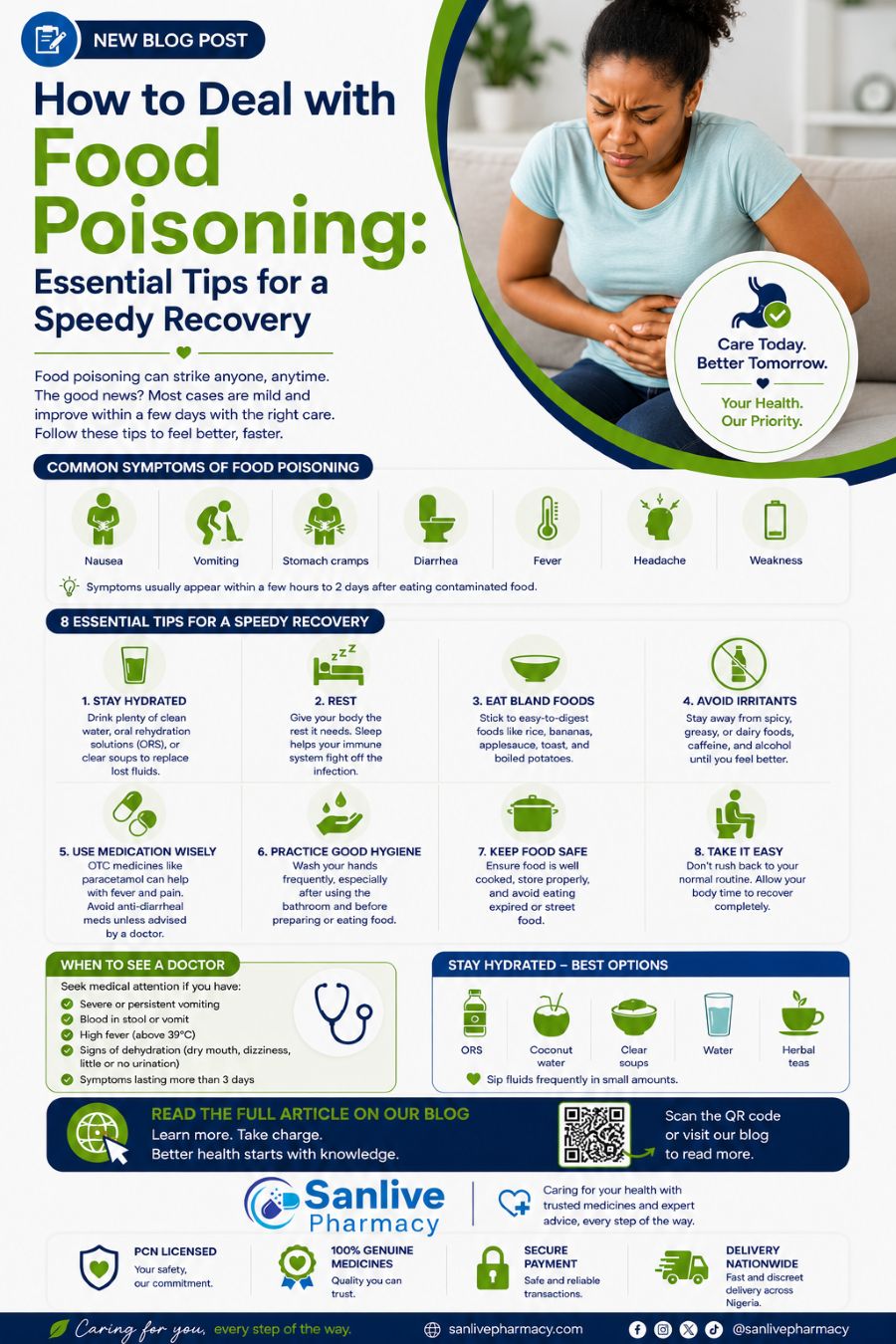
How to Deal with Food Poisoning: Essential Tips for a Speedy Recovery
It starts innocently enough. A meal at a new restaurant. Leftover rice reheated from the day before. Street food purchased during a busy lunch break. A family celebration with plenty of food sitting out in the afternoon heat. You eat, enjoy it, and think nothing of it — until several hours later when your stomach begins to cramp with an urgency that sends you rushing to the bathroom.
Food poisoning is extraordinarily common. The World Health Organization estimates that 600 million people — nearly 1 in 10 people globally — fall ill from contaminated food every year, resulting in 420,000 deaths annually. In Nigeria, where ambient temperatures accelerate bacterial growth, refrigeration is unreliable, safe water access is inconsistent, and street food consumption is a daily reality for millions, foodborne illness represents one of the most significant everyday public health burdens.
The good news is that the vast majority of food poisoning cases are self-limiting, manageable at home with the right approach, and resolve completely within days. This guide tells you exactly what to do, what not to do, when to manage at home, and when to seek urgent medical attention.
If you need ORS, antiemetics, probiotics, or any food poisoning recovery essentials right now, order from SanLive Pharmacy with fast delivery across Nigeria and internationally within 3 to 4 days.
What Is Food Poisoning — and What Causes It?
Food poisoning — medically termed foodborne illness — is illness caused by consuming food or drink contaminated with pathogenic microorganisms, their toxins, or chemical contaminants. It is not a single disease but a group of illnesses sharing the common feature of originating from contaminated food or water.
The Most Common Causes of Food Poisoning in Nigeria
Salmonella is found in raw or undercooked poultry, eggs, meat, and unpasteurised dairy products. Symptoms typically begin 6 to 72 hours after exposure and include diarrhoea — sometimes bloody — fever, abdominal cramps, nausea, and vomiting. Duration is 4 to 7 days.
Staphylococcus aureus produces heat-stable toxins in food left at room temperature. Crucially, the toxins survive cooking — so reheating contaminated food does not make it safe. Onset is rapid, between 30 minutes and 8 hours, and is characterised by sudden, severe vomiting. Duration is usually 24 to 48 hours.
Bacillus cereus is particularly associated with rice — one of the most significant food safety concerns in the Nigerian context where rice is a dietary staple. Spores survive cooking and germinate when cooked rice is left at room temperature. Two toxin types cause either vomiting (onset 1 to 6 hours) or diarrhoea (onset 6 to 15 hours). Never leave cooked rice at room temperature for more than two hours.
Escherichia coli (E. coli) — particularly the dangerous O157:H7 strain — is found in undercooked meat, raw vegetables, and contaminated water. Can cause severe, bloody diarrhoea and, in vulnerable individuals, life-threatening kidney failure.
Vibrio cholerae causes severe, potentially fatal diarrhoea and is a significant concern in Nigeria's flood-prone communities.
Campylobacter is found in undercooked poultry, unpasteurised milk, and contaminated water, and is one of the most common bacterial causes of diarrhoea globally.
Clostridium perfringens is found in meat, poultry, and gravy left at room temperature after cooking — a common cause of large-scale food poisoning at events and celebrations, precisely the scenario of Nigerian parties where food is cooked in large quantities and kept warm for extended periods.
Norovirus is the most common cause of viral gastroenteritis worldwide. Extraordinarily contagious — as few as 18 viral particles can cause infection. Characterised by sudden onset of vomiting and diarrhoea. Duration is 1 to 3 days and is responsible for many of the "24-hour bugs" people experience.
Entamoeba histolytica causes amoebic dysentery — characterised by bloody, mucus-containing diarrhoea with severe abdominal cramping. Particularly relevant in Nigeria where it is endemic in many communities. Requires specific antiparasitic treatment and does not resolve with supportive care alone.
Giardia lamblia causes prolonged diarrhoea, bloating, and malabsorption, often acquired through contaminated water, and requires specific treatment with metronidazole or tinidazole.
Aflatoxins — produced by moulds on improperly stored groundnuts, maize, and other grains — are a significant food safety concern in Nigeria with both acute toxicity effects and long-term liver cancer risk with chronic exposure.
Recognising Food Poisoning — Symptoms and Timeline
The most common presentation includes some combination of nausea and vomiting; diarrhoea — watery, loose, or in severe cases bloody; abdominal cramping and pain; fever and chills; headache and muscle aches; fatigue and weakness; and loss of appetite.
Onset timeline — one of the most useful diagnostic clues:
| Onset After Eating | Most Likely Cause |
|---|---|
| 30 minutes to 6 hours | Staphylococcus aureus toxin, Bacillus cereus (vomiting type) |
| 6 to 24 hours | Clostridium perfringens, Bacillus cereus (diarrhoea type) |
| 1 to 3 days | Salmonella, Campylobacter, E. coli, Norovirus |
| 1 to 4 weeks | Hepatitis A, parasitic infections (Giardia, Entamoeba) |
Most bacterial and viral food poisoning resolves within 24 to 72 hours with appropriate supportive care. Parasitic infections and hepatitis A cause more prolonged illness requiring specific treatment. If symptoms persist beyond 72 hours without improvement, medical evaluation is warranted.
Essential Tips for a Speedy Recovery
Tip 1: Rehydration — Your Single Most Important Priority
The greatest danger in food poisoning is not the infection itself but the dehydration caused by fluid loss through vomiting and diarrhoea. Dehydration is the primary cause of food poisoning-related deaths — and it is almost entirely preventable with prompt, adequate rehydration.
Dehydration in food poisoning involves simultaneous loss of water and critical electrolytes including sodium, potassium, chloride, and bicarbonate. Replacing water alone without electrolytes is insufficient and can actually worsen the imbalance. This is why Oral Rehydration Salts (ORS) are vastly superior to plain water, soft drinks, or fruit juice.
ORS contains the precise combination of glucose, sodium, potassium, and bicarbonate that exploits the sodium-glucose co-transport mechanism in the intestinal wall — promoting maximum fluid absorption even from a gut that is actively losing fluid. This makes ORS effective even in the presence of active vomiting and diarrhoea.
How to use ORS: Dissolve one ORS sachet in one litre of clean, boiled and cooled water. Sip slowly and continuously — small, frequent sips are better tolerated during nausea than large volumes. Continue giving ORS after every episode of vomiting or diarrhoea. Do not stop ORS because of vomiting — even patients who are vomiting absorb meaningful amounts from small, frequent sips.
If commercial ORS is unavailable — home preparation: Combine one litre of clean, boiled and cooled water with six level teaspoons of sugar and half a level teaspoon of salt. Mix thoroughly and use within 24 hours.
Drinks to avoid during food poisoning include soft drinks and sugary beverages, whose high sugar content draws water into the intestine and worsens diarrhoea; alcohol, which is a diuretic that accelerates dehydration; undiluted fruit juice with high fructose content; caffeinated beverages, which stimulate intestinal motility; and cow's milk, which may worsen diarrhoea due to temporary lactase depletion during gastroenteritis.
Signs of dangerous dehydration requiring immediate medical attention:
- No urination for more than 8 hours or very dark, concentrated urine
- Dry mouth and severely dry eyes
- Dizziness and light-headedness on standing
- Rapid, weak pulse
- Confusion or altered consciousness
- In children: no tears when crying, sunken fontanelle, no wet nappy for 8 or more hours
✅ Order ORS sachets on SanLive Pharmacy — adult and paediatric formulations available, delivered across Nigeria and internationally within 3 to 4 days. ORS should be kept in every Nigerian home as a first-aid essential.
Tip 2: Rest — Allow Your Body to Heal
Food poisoning is a physiological assault. Your immune system is actively fighting infection, your gut is inflamed, and your body is directing significant energy toward recovery. Rest is not laziness during food poisoning — it is an active therapeutic intervention that frees up your body's limited energy resources for healing.
Stay in bed or rest close to bathroom facilities. Avoid physical exertion — even activities that normally feel effortless will feel exhausting during acute illness. Sleep as much as your body requests, since sleep is when immune function is most active and restorative. Do not attempt to return to work, school, or normal activities until you have been symptom-free for at least 24 hours — both for your own recovery and to prevent spreading infection to others.
Tip 3: Manage Vomiting Safely
Vomiting is your body's mechanism for expelling contaminated food from the stomach as rapidly as possible. For the first 1 to 2 hours of active vomiting, allow the body to do its work without forcing fluids or food.
After the initial acute vomiting phase, begin sipping ORS in very small amounts — a few sips every few minutes. If a sip triggers immediate vomiting, wait 10 to 15 minutes before trying again. Gradually increase the volume and frequency of sips as tolerance improves.
Antiemetic medications for persistent vomiting:
Metoclopramide (Plasil, Maxolon) at 10mg reduces nausea and vomiting by accelerating gastric emptying. It is widely available in Nigeria and suitable for most adults — avoid in children under 1 year.
Ondansetron is the most effective antiemetic for severe nausea and vomiting, available as tablets, oral dissolving tablets which are particularly useful when swallowing is difficult, and injections.
Promethazine (Phenergan) is an effective antiemetic that causes significant sedation — best taken at bedtime if used during food poisoning.
Ginger at 1 to 2g of fresh ginger in hot water has clinically demonstrated antiemetic properties and is safe to use alongside medications — a practical, widely available, and evidence-supported home remedy.
✅ Order antiemetics on SanLive Pharmacy — metoclopramide and ondansetron available, delivered across Nigeria and internationally within 3 to 4 days.
Tip 4: Manage Diarrhoea Carefully — Know When to Treat and When Not To
Diarrhoea is a protective mechanism — the body's attempt to expel pathogens rapidly. Managing it requires nuance.
In most cases of mild to moderate food poisoning, diarrhoea is self-limiting and represents the body's natural clearance mechanism. Prematurely stopping diarrhoea with anti-motility agents can prolong the infection by trapping pathogens in the gut.
Loperamide (Imodium) reduces intestinal motility and is appropriate for mild to moderate watery diarrhoea without fever, and for situations where diarrhoea is causing significant practical difficulties. It must NOT be used if diarrhoea contains blood or mucus — suggesting invasive bacterial infection where anti-motility agents worsen outcomes by trapping toxins; if high fever accompanies diarrhoea; if amoebic dysentery is suspected; or in young children without medical advice.
Probiotics for faster recovery: Evidence supports the use of probiotics containing Lactobacillus rhamnosus GG, Lactobacillus acidophilus, and Bifidobacterium species during and after gastrointestinal illness. These have been shown to reduce the duration of infectious diarrhoea by approximately one day. Begin probiotics as soon as they are available and continue for at least one week after recovery to restore the gut microbiome.
✅ Order loperamide and probiotics on SanLive Pharmacy — pharmacist-approved options delivered across Nigeria and internationally within 3 to 4 days.
Tip 5: Return to Eating Gradually — The Right Foods at the Right Time
Early, appropriate re-feeding actually supports gut recovery and immune function — but the key word is appropriate.
For the first 2 to 4 hours, focus entirely on rehydration with no solid food. When nausea subsides and ORS is tolerated, begin with small amounts of easily digestible foods.
Excellent recovery foods in the Nigerian context include plain boiled white rice, which is easily digestible and gentle on the gut; ripe bananas, which provide potassium lost through diarrhoea and vomiting and contain natural pectin with mild anti-diarrhoeal properties; plain boiled potatoes; boiled or steamed plain chicken for gentle protein; plain crackers or dry toast; clear soups and broths providing electrolytes with minimal digestive demand; plain boiled yam; and akamu (ogi or pap) — a traditional Nigerian fermented cereal porridge that is easily digestible and particularly gentle on a recovering gut.
Foods to avoid during recovery include fried and fatty foods, spicy foods, dairy products due to temporary lactose intolerance, raw vegetables and high-fibre foods, alcohol, and highly seasoned soups and stews that may trigger recurrence of nausea.
Gradually reintroduce your normal diet over 2 to 3 days as symptoms resolve and tolerance improves.
Tip 6: Use Medications Wisely
Most uncomplicated food poisoning does not require antibiotics. The majority of cases are caused by toxin-producing organisms where the toxin — not the living bacteria — is responsible for the illness. Antibiotics have no effect on pre-formed toxins.
For viral food poisoning including norovirus, antibiotics are completely ineffective. Using antibiotics for viral gastroenteritis contributes to antibiotic resistance and disrupts the gut microbiome, potentially prolonging recovery.
Situations where antibiotics ARE appropriate include confirmed or strongly suspected bacterial dysentery; confirmed amoebic dysentery, which requires metronidazole or tinidazole; typhoid fever; cholera; severe Salmonella or Campylobacter infection in high-risk patients; and food poisoning with septicaemia, which is a medical emergency.
Never self-prescribe antibiotics for food poisoning. This is one of the most common and most harmful examples of self-medication in Nigeria. Speak with a SanLive pharmacist if you believe antibiotics may be necessary — our team can guide you appropriately.
For pain and fever: Paracetamol is safe and effective for fever and abdominal discomfort associated with food poisoning. Ibuprofen and NSAIDs must be avoided during food poisoning — they irritate an already inflamed gastrointestinal lining, impair kidney function in a dehydrated patient, and increase the risk of gastrointestinal bleeding.
✅ Order paracetamol and recovery essentials on SanLive Pharmacy — delivered across Nigeria and internationally within 3 to 4 days.
Tip 7: Practise Strict Hygiene to Prevent Spreading the Illness
Many food poisoning organisms — particularly norovirus — are extraordinarily contagious. A person with norovirus can infect everyone in their household within hours if hygiene precautions are not taken.
Preventing spread within the household requires washing hands thoroughly with soap and water after every visit to the toilet and before touching food or shared surfaces — hand sanitiser alone is insufficient for norovirus. Avoid preparing food for other household members until at least 48 hours after your last episode of vomiting or diarrhoea. Disinfect toilet surfaces, door handles, taps, and any surfaces that may have been contaminated using a diluted bleach solution. Wash soiled clothing and bedding immediately at the highest appropriate temperature. Use separate towels and do not share utensils, cups, or plates during illness.
Food Poisoning in Vulnerable Groups — Special Considerations
Children
Children under 5 years are at significantly higher risk of severe dehydration because their smaller body size means fluid losses represent a larger proportion of total body water. Dehydration progresses much faster in children than in adults.
Begin ORS immediately in small, frequent sips — a teaspoon every minute is better tolerated than large amounts that provoke vomiting. Do not give plain water as the sole rehydration fluid in young children. Zinc supplementation at 10mg under 6 months and 20mg over 6 months for 10 to 14 days is a WHO-recommended intervention that reduces the duration and severity of diarrhoea in children. Continue breastfeeding throughout the illness — breast milk provides both nutrition and immune support.
Seek medical attention promptly for any child showing signs of dehydration, persistent vomiting preventing ORS administration, bloody diarrhoea, high fever, or illness lasting more than 24 hours.
✅ Order paediatric ORS and zinc supplements on SanLive Pharmacy — essential products for every Nigerian household with young children.
Pregnant Women
Food poisoning during pregnancy requires prompt medical attention. Certain pathogens — particularly Listeria monocytogenes — pose specific risks during pregnancy including miscarriage, premature birth, stillbirth, and neonatal infection. Listeria is found in soft cheeses, unpasteurised dairy products, ready-to-eat deli meats, and chilled smoked fish. Pregnant women should avoid these foods entirely. Any food poisoning illness during pregnancy warrants medical evaluation rather than home management alone.
Elderly Patients
Older adults have reduced physiological reserves and impaired immune function, making them more vulnerable to severe illness. Dehydration progresses faster and is tolerated less well. Bacterial food poisoning is more likely to progress to bacteria in the bloodstream in elderly patients. Medical evaluation is appropriate for elderly patients with significant food poisoning symptoms.
Immunocompromised Individuals
Patients with HIV, those on immunosuppressive medications, and those with other immune-compromising conditions face disproportionate risk of severe or complicated food poisoning. Medical evaluation and more aggressive treatment is typically warranted.
Food Poisoning Recovery Products — Quick Reference
| Product | Purpose | When to Use |
|---|---|---|
| ORS Sachets | Rehydration | Immediately — most critical intervention |
| Zinc Supplements | Reduce diarrhoea duration in children | Children under 5 with gastroenteritis |
| Probiotics | Restore gut microbiome | During and after illness for at least one week |
| Metoclopramide | Reduce nausea and vomiting | Persistent vomiting in adults |
| Ondansetron | Severe nausea and vomiting | When metoclopramide is insufficient |
| Loperamide | Anti-diarrhoeal | Watery diarrhoea without fever or blood |
| Paracetamol | Fever and pain | Throughout illness as needed |
✅ Order everything on this list from SanLive Pharmacy — all products delivered across Nigeria and internationally within 3 to 4 days.
When to Seek Urgent Medical Attention
Do not delay seeking care if any of the following are present:
Signs of severe dehydration including no urination for 8 or more hours, extreme thirst, dizziness, or confusion; bloody diarrhoea, which suggests invasive bacterial infection requiring specific treatment; high fever above 38.5°C; severe, unremitting abdominal pain; inability to keep any fluid down requiring intravenous fluid replacement; symptoms in a pregnant woman; symptoms in a young child — particularly under 2 years or any child with signs of dehydration; symptoms lasting more than 72 hours without improvement; neurological symptoms including numbness, tingling, or muscle weakness alongside gastrointestinal symptoms, which suggest botulism or chemical poisoning; jaundice suggesting hepatitis A; or known or suspected ingestion of poisonous food including mushrooms or toxic fish.
Speak with a SanLive pharmacist if you are unsure whether your symptoms require emergency care — our team can advise you promptly.
Preventing Food Poisoning — The Four Core Principles
Keep it clean. Wash hands thoroughly before and after handling food, after using the toilet, after touching raw meat, and after handling garbage. Keep cooking surfaces and utensils clean and protect food from insects and pests.
Separate raw and cooked. Keep raw meat, poultry, and seafood separate from cooked foods and ready-to-eat foods at all times — in the refrigerator, during preparation, and during serving. Use separate cutting boards for raw meat and vegetables.
Cook thoroughly. Cook poultry to 75°C internally. Cook meat until juices run clear. Cook eggs fully. Reheat leftovers thoroughly to steaming hot throughout — not just warm on the outside.
Keep food at safe temperatures. Do not leave cooked food at room temperature for more than two hours — in Nigeria's heat, this window is even shorter. Never leave cooked rice at room temperature — Bacillus cereus spores survive cooking and multiply rapidly.
Additional practical tips for the Nigerian context include being cautious with street food — choosing vendors with high turnover and freshly cooked items; avoiding raw or undercooked shellfish; ensuring your refrigerator maintains a temperature below 5°C; and when in doubt, throwing it out — the cost of discarding questionable food is immeasurably less than the cost of the food poisoning it might cause.
Nigerians in the Diaspora — You Can Order Too
If you are a Nigerian living in the UK, USA, Canada, Australia, Europe, or the Middle East and you want access to trusted food poisoning recovery products, SanLive Pharmacy ships internationally.
- Delivery time: 3 to 4 days to most international destinations
- Packaging: Plain, discreet, and unbranded
- Support: Speak with a SanLive pharmacist for personalised guidance on managing food poisoning safely
Frequently Asked Questions
How long does food poisoning typically last? Most bacterial and viral food poisoning resolves within 24 to 72 hours with appropriate home management. Salmonella and Campylobacter may last up to 7 days. Parasitic infections and hepatitis A cause more prolonged illness requiring specific treatment. If symptoms persist beyond 72 hours without improvement, medical evaluation is warranted.
What is the single most important thing to do during food poisoning? Rehydrate with ORS immediately and continuously. Dehydration — not the infection itself — is the primary cause of food poisoning-related deaths. Order ORS from SanLive Pharmacy and keep it in your home at all times.
Should I take antibiotics for food poisoning? In most cases, no. The majority of food poisoning is caused by toxins or viruses that antibiotics cannot treat. Unnecessary antibiotic use contributes to resistance and disrupts the gut microbiome. Speak with a SanLive pharmacist before taking antibiotics for food poisoning.
Can I eat during food poisoning? During the first 2 to 4 hours, focus entirely on rehydration. Once nausea subsides, begin with small amounts of bland, easily digestible foods like plain rice, ripe banana, boiled yam, or akamu. Avoid fried, spicy, or fatty foods until fully recovered.
Is loperamide (Imodium) safe for all food poisoning? No. Loperamide must not be used if diarrhoea contains blood or mucus, if you have a high fever, or if amoebic dysentery is suspected — as it can worsen these conditions by trapping pathogens in the colon. It is appropriate for mild to moderate watery diarrhoea without fever.
Can diaspora Nigerians order food poisoning recovery products from SanLive Pharmacy? Yes. SanLive Pharmacy ships to the UK, USA, Canada, Australia, Europe, and the Middle East with delivery in 3 to 4 days in plain, discreet packaging.
The Bottom Line
Food poisoning is miserable and in vulnerable individuals genuinely dangerous — but armed with the right knowledge, the vast majority of episodes can be managed safely at home and resolved completely within days. Prioritise rehydration above everything. Rest without guilt. Return to eating gradually and thoughtfully. Use medications wisely and only where appropriate. And know the warning signs that demand immediate medical attention.
Keep ORS in your home. Practise rigorous food safety. Know when to act quickly. And when you need guidance, expert support, or the right products to manage your recovery — SanLive Pharmacy is here.
- 🔵 Order ORS Sachets (Adult and Paediatric)
- 🔵 Order Probiotics
- 🔵 Order Antiemetics (Metoclopramide, Ondansetron)
- 🔵 Order Loperamide (Imodium)
- 🔵 Order Zinc Supplements for Children
- 🔵 Order Paracetamol
- 🔵 Speak with a SanLive Pharmacist for Free
This article is for informational and educational purposes only and does not constitute medical advice. Severe food poisoning — particularly in children, the elderly, pregnant women, and immunocompromised individuals — requires urgent medical attention. If you are unsure whether your symptoms require emergency care, consult a healthcare professional immediately. SanLive Pharmacy operates in compliance with NAFDAC regulations and international pharmaceutical standards.


.jpg)