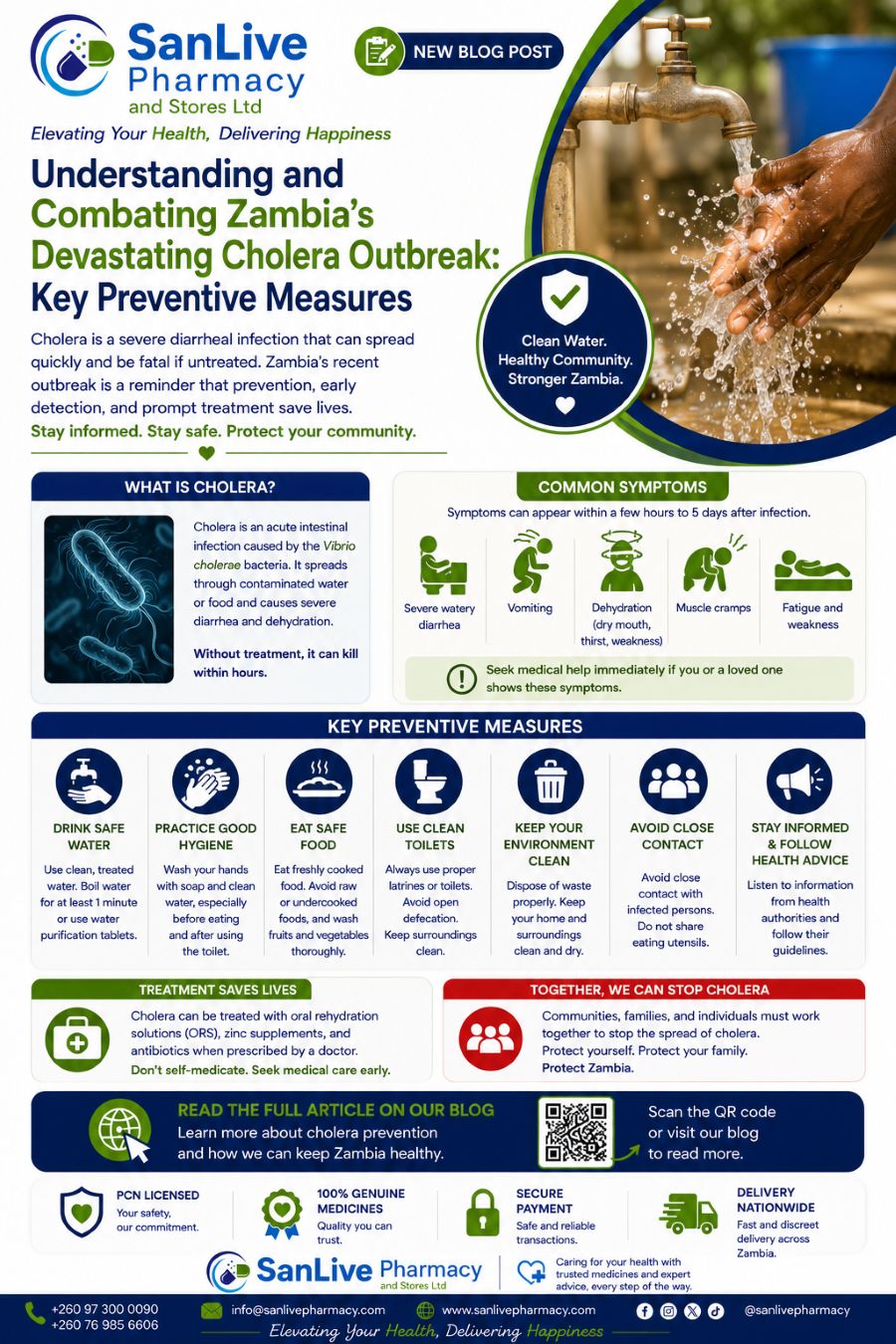
Understanding Cholera: Lessons from Zambia's Outbreak and How Nigerians Can Protect Themselves
In late 2023 and through 2024, Zambia experienced one of the most devastating cholera outbreaks in its recent history — a public health emergency that killed hundreds, infected tens of thousands, overwhelmed healthcare facilities in Lusaka and beyond, and forced the government to declare a national health emergency. Schools were closed. Public gatherings were banned. International health agencies mobilised emergency response teams. And yet, despite all interventions, the outbreak continued to spread — driven by the same conditions that have enabled cholera to devastate communities across sub-Saharan Africa for generations.
For Nigerians, the Zambia outbreak is not a distant tragedy. It is a mirror. Nigeria is one of the countries most frequently affected by cholera outbreaks in Africa — with recurring epidemics in flood-prone states including Bayelsa, Rivers, Kogi, Borno, Adamawa, and others causing deaths, hospitalisation, and community disruption every rainy season. The conditions that enabled Zambia's outbreak — inadequate water sanitation, poor sewage management, overcrowding, flooding, and limited healthcare access — exist in significant parts of Nigeria.
Understanding what cholera is, how it spreads, why outbreaks occur, and — most critically — what every individual Nigerian and every Nigerian family can do to protect themselves is not merely interesting public health education. It is potentially life-saving knowledge.
At SanLive Pharmacy, we are committed to equipping every Nigerian with the evidence-based health information they need to protect themselves and their families. This comprehensive guide covers everything you need to know about cholera — and what to do about it.
If you need oral rehydration salts, water purification products, or free pharmacist guidance on cholera prevention and management, speak with a SanLive pharmacist today — confidential, professional, and available online nationwide and internationally.
What Is Cholera and Why Is It So Dangerous?
Cholera is an acute diarrhoeal disease caused by infection with the bacterium Vibrio cholerae — specifically the toxigenic O1 or O139 serogroups that produce the cholera toxin responsible for the disease's characteristic and life-threatening symptoms.
Cholera is not simply "bad diarrhoea." It is one of the fastest-killing infectious diseases known to medicine. In its most severe form, cholera can kill a healthy adult within hours of symptom onset — through a mechanism of dehydration so rapid and profound that it overwhelms the body's compensatory capacity before medical help can be reached.
How Cholera Kills — the Mechanism
When Vibrio cholerae is ingested, it colonises the small intestine and produces cholera toxin — a protein that permanently activates a cellular pump in intestinal cells, forcing them to continuously secrete chloride ions into the intestinal lumen. Water follows the chloride by osmosis in enormous quantities. The result is the production of profuse, watery diarrhoea at volumes that can reach 10 to 20 litres per day in severe cases — an almost incomprehensible rate of fluid loss that strips the body of water and electrolytes faster than they can be replaced without medical intervention.
The characteristic stool of cholera — pale, watery, with a faintly cloudy appearance resembling water in which rice has been washed, classically described as "rice-water stool" — is produced not by the body's normal digestive contents but by the intestinal fluid itself. It contains the bacteria that make it extraordinarily infectious.
Without treatment, severe cholera kills through hypovolemic shock — circulatory collapse caused by catastrophic fluid loss. Dehydration depletes blood volume, blood pressure falls, vital organ perfusion fails, kidney function shuts down, and death follows. The case fatality rate without treatment can reach 25 to 50 percent. With prompt, appropriate rehydration, the case fatality rate falls below 1 percent — one of the most dramatic treatment-outcome relationships in all of medicine.
How Cholera Spreads — the Transmission Chain
Understanding how cholera spreads is the foundation of preventing it. The transmission chain is straightforward — and every link in it represents an opportunity for prevention.
The Primary Route: Contaminated Water
Cholera spreads primarily through the faecal-oral route — infected faeces contaminate water or food sources, which are then consumed by uninfected individuals. The bacterium is excreted in enormous quantities in the stools and sometimes the vomit of infected individuals — and even mildly symptomatic or asymptomatic carriers shed bacteria that can contaminate water sources.
Flooded environments are particularly dangerous because floodwater mixes sewage, human waste, and other contaminants with drinking water sources — creating conditions in which a single cholera case rapidly seeds widespread community transmission. This explains why cholera outbreaks in Nigeria consistently follow flooding events and are concentrated in communities with inadequate sanitation infrastructure.
Contaminated Food
Food contaminated directly with infected water during preparation, irrigation, or handling can transmit cholera. Raw or undercooked seafood — particularly shellfish and fish from contaminated water bodies — is a significant source. Street food prepared with contaminated water, unpeeled raw fruits and vegetables washed with contaminated water, and ice made from contaminated water are all implicated transmission routes.
Person-to-Person Transmission
While less efficient than waterborne transmission, person-to-person spread occurs through the hands of infected individuals contaminating food, surfaces, or direct contact with others — particularly in overcrowded settings with inadequate hygiene facilities.
Asymptomatic Carriers
Approximately 75 percent of people infected with Vibrio cholerae develop no symptoms or only mild symptoms — but they continue to shed bacteria in their faeces for one to two weeks, silently contributing to environmental contamination. This is why outbreak control requires population-level water sanitation measures rather than simply isolating symptomatic cases.
Lessons from Zambia's Outbreak — What Went Wrong and Why It Matters for Nigeria
The Conditions That Enabled the Outbreak
Zambia's 2023-2024 cholera catastrophe was not caused by a new or unusually virulent pathogen. It was caused by a completely predictable convergence of longstanding vulnerabilities that have been identified, documented, and insufficiently addressed for decades.
Inadequate water and sanitation infrastructure. In Lusaka's densely populated informal settlements, access to safe piped water is limited and unreliable. Many households depend on shallow wells, boreholes, and communal water points that are vulnerable to faecal contamination — particularly during rainfall when surface runoff compromises groundwater sources. Without consistent access to safe water, hand hygiene and food preparation safety are fundamentally compromised regardless of community knowledge or individual motivation.
Flooding and climate extremes. Zambia experienced unusually severe rainfall in the period preceding the outbreak, causing widespread flooding that overwhelmed inadequate sewage infrastructure, contaminated water sources, and displaced large numbers of people into crowded temporary settlements with minimal sanitation.
Overcrowding and informal settlements. High population density in areas with inadequate sanitation accelerates transmission once an outbreak begins — each case rapidly seeds multiple new infections through shared water sources and close proximity.
Delayed healthcare seeking. Many community members, particularly in rural areas, did not recognise early cholera symptoms as requiring immediate medical attention or lacked confidence in the healthcare system's ability to help. The hours between symptom onset and treatment initiation are critical — and delays cost lives.
The Nigerian parallel is direct and immediate. The same infrastructure deficits, the same flooding vulnerabilities, the same overcrowded informal settlements, and the same barriers to healthcare access exist in significant parts of Nigeria — making the conditions for cholera outbreaks equally present.
Recognising Cholera — Symptoms and Timeline
The Spectrum of Cholera Presentation
Cholera does not always present as the dramatic, life-threatening illness of textbook descriptions. The clinical spectrum ranges from completely asymptomatic carriage through mild diarrhoea to the severe, rapidly fatal illness of classic cholera — and recognising where on this spectrum a patient sits is essential for appropriate management.
Asymptomatic infection — approximately 75 percent of cases. No symptoms but infectious faecal shedding for one to two weeks.
Mild to moderate cholera — approximately 20 percent of cases. Watery diarrhoea that may be difficult to distinguish from other causes of gastroenteritis. May include mild nausea and vomiting. Responds well to oral rehydration without hospitalisation.
Severe cholera (cholera gravis) — approximately 5 percent of cases but responsible for the vast majority of deaths. Characterised by sudden onset of profuse, painless, watery diarrhoea — the classic rice-water stool; projectile vomiting; rapid development of severe dehydration within hours; muscle cramps — particularly in the legs, caused by electrolyte loss; decreased urine output progressing to anuria; skin that loses elasticity and returns slowly when pinched (poor skin turgor); sunken eyes; rapid, weak pulse; low blood pressure; extreme thirst; and altered consciousness as dehydration becomes critical.
Incubation period: Two hours to five days after exposure — most commonly symptoms appear within 24 to 48 hours.
The Critical Window
The most important clinical insight about cholera is that the window between symptom onset and life-threatening dehydration can be very short — as little as four to six hours in severe cases. This is why cholera is uniquely dangerous and why immediate initiation of rehydration at the first sign of profuse watery diarrhoea is the single most important life-saving action.
Do not wait to see whether symptoms improve. Do not wait until you can get to a hospital. Begin oral rehydration immediately and seek emergency medical care simultaneously.
Immediate Response — What to Do if Cholera Is Suspected
Step 1: Begin Oral Rehydration Immediately
Oral Rehydration Salts (ORS) is the cornerstone of cholera management and one of the most effective life-saving interventions in all of medicine. The sodium-glucose co-transport mechanism that ORS exploits remains functional even in the presence of cholera toxin — allowing the intestine to absorb fluid and electrolytes even while the toxin is driving massive secretion. This elegant biochemical workaround has saved millions of lives.
Dissolve one ORS sachet in one litre of clean, boiled and cooled water. Begin sipping immediately — small, frequent sips are better tolerated than large volumes that may provoke vomiting. Continue without interruption. Replace fluids as close to the rate of loss as possible — for every episode of diarrhoea or vomiting, drink at least 200 to 300ml of ORS solution.
In severe cholera where vomiting is profuse, intravenous fluid replacement is required — which means getting to a medical facility as fast as possible is urgent and non-negotiable. But ORS administered during transport can buy critically important time.
ORS should be kept in every Nigerian household at all times — its availability in the home in the critical first hours of illness is the difference between life and death.
✅ Order ORS sachets on SanLive Pharmacy — adult and paediatric formulations available, delivered across Nigeria and internationally within 3 to 4 days. Do not wait for an outbreak to stock this essential life-saving product.
Step 2: Seek Emergency Medical Care Immediately
Suspected cholera — particularly with profuse watery diarrhoea, vomiting, and signs of dehydration — is a medical emergency. Go to the nearest hospital or health facility immediately. Do not wait to see if symptoms improve. Severe cholera requires intravenous fluid replacement, electrolyte monitoring, and antibiotic therapy that can only be administered in a clinical setting.
Step 3: Isolate and Contain
While seeking medical care, implement strict hygiene measures to prevent spread within the household — thorough handwashing with soap after any contact with the ill person or their environment; separate toilet facilities if available or designated area with immediate disinfection; disinfection of all surfaces, clothing, and bedding that may have been contaminated; and ensuring other household members do not consume food or water prepared by the ill person.
Step 4: Report to Health Authorities
Cholera is a notifiable disease in Nigeria. Suspected cases should be reported to the nearest local government health authority or to the Nigeria Centre for Disease Control (NCDC) through their emergency reporting channels. Early notification enables rapid public health response that protects the broader community.
Antibiotic Treatment — When and What
Antibiotics are an important adjunct to rehydration in cholera management — they do not replace rehydration but they reduce the duration and volume of diarrhoea, shortening the illness and reducing infectious shedding.
Antibiotics are indicated for moderate to severe cholera — not for mild cases where rehydration alone is sufficient. The choice of antibiotic must be guided by local resistance patterns, which in Nigeria should be discussed with a prescribing physician.
First-line antibiotics for cholera include doxycycline 300mg as a single dose in adults — the preferred option where sensitivity is confirmed; azithromycin 1g as a single dose — preferred in pregnant women and children; and ciprofloxacin 1g as a single dose for adults where doxycycline is not available or appropriate.
Critical warning: Never self-prescribe antibiotics for suspected cholera. The first and most urgent priority is rehydration and emergency medical care — not antibiotic procurement. Antibiotic selection must be made by a qualified clinician with knowledge of the patient's condition and local resistance patterns. Speak with a SanLive pharmacist for guidance on appropriate management while emergency care is being sought.
Prevention — The Comprehensive Approach
Cholera prevention operates at two levels — individual and household measures that every Nigerian can implement immediately, and community and systemic measures that require collective and governmental action. Both are essential.
Individual and Household Prevention Measures
Safe water — the single most critical prevention measure:
Boil all drinking water vigorously for at least one minute — boiling kills Vibrio cholerae reliably. Allow to cool in a covered, clean container. Store in a clean, covered vessel with a narrow mouth and a tap or ladle to prevent contamination during use. Never store drinking water in open containers. Treat stored water with water purification tablets (chlorine tablets or sodium hypochlorite solution) where consistent boiling is not practical — follow dosing instructions carefully and allow adequate contact time before consumption.
During flood events or declared outbreaks, treat all water — even water from normally reliable sources — before consumption.
Hand hygiene — the transmission chain's most vulnerable link:
Wash hands with soap and clean water at every critical juncture — before preparing or handling food; before eating; after using the toilet or latrine; after handling raw food including meat, fish, and vegetables; after attending to a sick person; and after any contact with potentially contaminated water or surfaces. Where soap is not available, ash can be used as a substitute — it is alkaline and provides some decontamination even without soap.
Alcohol-based hand sanitiser is effective against Vibrio cholerae and can be used when handwashing facilities are not immediately available — but handwashing with soap and water remains superior and is preferred where accessible.
✅ Order water purification tablets, hand sanitiser, and hygiene support products on SanLive Pharmacy — delivered across Nigeria and internationally within 3 to 4 days.
Food safety:
Cook all food thoroughly and eat it while hot — heat kills Vibrio cholerae. Avoid eating raw or undercooked seafood, particularly shellfish from any source during an outbreak or in flood-affected areas. Wash fruits and vegetables thoroughly with clean, treated water before consumption. Peel fruits and vegetables where possible. Avoid street food and food from unknown sources during active outbreaks. Do not consume ice made from untreated water. Be particularly cautious about food left at room temperature for extended periods — bacterial growth accelerates in Nigeria's heat.
Environmental hygiene:
Dispose of human waste safely — in latrines, pit toilets, or sanitary toilet facilities — never in open water sources or areas where runoff can reach water sources. Ensure latrines and toilets are located sufficiently far from water sources (at least 30 metres) and downstream of wells or boreholes. Manage solid waste properly — uncollected waste attracts flies that can mechanically transmit cholera bacteria from faeces to food. Keep the household environment clean and dry — particularly important during flood events.
Special precautions during flooding:
Flooding dramatically elevates cholera risk by contaminating water sources with faecal material. During flood events, treat all water regardless of normal source reliability. Avoid wading through floodwater where possible — if unavoidable, wash thoroughly with soap and clean water immediately afterward. Be especially vigilant about food safety — discard any food that has been in contact with floodwater. Increase ORS stockpile in the household in anticipation of potential illness.
Cholera Vaccination — What Nigerians Need to Know
The Oral Cholera Vaccine
An oral cholera vaccine (OCV) — marketed as Shanchol or mORC-VAX — is available and provides meaningful protection against cholera in epidemic settings. The vaccine is taken orally in two doses two weeks apart, provides approximately 65 percent protection against severe cholera for two to three years, and is particularly recommended for individuals in high-risk communities during outbreaks, healthcare workers involved in cholera response, and travellers to cholera-endemic areas.
In Nigeria, oral cholera vaccine deployment has been implemented in high-risk communities during outbreak responses coordinated by the NCDC and international partners — but coverage remains insufficient relative to the population at risk.
The vaccine is a valuable additional layer of protection — but it does not replace water sanitation, hand hygiene, and food safety. A vaccinated person who drinks contaminated water is still at risk — protection is approximately 65 percent, not 100 percent, and protection against mild infection is lower than against severe disease.
Speak with a healthcare provider or SanLive pharmacist about cholera vaccine availability and appropriateness for your specific situation.
Cholera in Vulnerable Groups — Special Considerations
Children Under Five
Young children are disproportionately affected by cholera morbidity and mortality due to their smaller body water reserves — dehydration progresses much faster relative to body weight — and their greater vulnerability to electrolyte imbalances. Paediatric ORS formulations should be used for children, with immediate medical evaluation for any child showing signs of dehydration, lethargy, or inability to drink.
Pregnant Women
Cholera during pregnancy carries risk for both mother and foetus. Severe dehydration can trigger preterm labour and foetal distress. Aggressive rehydration is essential and antibiotic selection must account for pregnancy safety — azithromycin is the preferred antibiotic in pregnancy. Any suspected cholera in a pregnant woman requires immediate hospital evaluation without delay.
Malnourished Individuals
Malnutrition significantly increases the risk of severe cholera and death. Malnourished individuals — particularly children with acute malnutrition — have compromised immune function, lower physiological reserves, and impaired ability to compensate for fluid and electrolyte loss. They require aggressive clinical management.
Elderly Patients
Older adults have reduced physiological reserves and reduced thirst sensation — meaning dehydration can progress rapidly and is often underrecognised. Immediate ORS and early medical evaluation are essential.
Community-Level Prevention — What Needs to Happen
While individual and household prevention measures are within every Nigerian's control, eliminating cholera as a recurring public health threat requires systemic action that no individual can achieve alone.
Investment in reliable, safe piped water infrastructure reaching all communities — not just urban centres. Construction and maintenance of adequate sewage treatment systems that prevent faecal contamination of water sources. Community latrine construction and sanitation facility maintenance in areas where household facilities are not feasible. Flood management infrastructure that reduces the contamination of water sources during rainy season events. Community health education that builds accurate understanding of cholera transmission and prevention at the household level. Rapid outbreak detection and response capacity that can interrupt transmission chains before they become epidemics. Healthcare facility readiness with adequate ORS supplies, intravenous fluids, and trained staff to manage cholera cases effectively.
These are not optional investments — they are the foundational public health infrastructure without which cholera will continue to return to Nigerian communities every rainy season.
Cholera Prevention Quick Reference Checklist
| Action | When | Priority |
|---|---|---|
| Stock ORS at home | Always — before any outbreak | Critical |
| Boil or treat all drinking water | Always — especially during flooding | Critical |
| Wash hands with soap at critical moments | Always | Critical |
| Cook food thoroughly and eat while hot | Always | High |
| Avoid raw seafood during outbreaks | During outbreaks and flooding | High |
| Treat all water during flood events | During and after flooding | Critical |
| Dispose of human waste safely | Always | High |
| Stock water purification tablets | Always — before any outbreak | High |
| Know signs of dehydration | Always | High |
| Know nearest treatment facility | Before any outbreak | High |
| Consider OCV vaccination in high-risk areas | Before outbreak season | Moderate |
Nigerians in the Diaspora — Staying Informed and Supporting Families at Home
If you are a Nigerian living in the UK, USA, Canada, Australia, Europe, or the Middle East, you can support family members at home by ensuring they have ORS and water purification products stocked at home before outbreak season, sharing accurate prevention information with family members in high-risk communities, and accessing free pharmacist guidance through SanLive Pharmacy for any health concerns related to cholera or other infectious diseases.
SanLive Pharmacy ships essential prevention and management products internationally including ORS sachets, water purification tablets, and hygiene support products — with delivery in 3 to 4 days to most international destinations.
✅ Order ORS sachets and prevention essentials on SanLive Pharmacy — for families at home and diaspora customers alike.
Frequently Asked Questions
How quickly can cholera kill? In its most severe form, cholera can kill a healthy adult within four to twelve hours of symptom onset — through dehydration and circulatory collapse. This is why immediate rehydration and emergency medical care are non-negotiable at the first sign of profuse watery diarrhoea in a cholera-risk context. With prompt treatment, the case fatality rate falls below 1 percent.
Is cholera treatable at home? Mild cholera — watery diarrhoea without vomiting, without signs of dehydration, and without systemic features — can be managed at home with ORS and careful monitoring. Moderate to severe cholera — with profuse diarrhoea, vomiting, or any signs of dehydration — requires emergency medical care with intravenous fluid replacement. Do not attempt to manage moderate to severe cholera at home. Begin ORS immediately and go to the hospital simultaneously.
What is the difference between cholera and ordinary diarrhoea? Ordinary gastroenteritis from other causes typically produces moderate diarrhoea with other symptoms including fever, stomach cramps, and general malaise. Cholera characteristically produces profuse, painless, watery diarrhoea — often described as rice-water stool — with rapid onset, large volume, minimal or no abdominal pain, and rapid development of dehydration. During a declared outbreak or in a flood-affected area, profuse watery diarrhoea should be treated as suspected cholera until proven otherwise.
Can you get cholera more than once? Yes. Immunity following cholera infection is partial and may wane over time. Repeated exposure in endemic areas means repeated infection risk, though subsequent infections are often milder than the first.
How do I protect my family during a flood? Treat all drinking water by boiling or using purification tablets regardless of normal source reliability. Avoid all contact between food and floodwater — discard any food that has been submerged. Wash hands with soap and clean water after any contact with floodwater. Increase vigilance about food preparation hygiene. Stock ORS at home and know the location of the nearest health facility. Order water purification tablets and ORS from SanLive Pharmacy before flood season begins.
Can diaspora Nigerians order cholera prevention products from SanLive Pharmacy? Yes. SanLive Pharmacy ships to the UK, USA, Canada, Australia, Europe, and the Middle East with delivery in 3 to 4 days in plain, discreet packaging.
The Bottom Line
Cholera is a preventable disease. It is also a treatable disease. The deaths it causes — in Zambia in 2023 and 2024, in Nigeria during every rainy season, and across sub-Saharan Africa year after year — are not inevitable. They are the product of identifiable, addressable vulnerabilities in water infrastructure, sanitation systems, community health knowledge, and healthcare access.
At the individual and household level, the actions that protect against cholera are clear, evidence-based, and within the reach of every Nigerian family — safe water treatment, rigorous hand hygiene, careful food safety practices, ORS stockpiled at home, and knowledge of when to seek emergency care without delay.
The lesson of Zambia's outbreak is not that cholera is impossible to prevent. It is that the consequences of failing to invest in prevention — at the individual, community, and systemic level — are catastrophic and entirely avoidable.
Protect your family. Stock your ORS. Treat your water. Know the signs. Act immediately.
- 🔵 Order ORS Sachets — Adult and Paediatric
- 🔵 Order Water Purification Tablets
- 🔵 Order Hand Sanitiser and Hygiene Products
- 🔵 Order Zinc Supplements for Children
- 🔵 Browse all Digestive Health and Recovery Products
- 🔵 Speak with a SanLive Pharmacist for Free
This article is for informational and educational purposes only and does not constitute medical advice. Suspected cholera is a medical emergency — seek immediate hospital care for any case of profuse watery diarrhoea with vomiting or signs of dehydration. Report suspected cases to your local health authority and the Nigeria Centre for Disease Control (NCDC). SanLive Pharmacy and Stores Ltd operates in compliance with NAFDAC regulations and Pharmacists Council of Nigeria (PCN) standards.

.jpg)